Author Martin Dugard Shares His Experiences Researching the Running Boom to Write 'The Long Run'
A runner all his life and born to be a writer, Martin Dugard shares the places he traveled and the surprising facts he learned while researching his newest book, The Long Run, which documents the events that kickstarted the mid-1970s running boom.

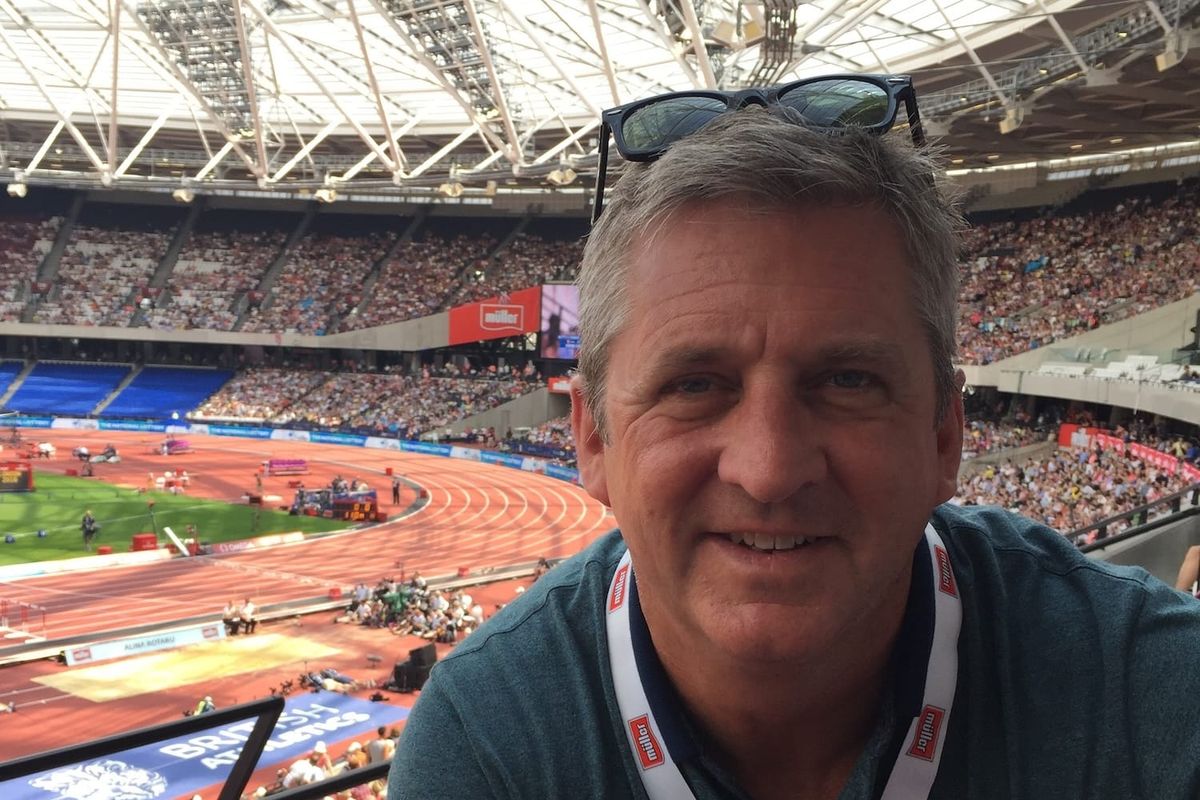
While attending college at Northern Michigan University, Martin Dugard remembers occasionally skipping class, going down to the shore to read, and dreaming about being a writer. He had wanted to be a writer since he was 6 years old. But writers didn’t make any money, or so his mother told him.
After graduation and while working a corporate job he hated, Martin paid a career counselor $350 for guidance. She told him that he should, in fact, consider a career as a writer. So, he started freelance writing from his cubicle.
“I began writing magazine articles for Runner’s World and Competitor Magazine, and then Triathlete, and finally Sports Illustrated and Outside. At one point, I was asked to go to Madagascar by a group to cover a big adventure race, and I had to take three weeks off from work to do it,” Martin shares. “When I came back, my boss fired me.”
Since that pivotal moment in 1994, Martin has built his career as a writer, covering both endurance sports and history.
Merging Personal Interests and Professional Writing
Growing up, Martin watched his parents get into running after reading Bill Bowerman’s book, Jogging, which was published in 1967. When Martin was in high school, his family moved four times in four years on military orders, and running became a solace. He remembers joining a new school just before cross country season began, running through the track season, and then moving to a new base during the summer.
“Running was the way that I met people,” Martin says. “Runners have a lot of things in common without knowing they have things in common. When you get around other runners, you just naturally mesh, and it’s a wonderful thing.”
Martin continued to run in college, then cycled through competing in marathons, triathlons, and ultras. After covering Raid Gauloises as a writer — the team adventure race across different countries that cost him his corporate job — he returned to race it.
The experience led him to write his first book, Surviving the Toughest Race on Earth, in 1998. In the years since, he’s written The Explorers, To Be a Runner, and Chasing Lance: The 2005 Tour de France and Lance Armstrong’s Ride of a Lifetime.
Realizing that writing about endurance sports had its limits and a small audience at the time, he expanded into another topic he enjoyed: history. Books he’s published in that genre include one on British explorer Captain Cook, the Taking series, and a collaboration with James Patterson.
“I just like history, and I like to jump around. And to tell you the truth, most of my books aren’t really about the subject matter. It’s about the place I want to travel to,” Martin shares. “It’s one of the perks of being a writer.”
On Traveling to Write The Long Run
Digging into the research for his latest book, The Long Run, Martin traveled to London and Munich, among other landmarks throughout the history of running. He also interviewed notable names in the sport, including Olympic marathon gold medal-holder Frank Shorter, Olympian and repeat Boston Marathon winner Bill Rodgers, and Olympic marathon runners who have each compiled incredible running accomplishments over the years: Deena Kastor and Des Linden.
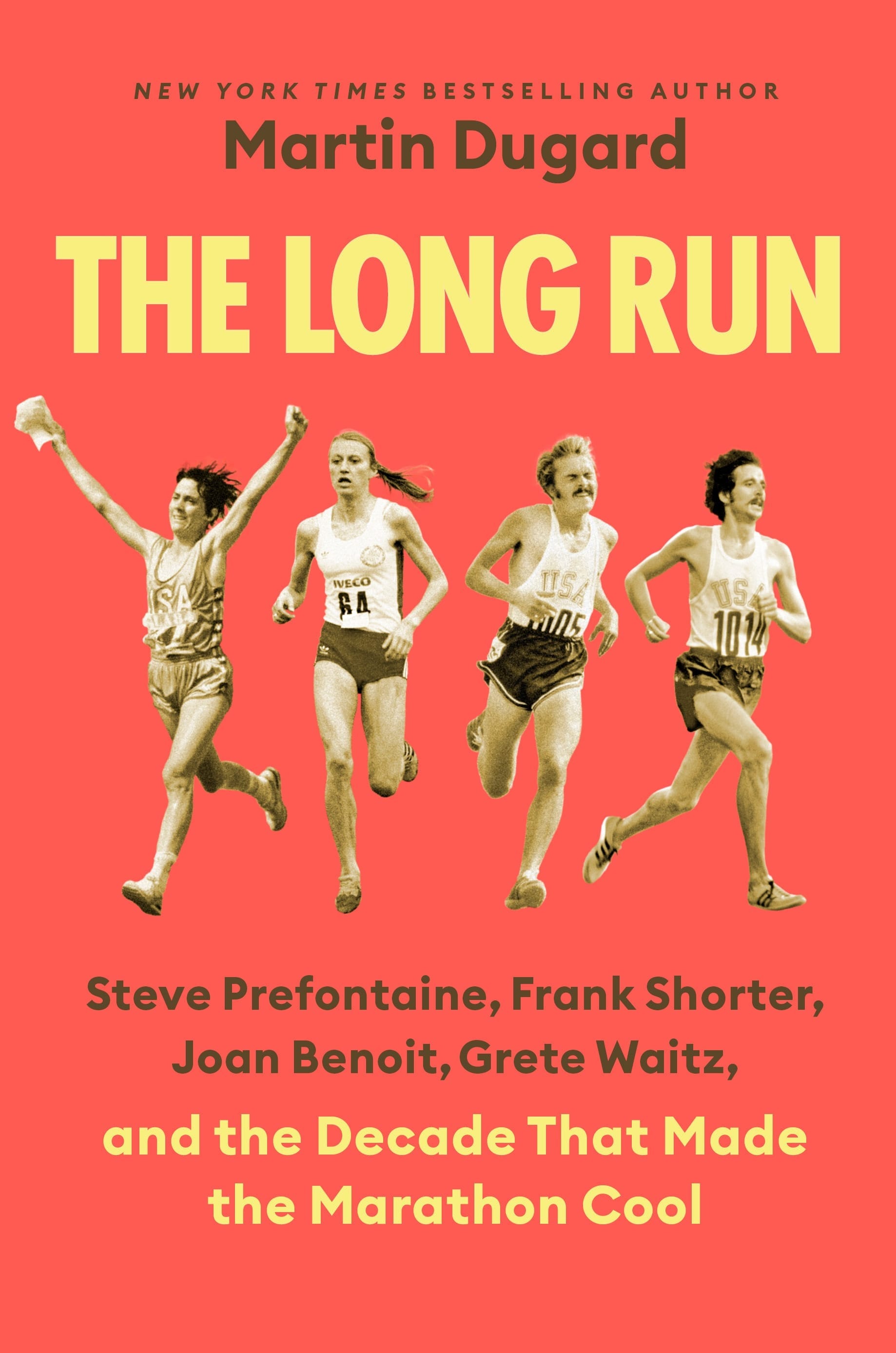
The Long Run recounts the events that preceded and propelled the 1970s running boom, such as the origins of the marathon and the race that changed its distance to 26.2 miles, the Munich Summer Olympics, Coach Bill Bowerman’s influence, Steve Prefontaine’s legacy, a startline protest for the right for women to run with men at the New York City Marathon, and much more.
But it’s not just a narration of history. Martin’s occasional first-person reflections add color to what it was like to witness such milestones.
While we’re currently experiencing one of the biggest surges in the running boom to date, The Long Run offers insight into how we got here. Dugard explains that, rather than a nostalgic book for people who lived through the ’70s, it’s relevant for anyone who’s a runner.
“I want people to see this as a great adventure,” Martin shares. “This is a great summer read to motivate you, to really get you in the frame of mind you need to be to complete.”
Once a Runner, Always a Runner
“I like to think of where I am right now, as a runner, is my Henry David Thoreau place in running,” Martin says. “Some days I go fast, some days I go slow, some days I go really slow, but I’m just out there. I love being out in nature.”
Today, Martin runs the trails just outside his house and continues to embrace his competitiveness by coaching high school cross country and track. A coach since 2005, he says it’s the relationships with his athletes just as much as the competition that keep him coming back season after season.
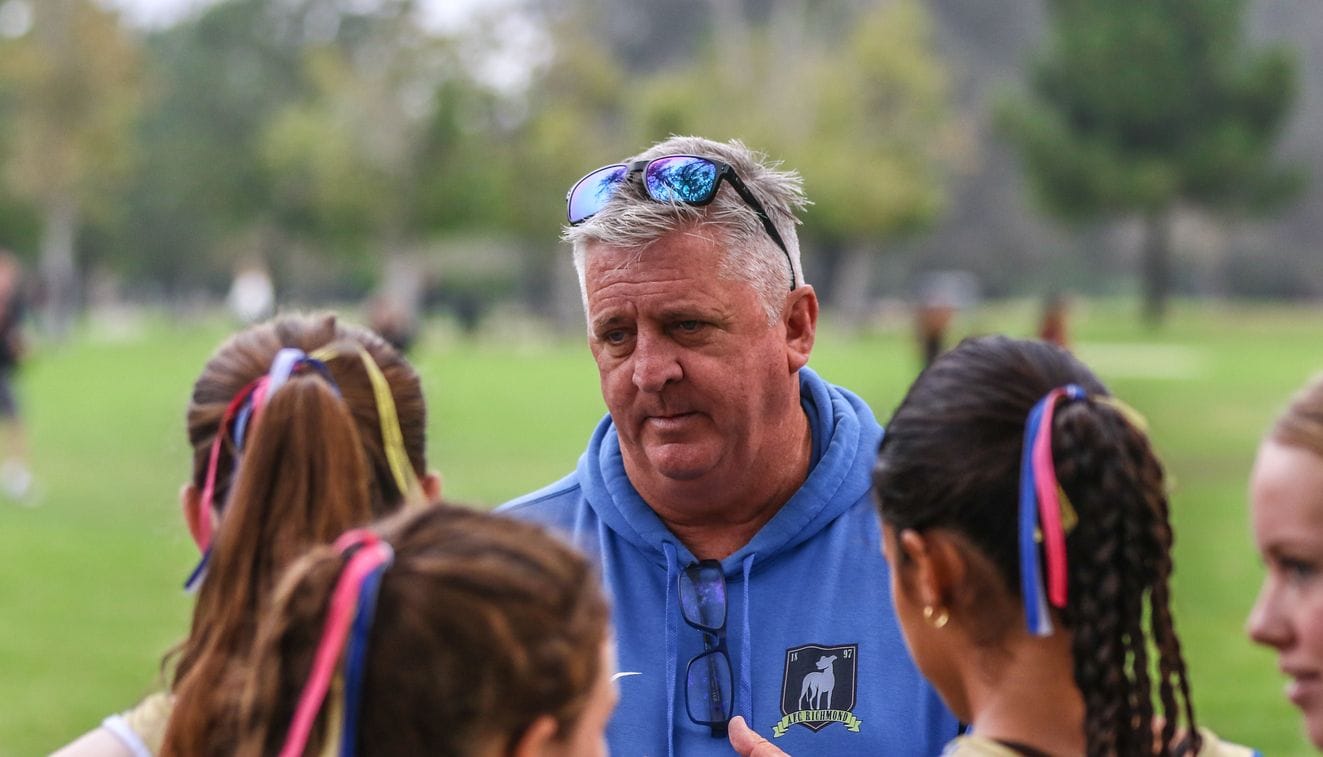
“I really love these teams. When the season is over, I’m really glad,” Martin shares. “I need a little bit of a mental health break. But then I can’t wait to get started again.”
Observing the increase in people becoming runners, record-setting marathon applications, and world-record performances, Martin says he feels renewed by the energy in running — enough to put his name in for the 2027 London Marathon.
Discussions about running nutrition, training plans, and what race you’re running next are no longer topics only fringe groups chat about, and he finds that to be a fun new development in the ongoing running boom.
“It’s such a welcoming sport,” Martin says. “It’s there for everybody, and there’s no right or wrong way to do it.”
Below, Martin shares more about writing The Long Run, including what he learned about the running boom that surprised him, and a few favorite travel moments during his research.
What inspired you to write The Long Run?
Martin Dugard: I wanted to combine my own love for the sport and my knowledge about the sport …. Every afternoon, I go out and talk about running to my runners, and I’ve always wanted to get back into writing about running.
Writing about the running boom…it’s not a nostalgia piece. It takes us right up to the 2025 New York City Marathon, which actually sounds dated, now that London’s already happened this year. But given the chance to combine all the stuff I knew and the stuff that I had experienced and the actual history of it, and then, of course, talking to all these legends like Frank Shorter and Bill Rodgers and Jim Ryun, it was kind of like reliving the last 50 years of my own life in a very unlikely way. It didn’t start out like that, but it became that.
It’s not a memoir. And I did not set out to write a memoir. But it felt like, by inserting myself as the narrator, the voice could be a little bit more conversational, as opposed to just bringing the people in and saying, ‘Here’s what happened. Here’s how the running revolution started.’ It could be a little bit more chatty, a little bit more familiar than you can be, for instance, writing military history.
Can you share one of the most memorable stories you learned about the history of running?
Martin Dugard: The part I liked was that 1908 marathon, when the marathon distance became 26.2 miles.
If you do an AI [search] and you ask, ‘Why is the marathon 26.2 miles?’ it will tell you it’s because the British royal family wanted the finish line to be in front of the royal box at the Olympic Stadium. I had thought that my whole life, and that’s the common perception.
If you do the deep dive, you realize it’s not the finish that was the important thing. They moved it back 1.2 miles, so the start could be within Windsor Castle, in a very private, secluded place only for the royals, because they’re hoping that the king would come out and actually start the race. That’s where you get that extra 1.2.
The fun thing about that extra 1.2 is, in that particular race, the guy who was leading as he came into the stadium collapsed four times, had to be helped, and was eventually disqualified. Well, if the marathon had been only 25 miles, or 24.8, which is 40 kilometers, that would have never happened. But because that happened, because it was such a fantastical sight, a little bit of a running boom 1908-style sprung up around the world because people were fascinated by this event where somebody could almost die.
This led to marathons being held inside Madison Square Garden. [The disqualified runner] got a rematch with the American who beat him. Can you imagine running a 10-laps-to-the-mile marathon inside Madison Square Garden, where people are smoking and drinking and singing, and you’re trying to run a race?
What were a few places you visited during your research for the book?
Martin Dugard: When I went to London …. I found the actual finish line of the 1908 marathon. The stadium that was built for that Olympics has been torn down. But because that finish of the 1908 marathon was such a big deal, the finish line is actually a granite line within the new development that replaced the old stadium. You can actually go there, and it says, ‘This is the finish line of the 1908 Olympic Marathon.’
I love those little moments when you’re researching, you travel, and you stand in the place where something major happened. You can imagine the crowd, and you can imagine the Queen looking down, and all the great things that happened. I mean, to me, that’s the best part about researching a history book.
If [you] really want to have fun, go to Munich and go to the Olympic Stadium. It’s the same stadium, and you can get inside for like three euros. You can see where Steve Prefontaine fell behind, and Frank Shorter finished the marathon, and Jim Ryun fell in the [1500 meters].
My wife and I walked all the way up to the top there, so we’ve got this bird’s-eye view of the thing. We just sat down in some of the seats. It was pretty much the same camera angle as ABC showed when they broadcast the Olympics that year. I pulled Prefontaine’s race up on my phone. My wife had never seen it before, so we watched the race. You could see where, ‘Okay, that’s where Pre kicked. That’s where Virén kicked.’
Of course, when Pre finishes fourth — he’s passed in the last five yards — we both gasped. I even knew it was coming, and I gasped, because it’s just so sudden. But we can look from the screen down to the track, and say, ‘Oh, it happened right there.’
And then, you know, after the race, Steve Prefontaine went to the Hofbrau House to have a beer. So, of course, we had to go there, too. Just the consummate research.
That was the Olympics of Mark Spitz winning seven Olympic gold medals, and Olga Korbut doing backflips off the uneven bars. I always thought that those places were miles apart, but the stadium is literally 100 yards from the gymnastics center, which is 50 yards from the pool. So all that stuff happened right at the same place.
Did you learn anything that surprised you about the running boom?
Martin Dugard: The thing that surprised me was how late women came into the story. I always thought they were right there with the men, because that was my recollection. But it really wasn’t until the late ’70s and early ’80s when women were inspired to do marathons, for instance, or ultra marathons.
I kept waiting for the women to come along, and they’re there early. There was one woman who ran the New York City Marathon in 1970, Nina Kuscsik. In 1972, there were six women who ran New York, and they famously staged a protest at the starting line to speak out against some of the rules against women running marathons with men. But you know, even up until ‘the boom’ began in 1976, the number of women who were participating in big city marathons and even road races was very small. It was four or five percent. You have to go to Grete Waitz, and then you have to go to Joan Benoit in 1984. Finally, you have to go to Oprah in 1994, when she ran the Marine Corps Marathon. That’s when things really took off for the women. I didn’t know that.
When you would think about people who did marathons, you always thought of these skinny white people, and Oprah just came along and blew it wide open for anybody. Not just women of all colors and shapes and sizes, but also men …. It just opened everything up.
Follow @AuthorMartinDugard on Instagram.
“I love those little moments when you’re researching, you travel, and you stand in the place where something major happened. You can imagine the crowd, and you can imagine the Queen looking down, and all the great things that happened. I mean, to me, that’s the best part about researching a history book.” — Martin Dugard