Baltimore’s A Tribe Called Run Founder Will Walker Shares Advice for Run Club Leaders
Founder of A Tribe Called Run, Will Walker, shares how being adaptable and of service to others cultivates an inclusive running community, and why formalizing as a business adds accountability.

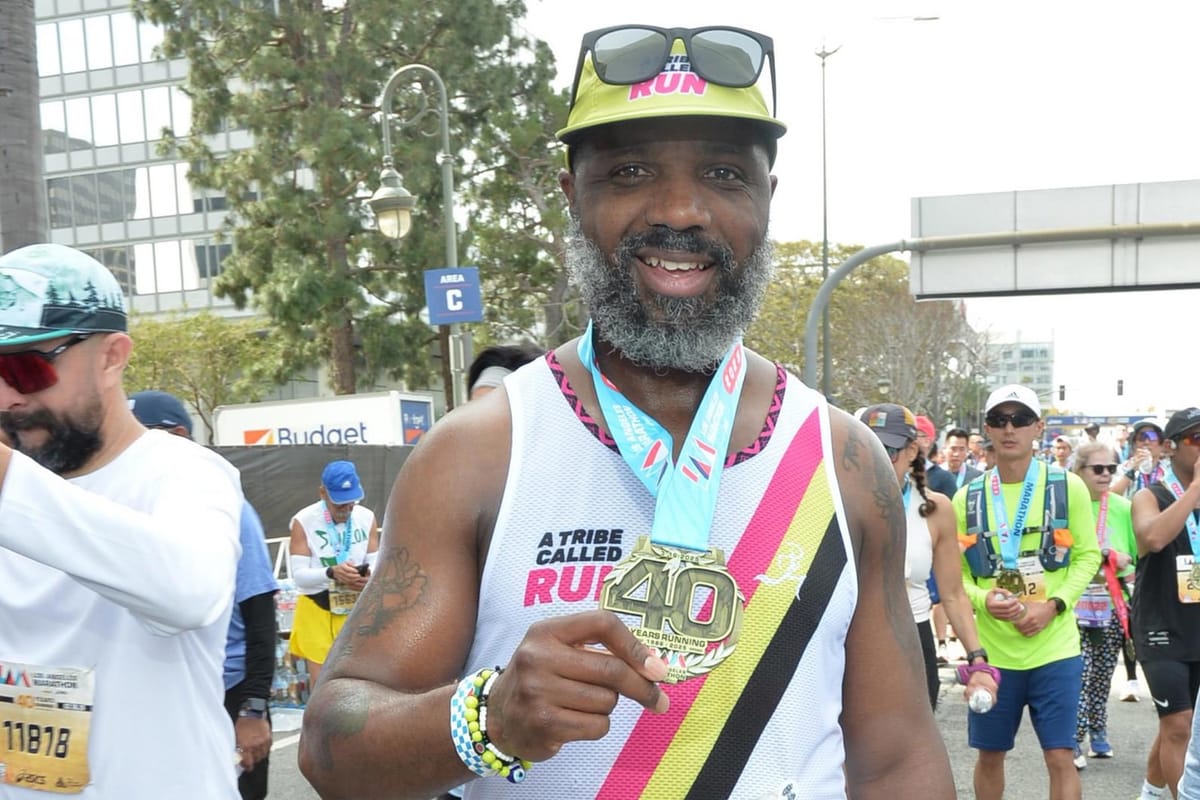
In 2017, Will Walker was running a 5K at his alma mater, Morgan State University. An athlete all his life and a former MSU football player, Will was surprised to see an older man running up ahead.
“I never would have thought that this 50-year-old guy…who didn’t look like he was a runner, would be out here smoking me in the 5K, so there we have it,” Will says.
That event pushed him into a more consistent running routine.
“I kind of took it as a challenge,” he notes. “It was just the fuel and the motivation that I needed to get a little bit more focused.”
After a rough breakup in 2018, his therapist solidified the importance of running in his life. “She knew that I ran, and she was just like, ‘You know, I’m sure that you get a boost of those endorphins. Stick with the running, and it’ll help see you through this.’”
Will preferred to run alone, using that time to sort through his thoughts. Eventually, a friend convinced him to join RIOT Squad, a Baltimore running group that stands for “running is our therapy.” That mission resonated, and he grew more connected within the local running community.
In addition to his career as an engineer, Will was busy building his own meal prep business and launching a venture called Brunch and Burn — boot camp and brunch — with a friend who’s a personal trainer.
People in his network began suggesting he start a run club.
For a while, he resisted. It was at the start of the pandemic in 2020, when so much felt uncertain, including ensuring people’s safety and health. He says he also didn’t want to grow to resent the sport he loved so much.
But the idea stuck with him.
“I talked to my partner about it,” Will says. “She said the same thing as my buddy…‘Why not now?’ Why wait? Why push it off? Because you never know what could happen.’”
Once he committed, the planning began, and A Tribe Called Run met for the first time as a running group in June 2020.
One of many run clubs born during the pandemic, A Tribe Called Run (ATCR) provided people with a needed outlet, an opportunity to try a new sport, and a way to build in-person connections.
“I had no idea that it would blow up into what it has in the last four, I guess, five years now,” Will notes. “It went from being something social, something fun, into turning it into a business.”
But the mission behind A Tribe Called Run was always deeper than social and fun. Will explains building community, connection, and inclusion are the priorities. Its name, inspired by the hip-hop group A Tribe Called Quest, was suitably chosen.
“The community aspect that we are working and aspiring to comes from the essence of what they represented in the ’90s, when it came to hip-hop, being disruptors, representing Black people, people of color,” says Will. “Our organization is a very mixed organization but BIPOC-led, which is one of the things that we are very intentional about.”
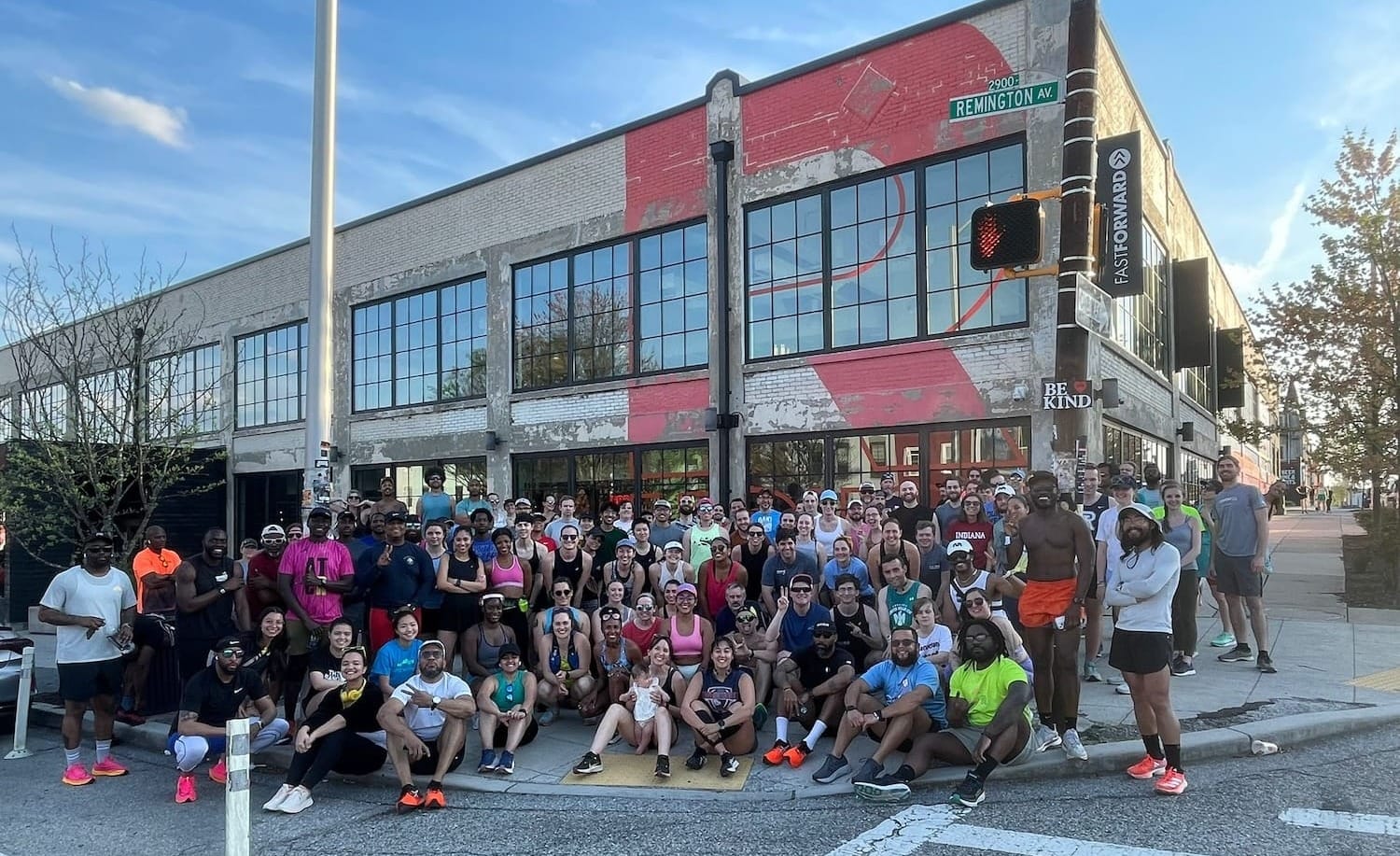
A large number of group runners are also from the LGBTQ+ community and have shared with Will that they feel safe running with and being a part of A Tribe Called Run.
“[We] want to continue to build upon that,” Will says. “Continue to make sure that people come here feeling included, knowing that it’s a safe space.”
In addition to weekly runs, group members have participated in donation drives and fundraising events, and ATCR regularly partners with local businesses and other run clubs. They’ve even taken teams to compete in The Speed Project, a 340-mile relay from Los Angeles to Las Vegas. This year was ATCR’s second year running the event.
When Will registered A Tribe Called Run as a formal business entity a few years ago, the decision was driven largely by fundraising and business partnership opportunities. But Will explains that obtaining the LLC status also keeps A Tribe Called Run accountable for delivering its best to the running community.
Below, Will shares what he’s learned about leadership in the running community, building relationships with local organizations, and formalizing a run club into a business.
How do you think about run club leadership, and what advice would you give other runners who want to start a running group?
Will Walker: Setting up a group, there’s so much that comes along with it, and you have to be adaptable — or you should be adaptable. I don’t say you have to be, because if you’re not adaptable, the people won’t come. But if you are building a group and a community for the right things, ultimately, this labor of love [turns] into a position of service.
I try to always remind our captains that it’s no longer about you, per se, once you become a leader in this group. Everything that we are doing is in service to the people who show up every day. I think that’s one of the big things that we try to instill when people show up to any of our runs, is that, ‘Hey, we’re here for the right reasons.’
Everything isn’t going to be perfect, and we are learning as we grow, but we’re trying our best and learning from it in order to continue to provide an environment that is inclusive, equitable, welcoming, happy, celebratory — all of those good things that you want to be within your run club. But also, standing up for things that are right, calling out injustices when we see it, whether it’s locally, nationally, internationally. We just want to make sure that we’re on the right side of history when it comes to doing things.
I think that when you say you are building community, you have to back it up. Or you say that you are a community, you have to back that up. And sometimes that means doing things that aren’t just about running, or including that as a part of your ethos or process and being able to stand up and support that.
If you are thinking about creating a run club, starting a run club, sometimes it’s actually bigger than running.
How do you build relationships within the local community?
Will Walker: That’s pretty much what we’ve always been about, is just connecting, whether it’s within the running community itself or the local community in Baltimore city.
We’ve partnered with a number of nonprofits to either raise food, toys, diapers for a diaper bank. We’ve done a number of fundraising opportunities that service organizations that have an immediate impact with people in the city who are a bit less fortunate.
That’s, first and foremost, one of the things that I am very proud of and happy that we do, and would love to do more of it. But also, trying to be cognizant of people in our community. You know, you don’t want to keep going back to the well to say, ‘Alright, y’all keep giving us your money to give these other people.’
When we started in the pandemic, people were out of jobs because there were layoffs and things like that. And even to now, we just don’t know the uncertainty that could be coming with — especially here in Maryland — a lot of the government layoffs that have been happening.
Just trying to be mindful, again, of not only the running community, which is the people who are actually in our groups and what they could be going through personally. But also, how do we impact and help others that are in the space, living in the streets or in the neighborhoods and the communities that we run through?
What are some ways you’ve partnered with other run clubs in Baltimore?
Will Walker: We have an idea and a concept called 4Run0 Day, but the ‘Run’ representing the ‘1’ — 410 is Baltimore’s probably most-recognized area code. So, April 10, we celebrate 4Run0 Day as a node to Baltimore. It doesn’t land on the same day every year, so depending on timing, whichever group has the major run that day…we’re like, ‘Hey, let’s partner up! The run lands on your day. Let’s connect, collaborate, build from there.’
There’s another local group, Runners Run …. We pretty much started around the same time of the year. I think they are two years or a year older than us. Finally, this year, we said, ‘You know what, let’s just celebrate our anniversaries together,’ because we usually celebrate within a week of each other.
I think that it’s a missed opportunity when you don’t take advantage of connecting with either your local run groups or your local run stores or people who are trying to make change within the run community, especially when they are close and accessible …. We’re definitely always looking to get better and trying to find other ways to connect and continue to build our community.
In addition to the growth of the group, what else prompted you to formalize ATCR as a business?
Will Walker: We had to do this, in a sense, because of opportunities that came across. If we didn’t, we would have gotten passed up on great opportunities to partner with some great organizations.
It was some of these smaller opportunities [with]…local organizations, local people reaching out to say, ‘Hey, can I donate this? Or can you guys take this? Do you guys accept this? But you need to be a nonprofit.’
That was kind of like the wake-up call …. If local organizations are knocking on our door and saying we need to have these things in order..if we want to be in this space and eventually grow to be recognized by one of these major running brands, or fuel brands, or clothing brands, we gotta step up to the plate.
It’s not necessarily a business in a sense that we were trying to be a for-profit thing, but just trying to have the paperwork in place so that when somebody does come calling, you’re ready.
What advice would you give other group leaders on operating their run club as a business?
Will Walker: Do your homework. Do your due diligence. Going through this process, it really opens your eyes as to what it takes to run a good, solid business and organization.
A lot of groups probably want to get that first contract or get a first partnership or sponsorship or deal with Nike, Adidas, Reebok, ASICS, whoever, right? You got to have your stuff in order when they come knocking.
There’s absolutely nothing wrong with looking for the brand deals with the major footwear brands or clothing brands. But sometimes, the thing that’ll get you those major brand deals is connecting and partnering with the people who are close to you and around you, and that can drive up the visibility, the network, the community, and [it] shows the profit value that your team can potentially bring to another group that may want to sponsor you one day.
Don’t look up, up, up the ladder. It’s okay to aspire to get up there and connect with those groups up there. But look at who’s at your same level, because you can grow together …. The things that you may be learning as a business, they may have some insight that can help propel you and help you go even further.
It’s just kind of like that give-and-take, and what we call in this run community the ‘community’ piece of it. You never know where you can gain some more insight and additional help and assistance along the way to building your group.
Follow @atribecalledrun on Instagram.
“I try to always remind our captains that it’s no longer about you, per se, once you become a leader in this group. Everything that we are doing is in service to the people who show up every day. I think that’s one of the big things that we try to instill when people show up to any of our runs, is that, ‘Hey, we’re here for the right reasons.’” – Will Walker