Eat for Endurance Founder Claire Shorenstein Shares Travel Nutrition Tips for Runners
Claire Shorenstein, Registered Dietitian and Board Certified Specialist in Sports Dietetics, advises runners on proper fueling strategies through her Eat for Endurance coaching business, podcast, and community. She shares why she became a nutrition expert, plus travel nutrition tips for runners.

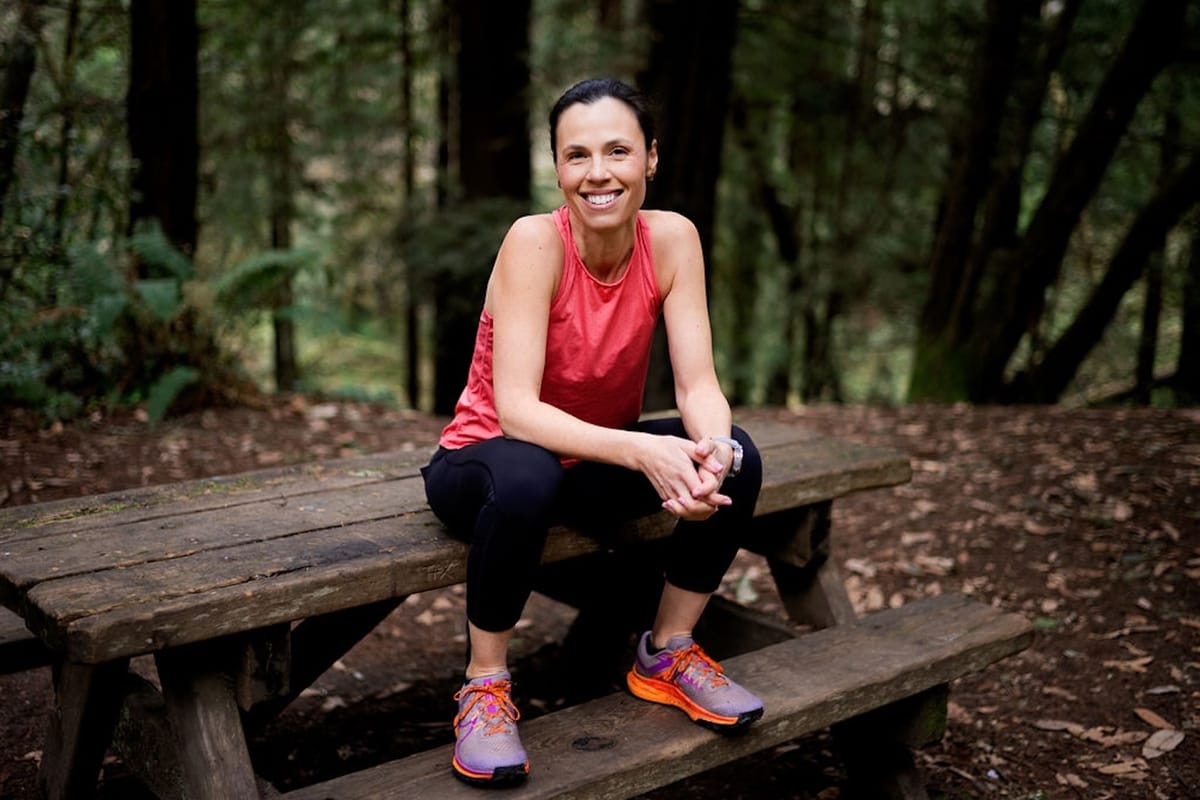
In her early 20s, Claire Shorenstein found herself living in New York City, working in the legal field at a job she hated, and in unhealthy relationships with exercise and food.
She says a “quarter-life crisis” prompted her to quit her job, solo travel across South America for the better part of a year, and then move to London.
“It was hard, but wonderful,” Claire shares about the travel experience. “It was a great way to challenge myself and break free of all these struggles I had with depression and [an] eating disorder.”
While living in London, Claire rediscovered her love for running. She dabbled in running on her high school cross-country team but ultimately turned her focus to academics and music endeavors. It was time to dive back in.
“London has an incredible running scene,” Claire explains. “I lived in Southeast London near Borough Market, and would run along the Thames in both directions. I would go to Hyde Park, and I would just run all over. They have so many running clubs.”
But her running didn’t stay within London’s city limits. Claire and her friends often took long weekend trips to cities in Europe, such as Berlin and Stockholm, where she would go on long runs to explore.
After running her first half marathon in London, Claire immediately set her sights on the marathon distance. She hired a coach to help her train for the Paris and NYC marathons. In NYC, she got her first of three Boston qualifying times.
While training for longer distances, Claire says she was keenly aware she was under-fueling and decided to learn as much as she could about proper nutrition.
That interest led her to pursue a new career as a dietitian for endurance athletes.
Claire and her husband, a fellow runner whom she met in London, moved back to New York City so she could attend NYU for a second bachelor’s degree, followed by a clinical internship and a master’s degree. She gained credentials as a Registered Dietitian (RD) and a Board Certified Specialist in Sports Dietetics (CSSD).
Today, Claire is based in Northern California, where she runs mostly on trails. She owns her own nutrition coaching business called Eat for Endurance and works with recreational endurance athletes who are busy juggling work, family, and social lives while trying to take care of themselves.

“You are not just a runner. That’s just one piece of you. Even if you’re an elite athlete, that’s still just one piece of you. You are a human being. And so we’re always treating you as a whole person,” Claire explains about her approach to nutrition coaching.
“There are just so many things that influence how we feel, how we perform, health, wellness,” Claire notes. “It’s always a fun puzzle to kind of figure it all out.”
She says athletes often seek her guidance because they’ve taken a wrong turn in their nutrition and need help getting back on track. Other times, she works with athletes who want accountability and to ensure they’re doing the right things.
Below, Claire shares how distance running set her on a path to becoming a sports dietitian, her “Eat for Endurance Podcast” and membership community, and a few travel nutrition tips for runners.
How did your running experiences lead you toward a career as a dietitian?
Claire Shorenstein: It was when I was in London, and I was just trying to figure out what I wanted to do with my life. Because I’d worked in the legal field previously, and I needed a Visa to be sponsored to be in London and working, that was the only field I could really be in. So I found myself in another job I hated, but I was paying the bills.
My passion really was running, so I was really getting into it, and I absolutely had no idea how to fuel myself. I look back, and it is so cringeworthy what I would do. I was severely under-fueling. And by this point, I didn’t have an eating disorder. I still had some lingering disordered eating. But a lot of my under-fueling was unintentional. I just didn’t know what to do.
So running those early marathons and trying to train…and just experiencing all the things that I now work with clients [on] who are under-fueling and whatnot, I was really going through a lot of it …. It was kind of a selfish thing at first…in that I wanted to learn how to fuel myself for these endurance efforts because I loved it so much and I wanted to understand it better. I just started reading online and taking a little nutrition course here and there.
I started looking into, ‘You know what? This might be an interesting field to pursue.’ And so that’s why I left London. [I] went back to the states to apply to school.
It was kind of crazy going back to school at 30. I basically [had to] get a second bachelor’s degree …. I took zero science in college. I took almost entirely art history and music, and those kinds of things …. So I did this very rigorous program at NYU at age 30, and then the internship that followed that was a clinical internship and the master’s degree.
How has your nutrition coaching business, Eat for Endurance, grown over the years?
Claire Shorenstein: No one teaches you, when you’re getting your nutrition degree, how to run a business, how to run a private practice, what to do, how to be business-savvy …. It’s such a steep learning curve, so I really had to learn everything the hard way.
My business, for the longest time, was just, ‘Hey, I’m going to see one-to-one clients.’ And then, maybe I would give little free talks to running groups or whatever.
A little over five years ago is when I started my podcast …. I was on a run one day on the East River in New York City, and you know, podcasts were very popular, but they weren’t like they are now. I was thinking, I’m listening to all these athletes and other people share their story or talk about their training or whatever, and they’re really not sharing that much about their nutrition …. It would be really cool to learn…specifically about someone’s life and how it all unfolds, but from this nutrition perspective.
Also about this time, I was starting to make some more connections in the trail and ultrarunning space and had been to some conferences and met some really amazing athletes. I was able to really leverage those connections, and those were many of my first guests …. I got Courtney Dauwalter, I got Maggie Guterl, I got Dave Horton — a bunch of these people who are just some of the legends on there to kick things off.
It felt very vulnerable, and I was really afraid at first. Now it’s just such a fun thing because I love connecting with people. I love getting to know them. I love sharing stories with people. And it’s really grown …. I have this really dedicated community that enjoys my show.
It’s only been the last couple years that I’ve started to branch out into other things …. The membership is brand new. That was just started in January. A year ago, I launched a self-paced course, and I started putting out lots of freebies. I started a blog, and I started a newsletter …. There are a lot of ways people can work with me now.
What does your nutrition coaching membership community look like?
Claire Shorenstein: The membership is so much fun. It’s small, but it’s a really, really awesome group …. We have a private Slack channel. The idea is really just, you drop in, you can ask your questions, you can show me a picture of what’s going on. I give you advice. It’s not one-to-one counseling. That’s the clear line …. But I’m answering their questions enough that it is helpful. And they can ask me whatever…[such as] ‘I’m struggling with my iron levels. Can you speak about this a little bit?’
We have monthly live calls, so I ask everybody, ‘What do you guys want me to talk about this month? Here are some options.’ They vote on it, or they suggest things. We’re going to probably end up doing some more formal presentations, and then intersperse some Q&A time where we can all just talk through stuff.
Then there’s a lot of community stuff. We now have enough people where we have a weekly wins channel …. [They’re] cheering each other on. Or someone shares a recipe, and then someone’s like, ‘Oh, I made this, and this is the adjustment I made, and this was great.’
It’s not just me interacting, which is the beauty of it now …. It’s grown enough now that everyone’s interacting with each other, which is really cool.
What are your top travel nutrition tips for runners?
Claire Shorenstein: Across the board, the biggest thing I see, generally speaking…is just not eating enough or not eating consistently. Then you throw travel into the mix, and if you’re not really on top of it, and you haven’t planned in advance — or thought about where you’re going to eat your meals, or can you even get snacks, or does the plane have food — then you’re really not going to be in a good spot.
I’d say the first thing to keep in mind is: Do I have snacks that I can bring with me that are really easy? Things that I enjoy and that meet my fueling goals?
If you’re traveling for fun but you hope to get some runs in and other workouts, let’s say there’s a gym in the hotel or you want to run outside, cool. Do you need a handheld? Do you need a hydration vest? Do you need sports nutrition? What do you need in order to do what you hope to do successfully?
We go to Hawaii every June. I’m never doing anything super long, and normally for a 3- or 4-mile run, I wouldn’t bring a bottle. But it’s hot …. I now know, I’m bringing electrolytes. It’s a short run, but I still need hydration.
Check out Claire’s free travel snack guide and checklist.
What tips do you usually give runners on what to eat the night before a race when away from home?
Claire Shorenstein: If you’re specifically traveling to a race, are you on a plane when you should be carb-loading? Did you make your dinner reservations? Do you have a sense of where you’re going to eat? Are you staying in a hotel versus an Airbnb?
You really have to plan that stuff out so carefully.
There’s not one cuisine that you have to do [the night before a race]. Everyone always thinks about pasta, but there are other options. A lot of people choose sushi. Sushi can absolutely fit. Or some sort of rice-based thing, or even certain pizzas, potentially.
The main thing to think about is that you want mostly carbs …. You do not need vegetables. Those are very optional, and you can leave those behind.
You don’t want to go too heavy on the fat. If you’re going out to eat, the thing to keep in mind is, if something is too heavy, whether it’s a sauce or you get a pizza with tons of toppings and meats and whatever, there’s usually going to be a lot of fat in there. And not only is that very heavy, but it’s displacing the carbs that you’re supposed to be eating.
You really want to save your room for the carbohydrates. You can have a little bit of protein. That’s fine. But we want to go for a leaner source of a protein.
You want to get salt in there, so any salty foods are good.
Check out different restaurants and see what they have available and what makes the most sense for you.
Follow @eatforendurance on Instagram.
“My passion really was running, so I was really getting into it, and I absolutely had no idea how to fuel myself. I look back and it is so cringeworthy what I would do. I was severely under-fueling …. I wanted to learn how to fuel myself for these endurance efforts because I loved it so much and I wanted to understand it better.” – Claire Shorenstein