Free to Move Honors Alyssa Lokits by Empowering Women to Move with Confidence
Family and friends of Alyssa Lokits are honoring her memory through a nonprofit that aims to provide safety education and empower women to live actively without fear.
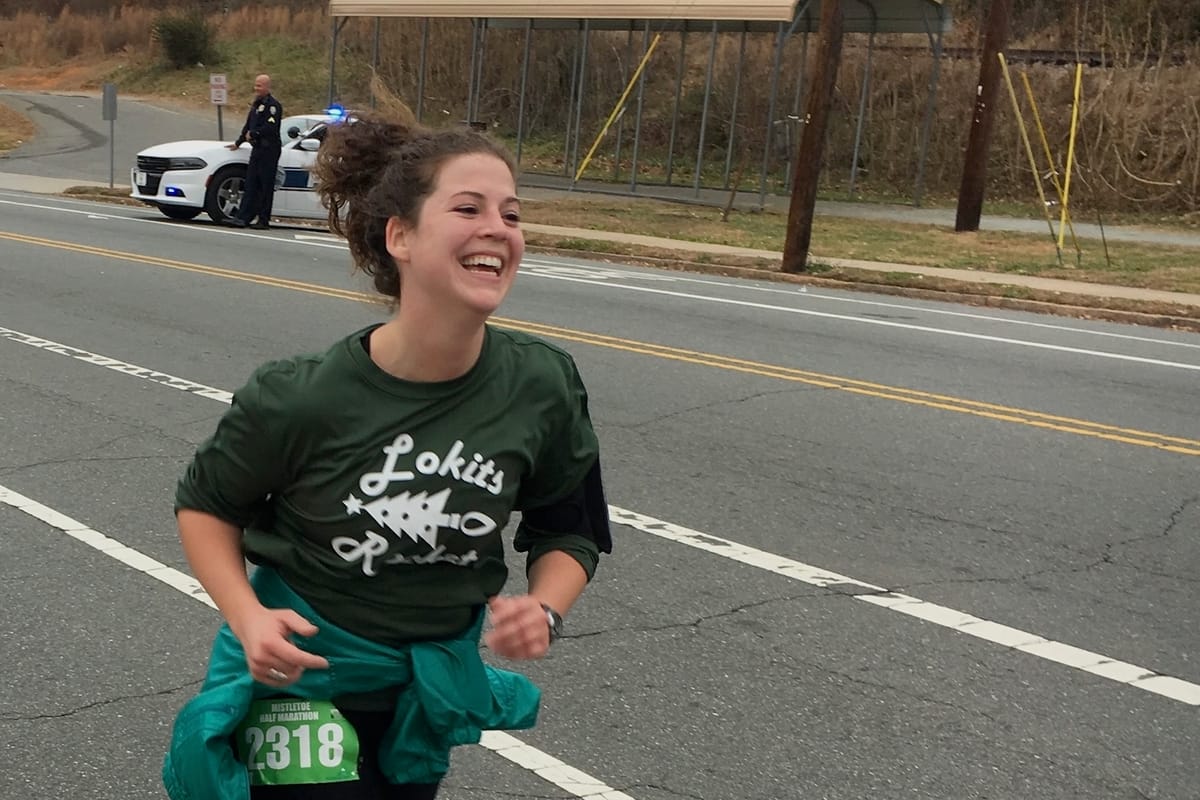
Adventurous. Incredibly intelligent. Empowering. Fully present.
The most badass of all badasses.
These are among the ways family and friends describe Alyssa Lokits.
“She did all the things. She loved all the things. She would try [everything],” shares Bethany Matheson, best friends with Alyssa since childhood. “She pushed me to be more adventurous than I would have ever been naturally.”
Abby Lokits, Alyssa’s sister-in-law, adds, “She instilled that belief in everyone that she encountered — that you were capable, that you were strong, that you could do anything that you felt like you wanted to do.”
After a horrific act of violence while Alyssa was running on a Nashville greenway in broad daylight prematurely took her from the world, those closest to her are carrying on her memory through a nonprofit organization called Free to Move, which launched in January.
Abby says she came to the realization, shortly after Alyssa’s death last October, that conversations about running safety need to be continuous — not just when a tragic event occurs.
Driven to honor Alyssa, she joined forces with Alyssa’s friends Calea Davis, who has a background in nonprofit management, and Bethany, a trauma therapist, to develop the vision for Free to Move, round out a board of directors, and obtain nonprofit status.
“She was always very passionate and involved in protecting women and providing safe spaces for them,” Calea shares about Alyssa.
The two friends, with Bethany, served on the board of a nonprofit that supports women and children fleeing domestic violence.
“I think that this is what she would be doing if it was one of us, or it happened to somebody else,” Calea adds.
Free to Move’s programming will focus on safety education and events that empower confidence and encourage women to live active lives without fear.
“Running is a huge piece of it, and it’s a piece of the story of how we lost her, too,” Bethany shares about the organization’s focus. “But it’s also free to do any kind of movement because that was a huge part of who she was as a person.”
A dancer, yogi, adventure-seeker, traveler, neuroscientist, and fluent in five languages, no endeavor seemed off the table for Alyssa, Abby shares. She notes that Alyssa would not have wanted what happened to her to scare or prevent others from living their lives to the fullest.
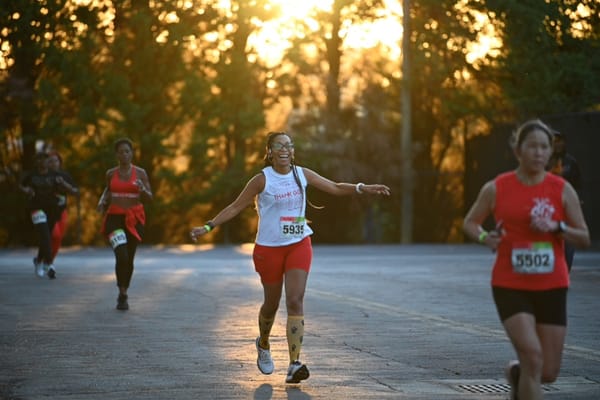
Free to Move’s first fundraising event is the 5K Run for Alyssa in Nashville, which welcomes virtual participants. The run is on March 8, coinciding with International Women’s Day and the weekend Alyssa would have celebrated her 35th birthday.
Below, Abby, Calea, and Bethany share more about the foundation, the 5K Run for Alyssa, and the life-changing relationships they had with their sister and friend.
How did the idea for the Free to Move nonprofit organization emerge?
Abby Lokits: I had the very impulsive…middle-of-the-night idea that we needed to run a marathon in her honor at this event called the Every Woman’s Marathon. And so, I rallied my brother-in-law and sister-in-law, after emailing the race director and asking if we could be a part of the event despite it being closed, and just said, ‘Hey, can we run for our sister?’
We ran in the marathon for her. And then, right after that, I went to The Running Event conference in Austin, where I spoke on a panel surrounding women’s safety and shared Alyssa’s story there. Then I went and talked to dozens of brands and companies to say, ‘Hey, this needs to change. Something needs to happen. We need to be prioritizing this conversation.’
For some reason, it seems that conversations just seem to kind of fizzle out after events happen, and we can’t let that keep happening. Alyssa was too remarkable of a person to let that happen, and I know without a doubt that she would be doing this right here, right now, if she was here.
I talked with, gosh, dozens of people about, ‘Okay, what do we need to do? How do we need to go from here? Where’s the gap?’ Because it’s very clear there was one.
There are a lot of companies — huge companies — that prioritize year-long campaigns or mission moments devoted to this cause. But then those all end up dissolving eventually. We need to have companies that are united across brands, coming together to support and prioritize this.
I went back after the conference and started kind of going back to the drawing board, talking to my husband more about what needed to be done. I don’t even remember who suggested [Calea and Bethany] to me…but they were like, ‘Hey, Calea and Bethany are badass women. You should get connected with them. They know all about this stuff. They know how to get stuff done.’
So, I met with them, and just kind of pitched the idea to them that, ‘Hey, we need to provide this service to communities. We need to be providing equitable access to resources for women — and men, for all individuals — surrounding this and getting larger companies to prioritize this as well.’
Why does Free to Move feel like the right way to honor Alyssa and your relationship with her?
Calea Davis: I had a conversation with Alyssa about a year ago, when the lottery was like a billion dollars, one of those times. And we had gone out and bought lottery tickets, on a whim, just for super fun. We were talking about it, and I’m like, ‘Okay…if you win, I will run your foundation for you. If you win this, I will help you set up something and make an impact in the world, and then you can just, you know, be a billionaire or whatever, and I’ll run your foundation.’
Alyssa was the most badass of all the badasses. She was the friend that you brag about knowing. She was the one who knew five languages and was always traveling and just squeezed so much out of life.
She was the most present person that I’ve ever met. I never saw her phone out when I was speaking with her. She was always with you in that conversation. And she was the person that we would call to celebrate something.
She was very accessible as a person, and I think that’s something that we want to be as a nonprofit.
We have a really great board that we’ve put together of just really passionate, incredible individuals from around the country. A lot of who knew Alyssa, some who didn’t — [they] were just really passionate about women’s safety while exercising and being active.
It’s just been a huge privilege to kind of walk into it and be part of it …. At the end of the day, if we help one person, if we help one woman feel more safe or to get out of a bad situation, it’s worth it.
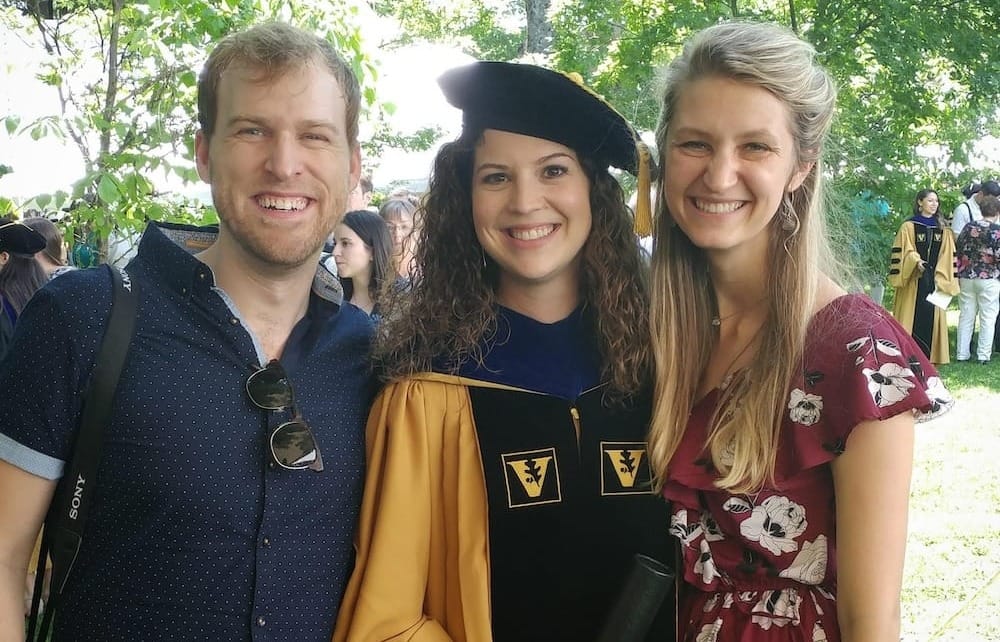
Bethany Matheson: Alyssa and I took self-defense classes. We took Krav Maga together for years. So, I mean, she knew her stuff, and I know that she knew what to do, and that she did everything that she could.
There are a lot of women who don’t have access to that, and I’m very passionate about the education piece of what we want to do because I think that there are physiological things when you are scared and overwhelmed. There are things that are happening in your body. You don’t necessarily have a choice over whether your body is fighting, or running, or freezing. Your body does what it has to do.
There are a lot of things that we can do to help women just be more in touch with their bodies…to feel like they have a choice and can take action. So, I’m excited about that. We’ve got some people on the board that are going to be really phenomenal resources for that.
Alyssa and I had been doing business stuff together for a long time, and we had a lot of plans to do business stuff together. The idea of not continuing to do something for her, about her, is just impossible.
This, for all of us, felt like a good fit. This felt like it represented who she was, things that she cared about, things she would have done if the situation were reversed.
What are some of the ways you hope to make a difference through Free to Move?
Bethany Matheson: This has happened fast, and so I don’t think we’ve had an opportunity to dive deep into the nuts and bolts of what it will look like to conceptually distill this down. I think that our board is well-equipped to offer a lot around some of these particular kinds of dreams that we have. I think educational videos will be very useful and accessible.
I think, sometimes, we assume that lots of people have had access to some basic concepts around safety or self-defense or self-awareness or body awareness when they have not had access to that. And so even just starting from square one and saying, ‘What does it even mean to have body awareness, or to be able to trust your instincts in a situation, or to be able to have some simple steps you could take physically or things you could say?’ Really distilling down to kind of the bare bones, and then going from there is what I’ve had in my head.
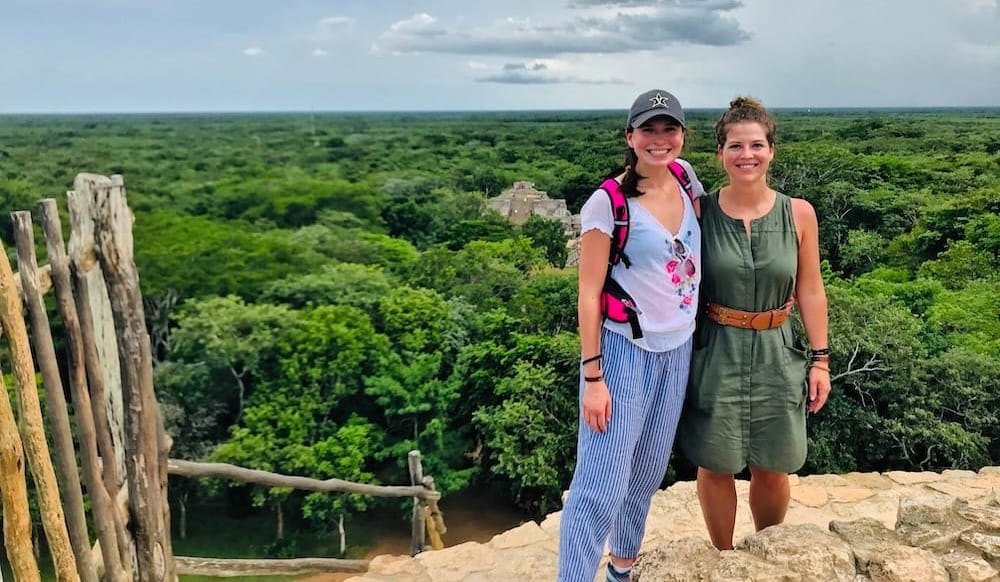
Calea Davis: Some of the pillars that we’ve talked about doing…[include] connecting some of these bigger companies to smaller running groups and smaller groups on the ground, providing an educational component, making it accessible to everyone around safety, and really empowering some of these new initiatives that are coming out around women’s safety that Abby has already been connecting with to help spread the word about ways that people can be safer while exercising and moving.
At the end of the day, our vision, our mission, is to create a world where women can be safe and that we don’t have to be afraid when we take a walk or be afraid when we go running at 4:30 in the afternoon. You know…helping to create a world where things like this don’t happen anymore. That’s what we’re here for.
“We envision a world where every woman moves confidently, free to pursue her ambitions without fear — supported by groundbreaking safety innovations, empowering education, and a strong, united community.”
– Free to Move’s vision statement
How is the 5K Run for Alyssa connected to the nonprofit, and what do you hope it brings to the Nashville community?
Abby Lokits: The 5K will be a fundraising event essentially for the nonprofit. Our goal was to try to get an organization together before we launched this event so that we could potentially fund future community programs and educational opportunities with the proceeds from the event.
A very core mission, core value…[the] goal throughout all of this has been to not incite fear into our community …. It’s good to be aware…and it’s good to learn about that awareness and understand that safety needs to be a priority. But I think there’s a big difference between that and then fear-mongering.
Alyssa was not afraid of anything. So I want to emulate that by making this more about empowerment and more about strengthening, about uniting the Nashville community and communities across the nation.
Nashville was very shaken as a community by what happened, especially with the circumstances of the event, and so bringing people together in a way that feels empowering and feels hopeful, I think is important for Nashville and important for our family and Alyssa’s friends, too.
We have had already an incredible outpouring of support …. I had a woman from the UK reach out and ask if she could run in the race virtually. Absolutely. Alyssa loved to travel. And to know that people are thinking of her all over the world is phenomenal.
Follow @wearefreetomove on Instagram.
“For some reason, it seems that conversations just seem to kind of fizzle out after events happen, and we can’t let that keep happening. Alyssa was too remarkable of a person to let that happen, and I know without a doubt that she would be doing this right here, right now, if she was here.” – Abby Lokits