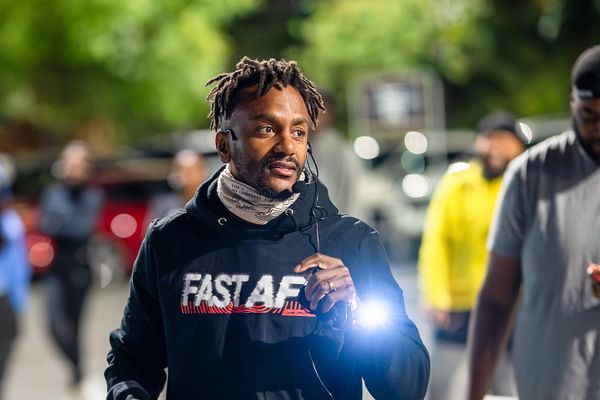
‘Lactic Acid Podcast’ Host Dominique Smith on Leveraging the Interview to Learn About Runners Beyond Their Performance
Realizing the value in creating a platform where runners could share who they are beyond their athletic accomplishments, Sports Journalist Dominique Smith launched the “Lactic Acid Podcast,” with topics ranging from fried chicken to oldies music.

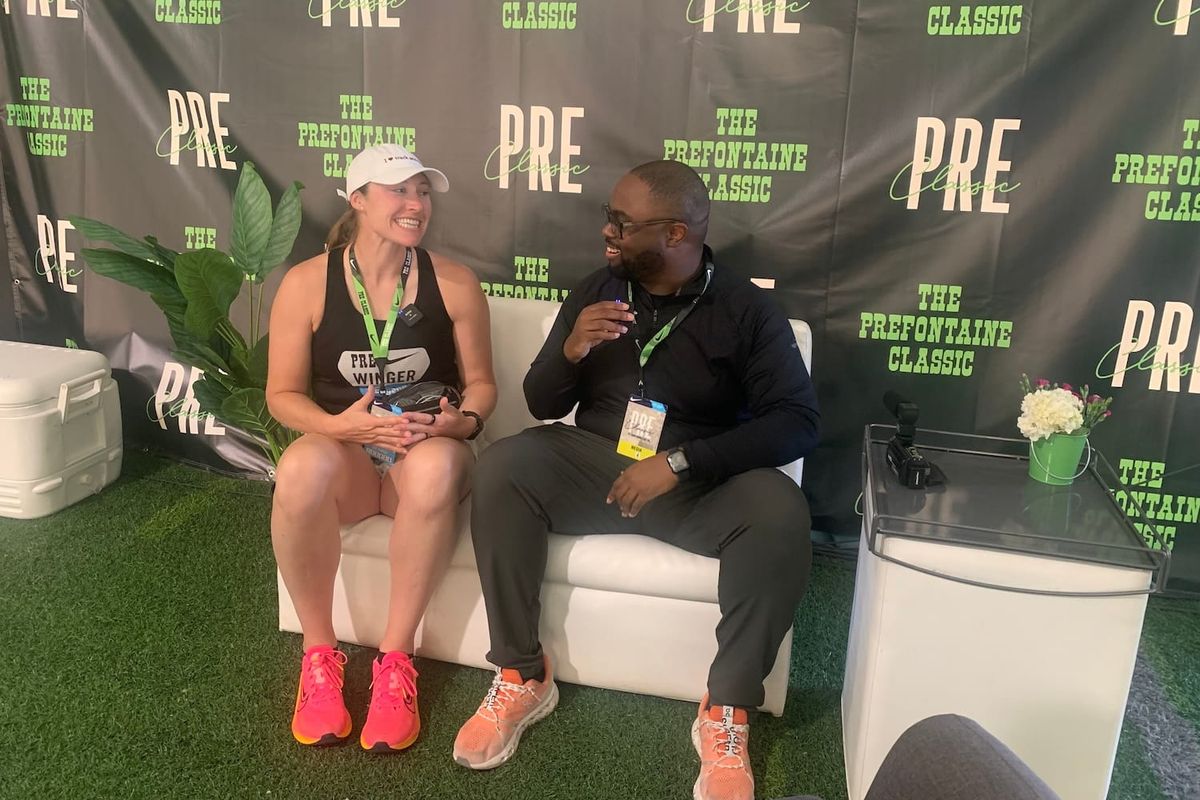
If you spot Dominique Smith out on a run in his hometown of Orlando, Florida, tunes from The Temptations, Aretha Franklin, or Earth, Wind & Fire are likely flowing through his earbuds. Unless it’s nearing the holiday season, when Christmas playlists are on repeat.
“It’s music that you probably shouldn’t run to,” Dominique shares. “But for whatever reason, it’s so relaxing.”
From oldies to smooth jazz to gospel, the selection for his run always fits the mood. And Dominique often takes the topic of music into his conversations with guests during recordings for his five-year-old “Lactic Acid Podcast.”
A journalism graduate and sports reporter, Dominique launched the podcast as a way to get to know runners beyond their running accomplishments and to bring lighthearted entertainment and laughter to listeners.
“We’re going to talk about your profession, but you get asked the same questions over and over. So, let’s have some fun,” Dominique explains. “We’ll talk about ’90s Nickelodeon. We’ll talk about food. Some people want to talk about religion.”
After he graduated college with a journalism degree, Dominique held positions as a metro reporter for Florida Runners and worked in the sports department for the Orlando Sentinel. A job as a recruiting analyst for Ohio State introduced him to podcast production. And while in that role, Dominique began working part-time at a local running specialty store.
The idea to start his own running podcast was nothing short of a divine message. It provided him a path to stay involved in sports journalism and, at the same time, share stories in ways that showcase more of an interviewee’s personality and voice.
“I can’t put an eight-sentence quote in a journalist story. But a podcast, I don’t have to edit anything,” Dominique notes.
Finding a Home in Running Media
Working on the launch of the “Lactic Acid Podcast,” Dominique found inspiration from other running podcast and YouTube hosts, including Aaron and Joshua Potts of “2 Black Runners” and Carrie Tollefson of the “C Tolle Run” YouTube show.
During a media fellowship program Dominique participated in, he was mentored by Ali Feller, host of “Ali on the Run.”
“She was one of the people who took a chance on me early on and came on my podcast, so I always have mad love and respect for her,” Dominique shares.
In the early months of recording for the podcast, Dominique interviewed runners he had existing connections with from his sports reporting, fellowship, and running store experiences. His first guest was Adair Lyden, a former colleague at Florida Runners.
“I reached out and she gave me a chance, and I just never forgot that. She’s one of my favorite editors,” Dominique shares. “It was important for me to have her on the show.”
Since then, Dominique has interviewed Allie Ostrander about growing up in Alaska, her high school basketball career, comparison culture, and waffle charcuterie boards. He’s chatted with ESPN Sports Commentator John Anderson about track and field coverage and Motown and ’80s music. And Jess McClain has joined the podcast to share why she finds joy in uplifting others and why the millennial era is the best.
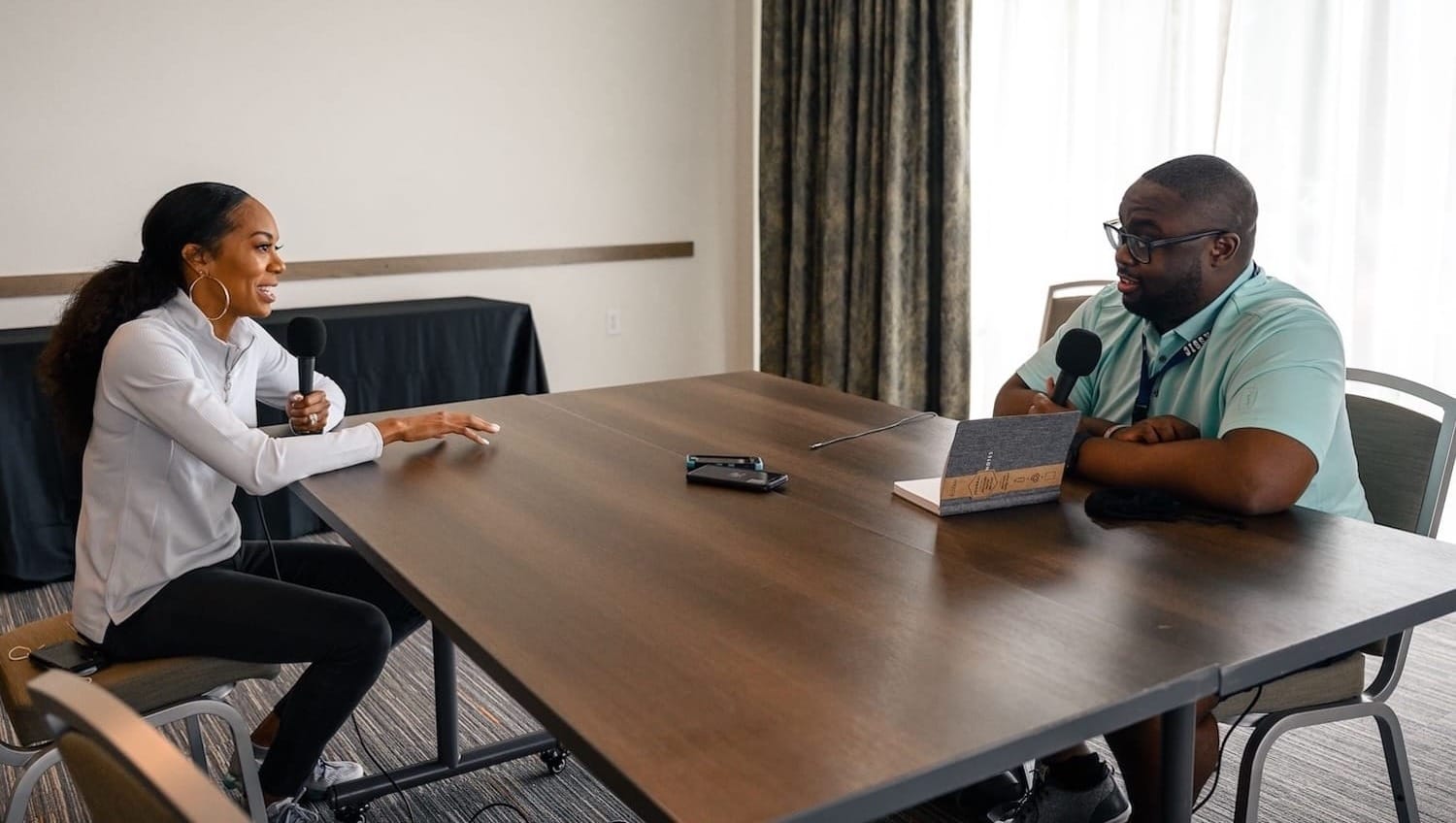
As Dominique became more immersed in the running media space, new doors began to open. His byline has appeared on articles in publications such as Runner’s World, RUN, and Running Insight. The latter, a business-to-business publication for the run retail industry, bridges his journalism and run specialty experience and has become a favorite outlet to report for.
“I feel like I found a home in this run specialty retail brand niche,” Dominique says. “It’s something that I didn’t know that I loved, but I love the stuff that we’re doing, telling people stories about retailers and brands.”
Whether reporting on the run retail business or interviewing runners for the podcast, his goal is to make a difference in the running space — to make listeners laugh, inspire someone through the stories shared, or help connect people to resources they need.
“To be honest with you, the goal is to help people,” Dominique notes. “I feel like, if you’ve been blessed with the platform, you need to use it for good.”
Below, Dominique shares more about his sports journalism career path, how the idea for the podcast emerged, the ways podcasting and feature writing complement one another, and one big lesson he’s learned in navigating this career field.
When did you know you wanted to be a sports journalist?
Dominique Smith: I’ve known I wanted to be a journalist since I was in the third grade. My mom was actually a journalist for the Orlando Sentinel in the late ’70s, and so for me, that was always the goal.
I did graduate from the University of Central Florida. My major was journalism. My minor was creative writing. I went into that and always knew I wanted to do sports journalism. But it’s interesting, because the journey — there were some setbacks. But the setbacks were perfect because it kind of helped shape things that I wanted to do.
For example, I was in college and I got into investigative journalism. I was blessed enough to be a Dow Jones scholar and attend the IRE — it’s the International Reporters and Editors conference. We did an independent study, a group of us, as part of our course load. I was a beat reporter for the Orlando Sentinel, where my mom worked, but we were covering politics. I covered the city of Casselberry. And I remember, truth be told, I hated it. There’s so much that goes on in politics that just drains you. There’s so much behind-the-scenes stuff, and it wore me out.
I remember praying, and God guided me back: You need to do sports. In my senior year, I was the assistant sports editor and was able to channel that …. After college, I worked for Florida Runners, which is a MileSplit affiliate. But more so, I worked on the sports desk at the Orlando Sentinel in the original building, which is where my mom worked, too. So it was kind of cool to see how all that came together.
What do you enjoy about sports journalism?
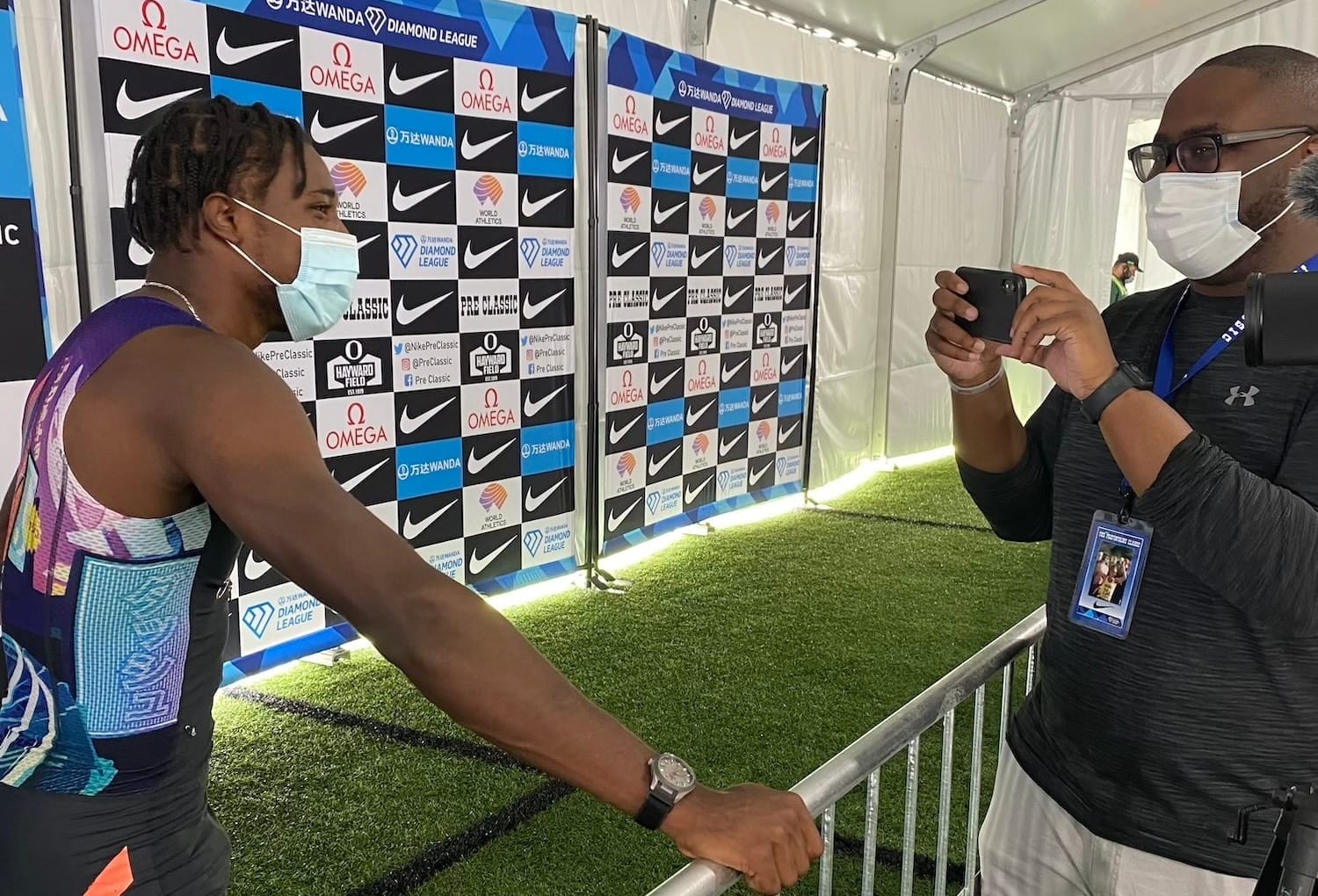
Dominique Smith: I love feature writing and I love telling people stories. I don’t know if it’s just what I’m meant to do. And I don’t know if the compassion comes from having been an athlete in a small form. But there’s just something that drew me towards that as far as getting a chance to see athletes in a different light, getting a chance to see them outside of their profession, and being able to help them elevate their brand.
When I was covering recruiting for an Ohio State website, I remember I made this podcast. It was called “Beyond the Shoe.” I would interview some of the high school athletes that Ohio State was really looking at, and they were really interested. But I never asked them the questions that they would get asked by the reporters, because they just want to know, ‘Okay, when are you going to sign with Ohio State?’
We would talk about welding, we talked about video games, cartoons, food, all that stuff, and the responses were so positive. They said, ‘I have 50 people reaching out to me to ask the same question…but it felt good that somebody actually took the time to get to know me more than an athlete.’ It made them feel valued.
That, over time, kind of enhanced [my] work — really trying to make a difference in that way to help athletes, brands, businesses, and even journalists covering the sport.
How did the idea for ‘Lactic Acid Podcast’ come together?
Dominique Smith: There was a program called the Magic Boost program that was brought to life by Hayward Magic, and so it was, in some ways, like a fellowship. It was eight weeks or so of intensive training. They picked 16 storytellers, journalists, photographers, videographers, graphic design artists. I was one of the 16, and I was a part of the inaugural class.
We went to The Prefontaine Classic in Eugene, and we received credentials, covered the press conference, interviewed athletes, all that stuff. We were in the mix zone, and I remember leaving Eugene just knowing this was the direction I needed to go. This is what I’m meant to do.
I was on the plane. Shout out to Delta because Delta has the screen so you know exactly where you [are], and I was over Denver. I’m just having this conversation with God. ‘I gotta get back into this. Something’s leading me to do it.’ That’s when he brought about the idea of “Lactic Acid.”
Everything was put into place as far as a game plan by the time I got to Jacksonville a few hours later.
What do you get to deliver through a podcast that’s different from a written article, and how do the media types complement one another?
Dominique Smith: In a journalist story…you have a word count. I have to use your words and paint a picture so readers can get an understanding of what the subject is talking about …. It’s an authentic, written, creative way to tell a story about somebody.
When you do a podcast, you get that full authentic emotion because you hear their voice …. You can hear the joy. You can hear the pain. You can hear everything in between. So, it’s just a different way of doing it.
I think the goal is the same, and it is to make a positive impact and to tell the best story possible. I think the way you go about it, obviously, is different because there are rules of journalism that you cannot cross. Podcasting, you have a little bit more freedom.
I’m not gonna sit there and talk about food the entire time in a written story, because there are angles that we need. We have information that we need to know. We have things we need to talk about. But I do think, in a way, they correlate and they correlate for the better, because it’s just all about trust.
They have to trust that I got their back and have their best interest at heart. I’m going to tell their story in a way that’s going to make them proud. But also, I’m going to tell the truth, and the truth is not going to be any opinion.
I have this phrase on the podcast that I got from “Diners, Drive-Ins and Dives.” I always say, ‘All thriller, no filler.’ That’s how we roll. And that’s kind of how the approach is to journalism. It’s truthful, it’s impactful, but it’s going to be your story told in the most appropriate way possible.
What’s the biggest lesson you’ve learned in trying to build a career in sports journalism?
Dominique Smith: It pays to be patient. I had to learn so much, and the setbacks taught me patience. It’s something I have to remind myself of when I get frustrated, when I feel like the career’s not going the way that I thought it would or I think it should.
My faith is such a big part of the journey. I have to trust in God’s plan that it’s all lining up. And it’s cool to see those little victories — ‘Okay, I’m glad this happened because if this didn’t happen, then I wouldn’t have been able to do this.’
I think being able to find joy in the journey has been a big thing, and it’s allowed me to meet the right people and to learn lessons, and to put myself in a position that, when it’s time for the opportunity to come, I’m ready for it.
Follow @LacticAcidPodcast on Instagram.
“I love feature writing and I love telling people stories. I don’t know if it’s just what I’m meant to do. And I don’t know if the compassion comes from having been an athlete in a small form. But there’s just something that drew me towards that as far as getting a chance to see athletes in a different light, getting a chance to see them outside of their profession, and being able to help them elevate their brand.” – Dominique Smith