Olympian Shannon Rowbury on Breaking Barriers in Women’s Running with Policy and Resources
How Shannon Rowbury’s pregnancy while running for Nike led her down two avenues of advocating for women runners. “If you give me lemons, I’ll make the best darn lemonade you’ve ever tasted.”

Growing up in the ’80s and ’90s, football, baseball, and basketball were among the sports most often broadcast on television in the U.S. Unsurprisingly, dreams of being a professional athlete were usually held by boys.
“I thought sports were very masculine. There weren’t really sports role models when I was growing up,” Shannon Rowbury shares. “My relationship with sports was pretty nonexistent.”
But Shannon gravitated toward the competition and enjoyed high-pressure environments. At a young age, she became an Irish dancer.
“I’d stand on stage in front of three judges watching my every move. And at the end, I’d be scored, and I could see where I ranked,” she says. “I could go back to practice and work on new things and try to come back better the next time.”
In high school, admittedly out of after-school boredom, she joined the cross country and track teams and quickly excelled. By her junior year, she won Outdoor Nationals in the 800 meters, which resulted in becoming a top collegiate recruit and receiving invitations to junior elite running development camps.
“I was there with some female athletes that went on to be some of the best in the country, like Shalane Flanagan and Alice Schmidt and Sara Slattery,” Shannon shares. “Molly Huddle, Des Linden — we were all in these camps together.”
It was while running at Duke University, where she won the NCAA Indoor Championships in the mile, that qualifying for the Olympics became a realistic prospect.
Thriving on Big Stadium Energy
After graduating from college in 2007, Shannon’s journey as a professional runner began, with the 1500 meters as her main event. She signed with Nike and went on to compete in five World Championships and three Summer Olympics.
Shannon broke her first American record in the 2-mile in 2014. Then in 2015, at the Herculis Monaco international meet, she ran 3:56.29 in the 1500, breaking an American record that had stood since before she was born.
“Something like the 15, I mean, we’re running it all the time, major championships, and yet that record hadn’t been broken,” Shannon explains. “It was kind of mind-blowing for me to actually achieve that.”
She says the only other experiences that compared to breaking that record were competing on the Olympic stage. Shannon ran the 1500 at the 2008, 2012, and 2016 Summer Olympics, with London in 2012 her most memorable.
“The British fans are so knowledgeable about track and field, and they were really running the race with us — their energy rose and fell based on what was happening in the race itself. That kind of connectivity with 80,000 fans all focused on this one race happening at the same time,” Shannon says. “It was so cool to have that shared experience.”
She placed sixth in the 1500 finals in London, the best Olympic finish by an American woman. But after several women ahead of her were later disqualified for doping, it was determined that Shannon earned the bronze medal.
A Pregnancy That Led to Advocacy for Women in Sport
When Shannon became pregnant with her first child in 2017, her sponsor, Nike, notified her of its right to cut her contract nearly in half if she didn’t maintain a top-five ranking in the U.S., which came with the risk of losing her health insurance. The unrealistic expectation to be top-ranked throughout pregnancy and postpartum resulted in a grim understanding of the disadvantages women face as professional athletes in the sport.
The experience motivated Shannon to find a better solution for women athletes, their sponsoring companies, and the athletic governing body.
Shannon connected with Rose Monday, USA Track and Field’s Women’s Development Chair, and they worked together to create a USATF maternity policy that ensured female athletes would keep their health insurance through pregnancy and for 12 months postpartum. That policy was approved unanimously in December 2018.
Just five months later, The New York Times published an article titled, “Nike Told Me to Dream Crazy, Until I Wanted a Baby.” The article spoke to the maternity penalties for women athletes, especially runners sponsored by Nike, and featured an interview with Olympian Kara Goucher.
“I’m really proud of this effort to try to make some positive change in a system that desperately needed to be updated to the current century,” Shannon shares about the first-of-its-kind maternity policy. “Those small acts can lead to bigger and bigger things as that snowball builds momentum.”
Finding a role as an advocate for women’s sports policies wasn’t the only initiative Shannon’s first pregnancy inspired, however.
At the suggestion of her coach, Pete Julian, Shannon began working with Jessica Dorrington, a physical therapist certified in orthopedics and a pelvic floor expert, to guide her through training during pregnancy and postpartum.
The two quickly became friends and frequently chatted about the lack of information available to women regarding exercise during pregnancy and postpartum. They shared the same motivation to write a book, yet finding a publisher that understood the value in their idea was a challenge.
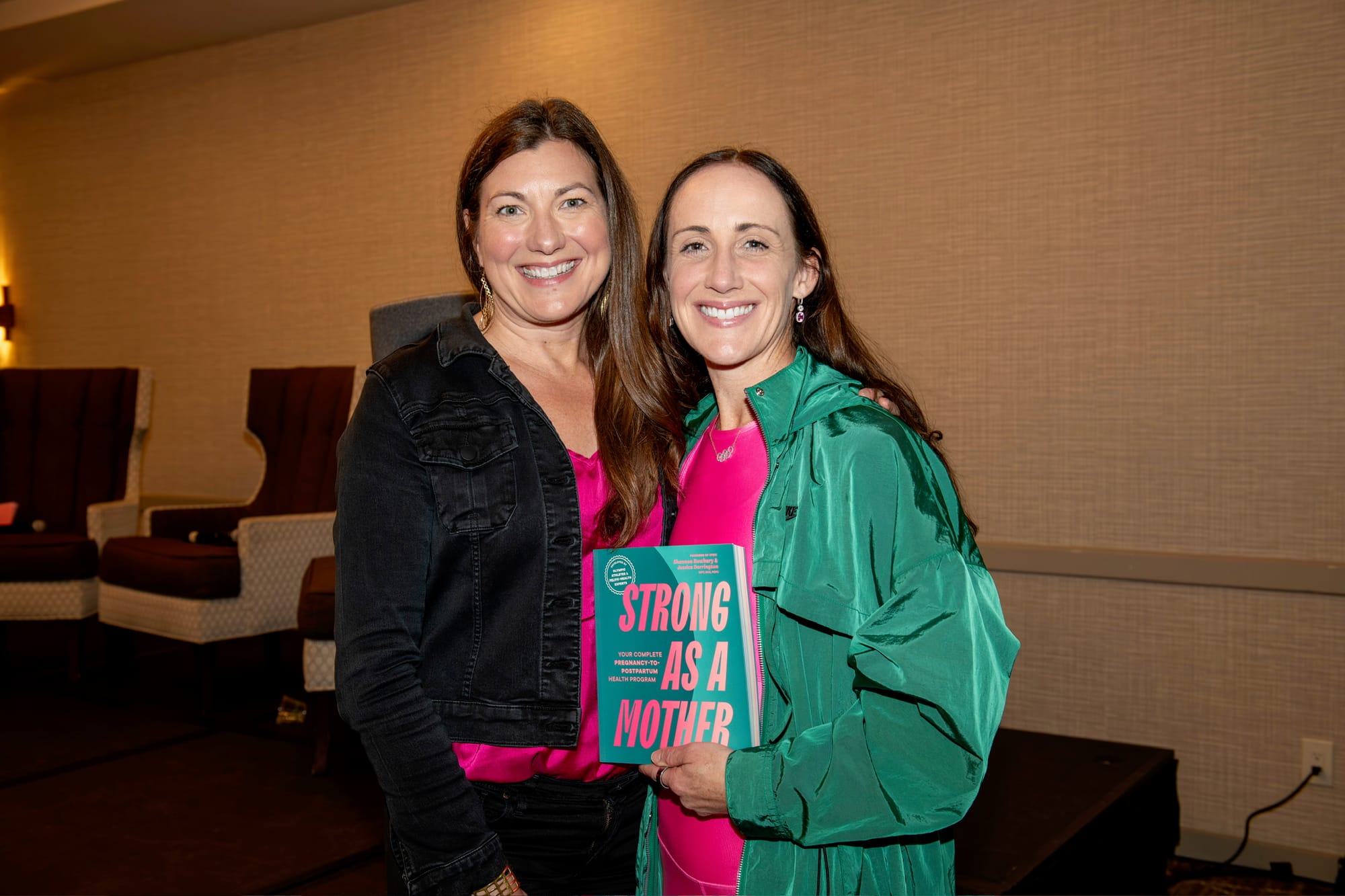
Over the years, Shannon and Jess finished the manuscript and even formatted the pages in Canva while they considered self-publishing. The two finally connected with a female literary agent and an editor who was a collegiate athlete and had just had her first child. With their help, Strong as a Mother was published in February through Sasquatch Books.
New Relationships with Running and the Industry
In Shannon’s post-professional running career, staying involved in the sport she loves has been the priority, both as a runner and in her work.
“Running had been my job, so it took me a while to reestablish a relationship with running that was based on me doing it because I wanted to,” she explains.
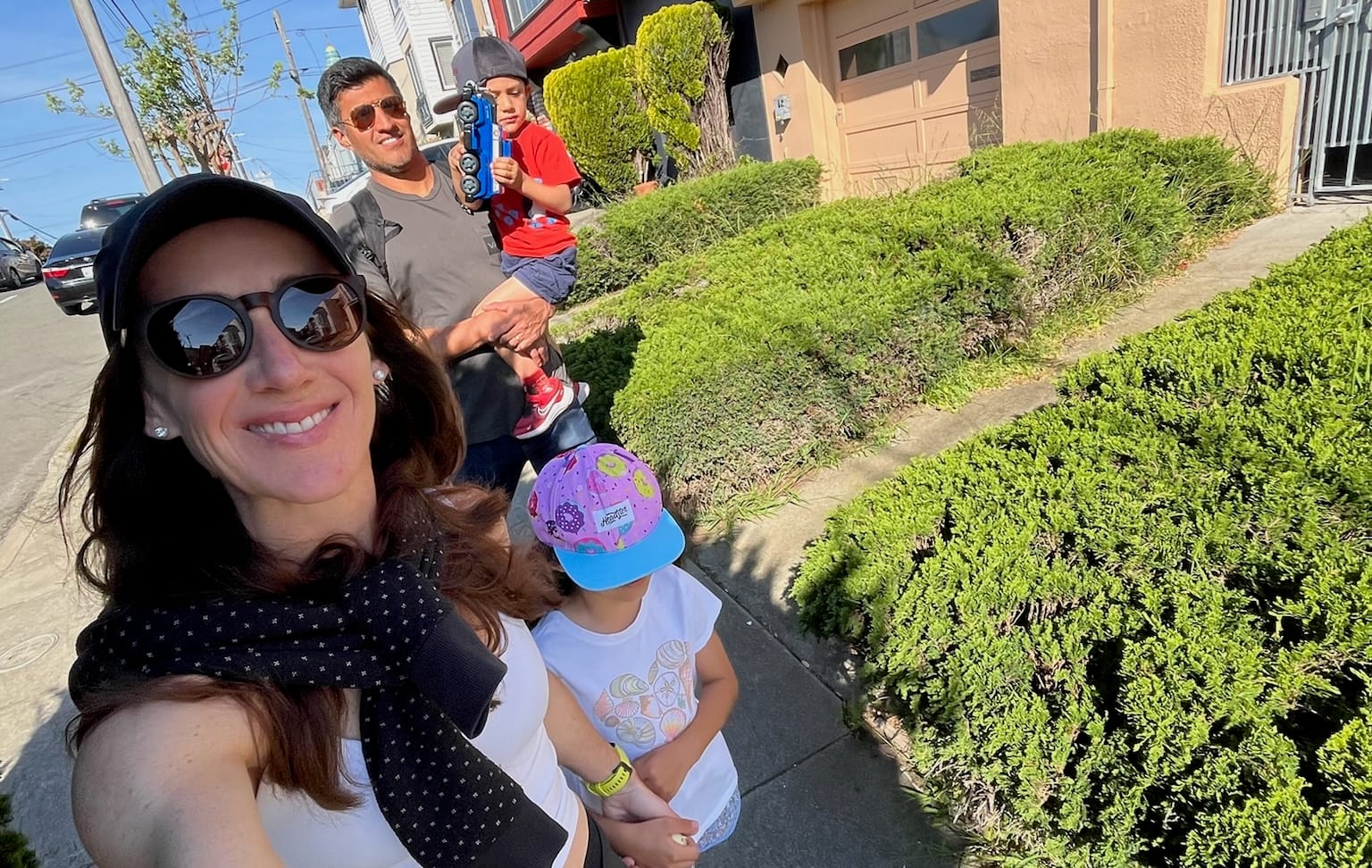
Shannon runs regularly for her mental and physical health, and enjoys being a part of the San Francisco running community. She and her husband, Pablo Solares, set up the Imagining More Foundation to invest in and empower younger athletes. This July, they hosted their second annual summer camp for junior high and high school runners.
“I think the two of us just wanted to create role models for kids in a way we never felt we had, him as a Mexican distance runner and me as a little girl in the ’80s and ’90s,” Shannon explains.
Often on the road, Shannon attends national and international track and field meets as a broadcast analyst and leads corporate workshops on her Medalist Mindset framework. Created with fellow Olympian Lauren Gibbs, who won a silver medal in the bobsled, the Medalist Mindset framework is intended to help people leverage the tools Olympic athletes use to perform under high pressure and work toward any goal.
Speaking of medals, at the LA 2028 Summer Olympics, Shannon is set to receive her long-awaited 2012 bronze medal for the women’s 1500.
Inspired by the doping disqualifications in that event, which is often called “the dirtiest race in history,” Shannon is currently working on a documentary that explores the human side of what leads an athlete to cheat, including larger influences such as coaches, agents, and even an athlete’s country.
With so many endeavors in the works, Shannon says she feels fortunate for the opportunities.
“Once I stopped competing, I was really trying to figure out ways that I could continue to leverage my background as a professional athlete, my passion for this world of track and field and the people in it, to make an impact and do exciting work,” she says.
Below, Shannon shares her experience running for Nike while pregnant, the female athlete advocacy and book collaboration that came out of it, the guidance Strong as a Mother provides to pregnant and postpartum women, and her perspectives on tackling challenges in women’s sport.
What was your experience being pregnant while running for Nike, and what did it lead to?
Shannon Rowbury: My daughter was born in June of 2018, and there were no maternity protections. I was able to do local road races to keep my contract from being suspended or terminated, but I had to keep racing.
My shoe company called me and said they had the right to reduce me by 40% because I wouldn’t be ranked top five in the United States, knowing full well that my due date was the same day as nationals, so there was no way I could have been.
At the time, there were no health insurance protections for professional track and field athletes. The shoe companies make us all contractors, so they don’t have to give us benefits, which means we have to earn our health insurance through performance, based on our placement at nationals and our tier-system ranking.
It was a really stressful period, because I was so excited to become a mother. I knew I wanted to be a mother before I had any career ambitions …. I’d already waited until I was in my early 30s — 33 when I had my daughter. I’d waited so long because I was fearful of the consequences of becoming a mother.
I didn’t realize just how much the deck was stacked against female athletes until I was in it.
Learning from that experience, I was able to work with USA Track and Field and create a maternity policy to protect our female athletes. I found out after the fact that it was the first one ever made by a sports NGB [National Governing Body]. That happened in December of 2018 while I was dealing with Nike.
The cool thing was that policy then became…a framework that shoe companies and other sports NGBs use to help build fair maternity policies for athletes. So, out of this really emotionally brutal period came, first and foremost, my daughter, who is amazing, and second, some advocacy that has really helped to change the face of sport.
How did your first pregnancy also spark the idea for a book?
Shannon Rowbury: My coach, Pete Julian, was phenomenal. He and our strength coach, Dave McHenry, both were so supportive of me being pregnant and also realized what their areas of limitation were. They weren’t pelvic floor experts. Within the industry, in general, there still remains limited information on what is recommended for female athletes during pregnancy.
Pete and Dave said, ‘We will support you however we can during this pregnancy, but you should also work with Jess because this is her area of expertise.’ So, Jess really became my main guide during pregnancy, and helped me understand what was safe to do, helped me with exercise plans that would support my body as it went through these postural changes, and then postpartum training plans as we returned back into full running.
She’s just, above all of it, the most wonderful person with the hugest heart, so we became fast friends. In our conversations, I kept saying to her, ‘None of this information is in any one readily available, credible source.’ The information that I could find at the time was calling my pro runner friends who are moms.
Since 2017, [we had] that idea of, well, if it doesn’t exist, maybe we should be the ones to make it. It took us nine years to make that dream a reality.
What do you and Jess hope to provide to women through Strong as a Mother?
Shannon Rowbury: It was really about, can we be that kind of big sister or that friend that you know you can rely on when you have questions? Because each pregnancy is different, even for one mother.
We always tend to think everybody’s doing it better than we are, and we really wanted to be that resource that women could turn to for information that they could trust. We wanted to offer the information to them before they had to ask for it.
Something that Jess has done for decades in her clinic and really sets her clinic apart is a birthing preference plan. It’s situated right between the third and fourth trimester, and it’s all about preparing for labor and delivery. And taking it even a step back from there: What are the stages of labor? What are the different interventions that might be offered to you? What are the things that you can do, whether it’s positions or partner support, or otherwise, to help give yourself better odds of having that successful or positive labor experience?
I haven’t seen any resources that really, month by month, trimester by trimester, take women through this pregnancy process. And then, postpartum, have this protocol and procedure to help women get back active again.
It’s really meaningful to have the information that Jess uses within her practice, the way that she’s able to help patients. But there’s only one Jess, and her clinic is in Portland, and not everyone can afford it, even if they are local. Physical therapy is expensive …. We wanted to have a resource that anyone could access.
The important stat that Jess taught me was the two main times women leave sport are when they get their periods and when they get pregnant. We really wanted to be a resource for women to hopefully keep them active during pregnancy, because it’s beneficial for mother and baby if they are. But then also to get them back into activity postpartum, because that would set them up for a longer, healthier life.
What’s your perspective on tackling challenges, especially in women’s sport?
Shannon Rowbury: I found out with myself, if you give me lemons, I’ll make the best darn lemonade you’ve ever tasted. I’m an optimistic person. I’m obviously a driven and passionate person, but very much driven by that greater good and how do we keep making the world just a little bit better?
As traumatic as that pregnancy process was for me, it felt like there were a couple areas where I could just take a little bit of the power back by fighting for what I wished I had had and maybe paying it forward to the next woman, to the next mom, to the next generation, so that their battles wouldn’t be the same as mine. But a lot of that comes from recognizing every opportunity I had was the result of the efforts of those who came before me.
I was born in 1984, and the first collegiate scholarship at Duke for [women’s] running was around that same timeframe. It’s actually such a short history that women have even been able to be professional athletes, and it makes sense then why we’re running into these really obvious flaws in the sporting system that hasn’t made space for women.
Follow @ShannonRowbury on Instagram.
“As traumatic as that pregnancy process was for me, it felt like there were a couple areas where I could just take a little bit of the power back by fighting for what I wished I had had and maybe paying it forward to the next woman, to the next mom, to the next generation, so that their battles wouldn’t be the same as mine. But a lot of that comes from recognizing every opportunity I had was the result of the efforts of those who came before me.” – Shannon Rowbury