Read & Run Chicago’s Allison Yates on Shaping Local Connections Through Book Tours
It’s part run club, part book club. Founder Allison Yates leads Read & Run Tours to help runners get to know their cities and one another.
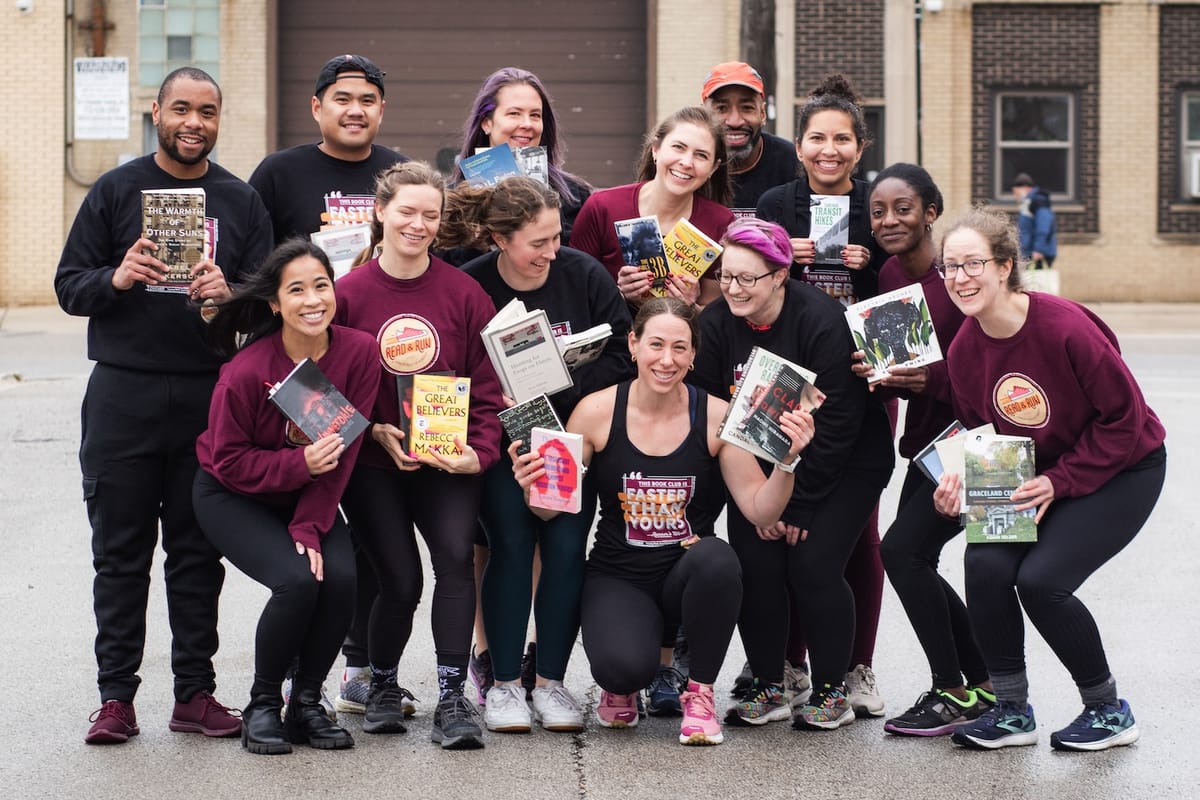
When Allison Yates moved to Chicago, she struggled to find a connection to the city. Originally from the Midwest, that detachment surprised her.
“I’ve lived in several different places, and I felt really, really connected,” Allison shares. “What was I doing there that made it so that I could feel that?”
An avid reader, she turned to her local library and bookstores and began getting to know her city through its storied past. Walking past buildings and through neighborhoods of Chicago, depicted in the pages she read, began to hold new meaning.
Simultaneously, she was getting more into running and realized she didn’t feel the typical competitive motivators that many runners experience.
“I think there are so many benefits to running that are not just races and not just times,” Allison notes. “I’m not motivated by that at all. I’m motivated by what it provides me.”
In addition to structure and a mental health outlet, running provided a way to experience the world and visit the places she read about. With the intuition that others would be interested in exploring Chicago through books and running, she started Read & Run Tours.
Grounding People in Place on Running Tours
Operating under the umbrella company Read & Run Tours is Read & Run Chicago, the first city chapter. Since launching in 2021, Allison and her team have hosted more than 100 events and run through more than 30 neighborhoods.
Allison also hosts pop-up events in cities across the country with Read & Run Tours. And through a separate program, Read & Run on the Road, people can apply to independently organize and host a pop-up event in their city. A few past event locations include Los Angeles, San Diego, and Washington, D.C.
“The approach that we have at Read & Run, with running, is that it’s about the movement,” Allison shares. “Running makes sense because it allows us to go to a lot more places.”
You don’t have to consider yourself a runner to participate, and you also don’t need to be an avid reader. Only Read & Run Chicago’s run club has a recommended book to read before attending the monthly event. At other tours, the information provided along the run is enough to understand the history and significance of the locations visited.
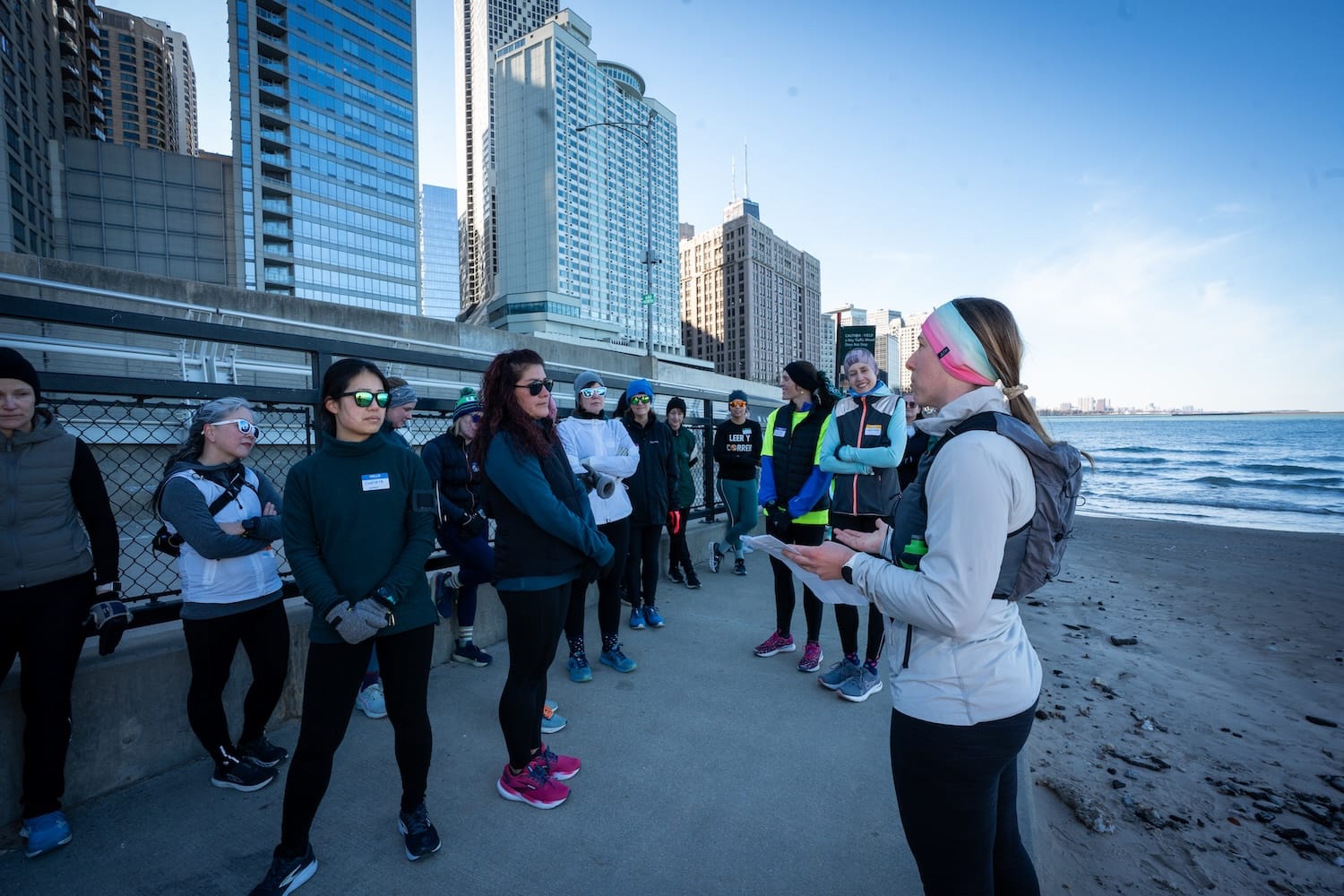
Books Are a Gateway to Social Connection
Allison notes a common saying by librarians: “You can travel anywhere in a book.”
Getting to know a city through a tour with Read & Run may introduce you to a subculture you’re unfamiliar with or a historic event you had yet to learn about.
“The amount of empathy that you can gain from a book, the way we attach ourselves to characters, and the way that we can learn history through historical fiction is just the most incredible opportunity that we have,” Allison explains.
Learning about a city’s history and sharing it with others through running tours is central to Read & Run’s mission. The discussions and sense of community that organically develop through these events create opportunities for deeper-level connections than you’ll find at most run clubs.
Moving forward, Allison is working to establish new city chapters of Read & Run, operated by people who are greatly interested and invested in the places they live. She’s also planning more pop-up events in smaller cities across the country.
While she describes herself as perpetually resistant to the business side of things, Allison notes, “I think it just goes to show, like with anything, if we feel strongly enough, we will find a way to do it or try to work it out, because it means that much to us.”
Below, Allison shares the ways books have helped connect her to the places she’s lived, how a book-inspired run in Chicago led to the launch of Read & Run Tours, and details on her all-time favorite event.
What inspired the idea for a run club combined with location-based books?
Allison Yates: It came out of a genuine desire for me to feel a real connection to the city of Chicago. It was during the pandemic …. Luckily, I was one of the ones who got to stay home and reflect a lot on what my life was looking like. It just really sprung out of, I want to know the city better. I want to feel part of the city. I want to know the history and everything that has happened here and made it what it is today.
I was lucky to find quite a few books that really ignited the push to do that. And one of them was a book called The Battle of Lincoln Park.
Lincoln Park is a neighborhood. It’s beautiful, it’s very nice, it’s affluent, it’s a great place to live, and it’s also one of the most exclusive. Just digging through that book and understanding how it came to be was mind-blowing for me.
It’s similar to other gentrification stories, but it’s also very different and very Chicago. It has a lot of nuances in it, and then that unlocked a lot of other pieces.
I was just thinking, ‘Wow, what would it be like to actually move through that space and feel exactly what I was reading about?’ And then, of course, the idea for running through it came to me because I was running a lot more at that time.
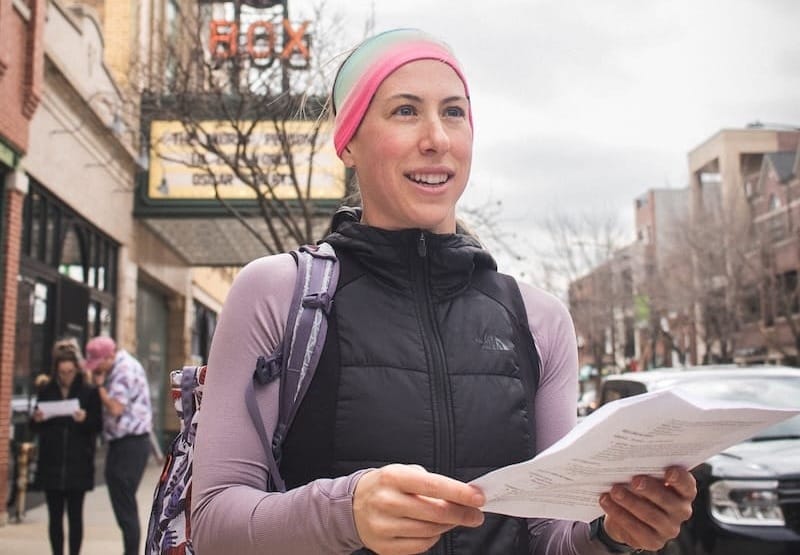
The more neighborhoods we visit and run through, the more stories we learn. Every place I go now, I remember, maybe this building is ugly…but it means something to someone. I just need to figure out what that is. Once I figure out what that is, it completely transforms the way I see that building or that neighborhood. It brings me comfort. It brings me happiness to know that something meaningful happened to someone there.
What prompted you to turn to books as a way to better connect with Chicago?
Allison Yates: When I was in Australia, I was there for about a year, more or less. I was feeling very disconnected from that place. Then I started to read books that were set there, and it completely changed my perception of everything that I was seeing.
When you’re new to a place, or you’re not feeling a connection to the place, there’s so much that you don’t notice, so many nuances. You don’t always have the time to sit down and talk to people and ask questions, or maybe you don’t even know what to ask.
The way a story works is it clues you into so many different perspectives without even being so overt in doing so. You get those nuances, and you get little tidbits that then lead you to more questions. You notice one thing, and then that helps you notice another thing.
I had spent a year studying in Argentina. I remember I was just consuming and devouring stories about the dictatorship, because I had been interning there with an activist group that was a really big player in taking down the dictatorship or bringing public attention to what was going on. So, I was consuming their stories. Not only reading novels that they had written, but then talking to them, and then reading and watching movies about it, too.
I would walk through the streets, and I would just see everything everywhere. I felt completely tapped into that time period and those people, and it was very place-based.
When you’re living abroad, you’re more inclined to think it’s different and you need to learn about it, versus in places in the U.S. — ‘It’s the U.S. I understand it. I know it. This is my culture.’ I’m from the Midwest, too, so I didn’t think it important to really know more about Chicago at the beginning, which is so ridiculous now that I think about it.
How did your first Read & Run event in Chicago take shape, and how have tours evolved?
Allison Yates: The very first tour that I did, I made my cousin go out with me. I had mapped out different spots corresponding to The Battle of Lincoln Park, and then she and I went out and we tried to trace the route.
I remember [thinking], there’s got to be at least a few other people who would want to do this with me …. It really started out as, let me just pick a book, plan a route, invite people to come.
I think what people wanted was a little bit more curation, a little bit more meaning …. So, I started to define that, not only for myself but for other people, and create an experience around the book.
We always say, ‘bringing the book to life.’ Truly, how do we do that? [Pulling] different elements from the book, and really thinking and taking our time and being intentional about how we’re communicating the book.
We have lots of procedures now. We take our route development and script development really seriously. There are evaluators. We do rehearsals.
At least the first time we do a book, it’s really important to have the author there …. I say there are the three A’s: Are they alive, affordable, and available? If there are all of those things, we try to have them at the event.
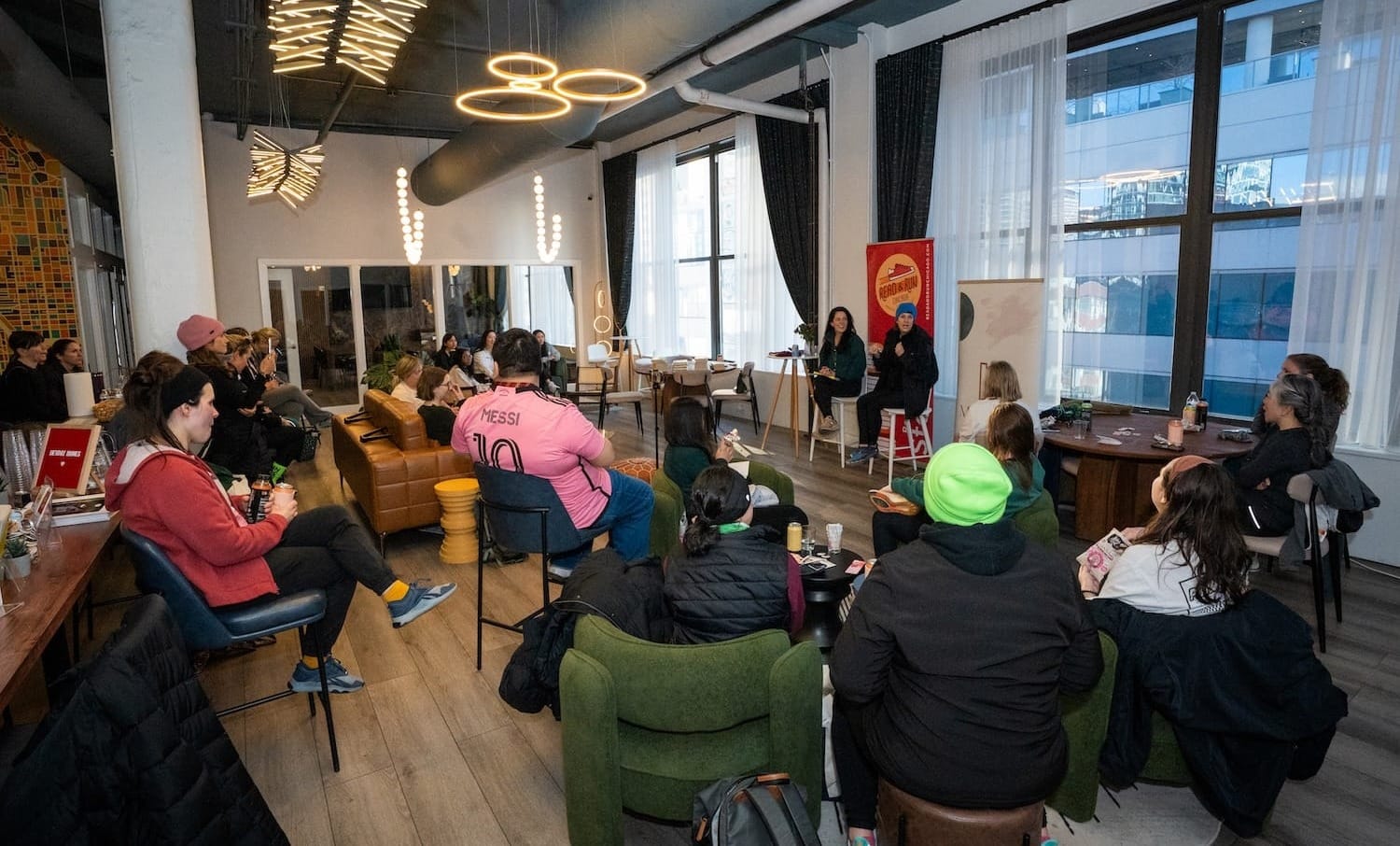
What is the structure of Read & Run Chicago and future city chapters?
Allison Yates: The goal is that they’re all exactly the same. So within each city chapter, we have four different types of events that we do: book club runs, running tours, trail runs, and fun runs. They all have to be inspired by books, but there’s just a little bit of difference.
Learn more about the city chapters in this bonus interview excerpt.
I found out that not everybody can or wants to read before they come to an event, so that’s why the only book we ask people to read ahead of time for is a book club run, and we only do one a month. We host other events, so people can still come and run and learn something, but they don’t have to read anything before they come …. Those are mostly nonfiction.
A lot of the nonfiction that we find about Chicago is pretty niche. For example, if you want to read 300 pages about the fountains, not everybody’s going to want to do that, but they might want to learn about it on a running tour. You can read it after if you are interested.
How do book club runs engage members differently than a traditional run club?
Allison Yates: In between stops, we pose discussion questions to make it more of a moving book club. We try to ask questions that are more personal. People are never forced to share, but we invite them to share. We say, ‘This won’t leave this space. Everybody should respect each other’s privacy.’
But I think the greatest thing about reading is what we think about that story in relation to ourselves or our own lives. So sharing that really does open you up in a more vulnerable way to other people.
That’s definitely not for everyone. Some people don’t feel comfortable, and that is okay. But if they do, I think it’s a great opportunity to get past the surface-level things that most people do discuss, perhaps at a bigger book club with people you don’t know or at a run club.
What can you share about your favorite Read & Run Tours event?
Allison Yates: My all-time favorite event that we do, and it’s hard to pick a favorite, but this is definitely a favorite…The Great Believers, by Rebecca Makkai.
It’s a heavy one. But I can take heavy if it’s really meaningful. It has a lot of big life emotions in it that, regardless of your identity…everyone will feel the things that the character felt.
It is a novel that is set partly in early-1980s Chicago, at the start of the AIDS epidemic. It changes in between that and present-day Chicago and Paris. The whole gist of the book is, it’s about a group of friends finding themselves at the same time that AIDS is starting to appear in Chicago. They’re losing best friends. They’re figuring out who they are …. It’s a lot about grief, and also what we carry with us and how it affects us years later.
Rebecca Makkai intensely researched…at a library and archives that we work with a lot called Gerber/Hart Library and Archives. It’s the largest LGBTQ archives in the Midwest. What they house is stacks and stacks of everyday people’s materials, like pamphlets and groups and advertisements and different very niche local newspapers that were actually publishing information about deaths or health information for people in that community at the time.
We have this neighborhood called Boystown, which has now been renamed to Northalsted to be more inclusive, but that is the historic gay neighborhood in Chicago …. She also interviews several different community leaders from Boystown who were alive and active at that time.
The tour that we did was, for me, the most meaningful thing that I think we’ve ever done. We visited three different places that were in Rebecca Makkai’s book. At each stop, we had a real-life person, some of whom she interviewed for the book, at the stop, talking about which character they corresponded to and how that physical location corresponded to not only their story but the character’s story, and what was different in their life versus the book.
Very few people recognized how much activism went into the neighborhood.
We were outside of Masonic Hospital, which had the first AIDS ward in the country, and it was the first place that people could die a humane death, essentially. Before Masonic Hospital, people were not allowed to see friends and family, because people thought you could contract AIDS through any sort of way. So they were dying alone in public hospitals. This was a place where they really set the model for how you care for a person with dignity.
We had a man who stood outside of there and talked about what that ward meant for him and his friend group, and how that showed up not only in real life but in the book.
We had a lot of people in tears. We had a lot of people very moved by this experience, and who continually tell me, ‘Every time I run through Boystown, I remember these people, and I remember their friends.’
The event was not only highlighting literature, but it really meant a lot for the people who got to speak, and it meant a lot for the people who heard it.
Learn more about Read & Run Tours here.
“The more neighborhoods we visit and run through, the more stories we learn …. It completely transforms the way I see that building or that neighborhood. It brings me comfort. It brings me happiness to know that something meaningful happened to someone there.” – Allison Yates