Take Risks and Bet On Yourself: Run Tri Bike Founder On Encouraging the Everyday Endurance Athlete
Jason Bahamundi discusses the lessons endurance sports teach us and his mission to connect fellow athletes through Run Tri Bike’s media platforms.

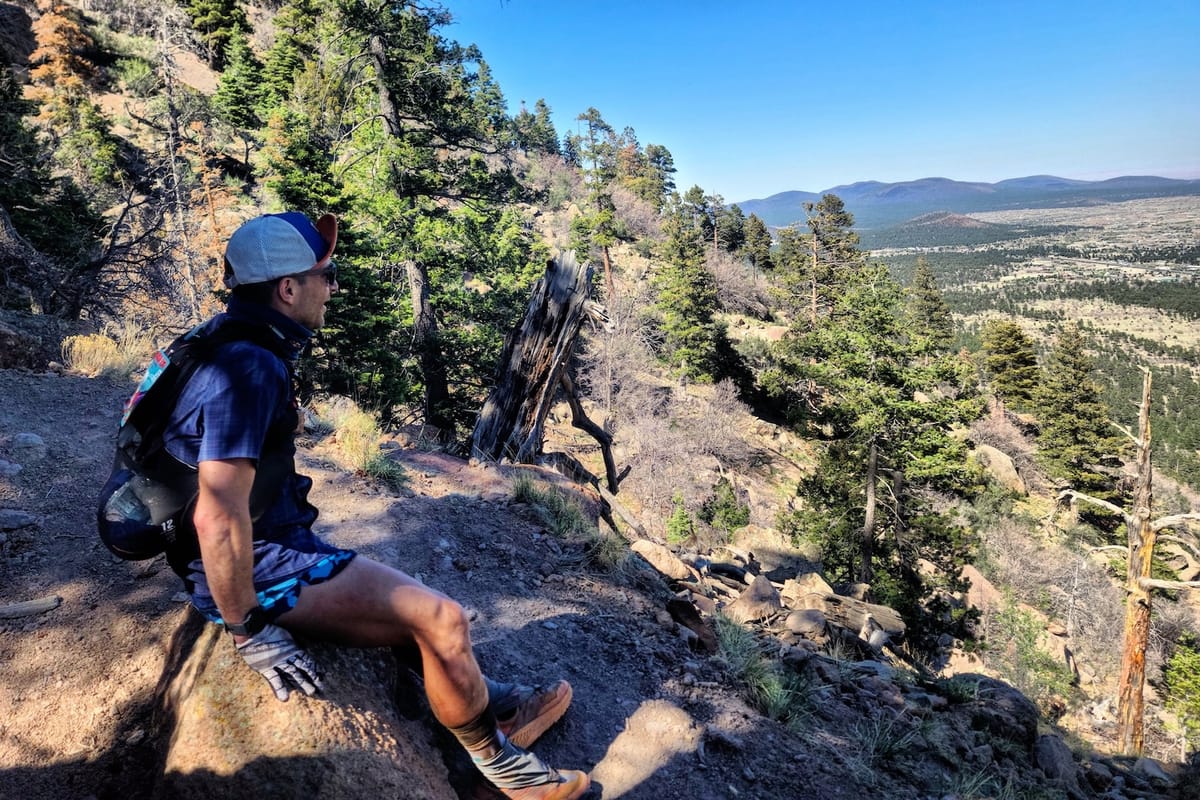
If there’s one thing Jason Bahamundi isn’t afraid of, it’s taking chances.
“I think the all-encompassing phrase of ‘take risks and bet on yourself’ is something that I’m known to say and I wholeheartedly believe,” says Jason.
It’s a lesson endurance sports has driven home, time and time again. In fact, after his first DNF, Jason realized the world doesn’t stop spinning. That perspective motivated him to go after bigger goals without the fear of failure.
“Oftentimes, we don’t want to take the chance on going from the half marathon to the marathon, or from the marathon to the ultra, or from the Olympic distance in the triathlon, because we’re scared of failure,” Jason explains. “If you can remove that fear of failure, then you’ll be ultimately successful.”
It’s not only endurance sports that Jason has applied this approach to, but also his career. During the pandemic, he launched the media company Run Tri Bike.
Working on the sales team for a visitor magazine at the time, with dreams of owning his own endurance sports publication, he bet on himself to establish and grow the business.
Many endurance sports publications focus on the achievements of pro athletes and record-breaking performances. But Jason chose to take a different route with Run Tri Bike and tell the stories of the everyday athlete, showing that there’s a place at the start line for endurance athletes of all backgrounds and abilities.
Through its channels, Run Tri Bike connects endurance athletes, inspires athletic endeavors, and encourages audience members to participate in the conversation.
Endurance athletes submit their first-person articles to the “How It All Started” column on Run Tri Bike’s website with the opportunity to be featured in a bi-monthly digital magazine that goes out to subscribers. The Everyday Athlete Podcast Network broadcasts nine shows that regularly feature athletes with great stories to share.
Run Tri Bike recently celebrated its fifth anniversary — but it’s a milestone Jason says wouldn’t have been possible to reach on his own. His wife and partner Lori Hauck is the brand’s biggest supporter, Jason explains. She helps refine strategic ideas and pushes them forward.
“We like to say, she’s the brains behind the operation,” Jason notes. “Lori is probably the biggest reason that we’re here today.”
Aum Gandhi joined the team shortly after writing an article for the “How It All Started” column. He manages Run Tri Bike’s social media channels and podcast production and is now a partner in the business.
Below, Jason shares a few lessons he’s gained from endurance sports, the aha moment that led to launching Run Tri Bike, more on the Everyday Athlete Podcast Network, and how the brand is helping connect endurance athletes worldwide.
How did you get into running, and where has the journey taken you over the years?
Jason Bahamundi: This will be my 18th year in running and endurance sports. To put it plainly, I was volun-told that I was going to be participating in a half marathon in Westchester, New York.
I had been an athlete in high school. And like most of the stories you hear, you stop training, stop running, stop being active as you’re getting into corporate America and trying to do all those things there. Life just kind of takes over, and fitness and stuff kind of go by the wayside.
But after being asked, volun-told, that I was going to be participating in this, I started running with the Leukemia & Lymphoma Society, and it just took off from there.
I found myself again. I’ve always been a competitive person. I love being active, and it was like a reawakening of the body and mind to get out there and run.
I do remember vividly, my first run, I had walked to the track by my house and ran 400 meters, and I thought it was the end of the world. I was like, ‘Oh my goodness, this is so hard.’ And then I walked 400 meters, ran 400 meters, walked 400 meters, and felt super accomplished that I had completed a mile run.
Over the course of the last 17, 18, years, it’s been progressive growth in terms of distances and fitness. I did start with a half marathon, but getting into 5Ks and making my way back up to the half marathon, marathon distance, which then led to participating in triathlon, from sprint and Olympic [distances] to half Ironman and Ironman, which then led to ultras.
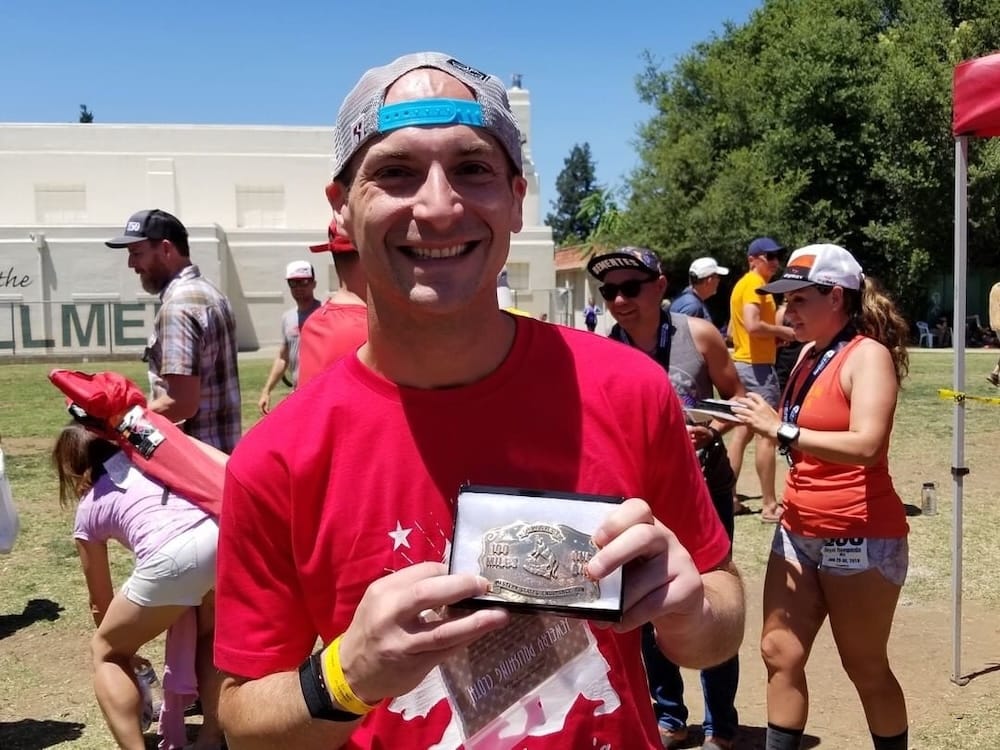
Today, being enamored with the backyard ultra format — my wife and I like to say, ‘That’s my white whale.’ I have yet to conquer it in any way that I feel accomplished. Even though I’ve run 50 miles in the format. I’ve run 40-plus miles in the format. I just feel like I haven’t been able to nail down the right strategy and execution. So, it’s kind of the thing that’s sitting out there for me.
I love being active and getting out there and running and testing myself, and then using all of the stuff that you learn about yourself outside of running, which I think is the thing that is most important to me. ‘How do I get through hard in running?’ is then used in, ‘How do I get through hard in life?’
What was your aha moment — when the inspiration and ideas came together — to start Run Tri Bike?
Jason Bahamundi: It was late-September, early-October 2020. We were a three-man crew for Travel Host during the pandemic. The company had gotten downsized. Bill, my mentor, had gotten rid of everybody except for myself and another person, and kept some other staff as hourly to help keep the company afloat.
He got a phone call that Texas Runner and Triathlete Magazine was looking to sell the business. The wife had just recently been widowed, and I talked to her a couple of times, and we were just really far apart in her asking price and my offering price.
I got off the phone, and I looked at Bill, and I said, ‘I don’t need to buy that company. I can do it on my own.’
It was literally as if lightning struck me.
After I said that to him, I just got to work, called a handful of people…‘What would a new media company look like in this space? What can be done? What stories, what articles, what topics?’ Just really dove into it.
I thought if we focused on specifically the everyday athlete in four different categories — women, BIPOC athletes, physically challenged/disabled athletes, as well as queer athletes — and really made them 85% to 90% of our stories, that we could have a large demographic of people that were largely ignored by the endurance sports media space and give us a niche that would make it difficult for…the bigger players…to penetrate into.
Surprisingly enough, as we started going down that path, the stories that were told to us got me emotional. We have athletes who have told us about their sobriety journeys, and athletes who have told us about their sexual assault situations, and athletes who have come out as queer to their family and friends. It just showed trust.
So, it’s kind of taken that, ‘Let’s tell stories in a way that gets people inspired and motivated,’ to ‘Let’s tell stories — or we are telling stories — that connect people to each other.’
In addition to articles on the Run Tri Bike website, you also operate the Everyday Athlete Podcast Network. How did that take shape?
Jason Bahamundi: We started that just about three years ago, and it was sort of a throwaway idea. Instagram Live was a thing back then. And it still is today, but it was something that was just getting started, in a sense. So we wanted to bring people on, to connect to them through something that was a little bit more interactive than just pictures and scrolling.
Over time, we discovered the restream platform, which allows us to broadcast simultaneously to multiple social media platforms. And now that we had the MP4 files, we could easily convert that into a podcast. That’s what we did with the ‘Fireside Chat,’ and we were booking so far in advance that we decided to start a sister show called ‘Fiery Embers.’
I’ve always been inspired by Dan Le Batard. He was a sports writer in Miami — or he still is, I should say — and he worked for ESPN. I was just enamored by this idea of the show that he had. It’s called the ‘Le Batard and Friends’ show …. All these people would come and talk to them, and it was very different. He and ESPN didn’t get along. So he left with John Skipper, who was the president of ESPN at the time, and they started Meadowlark Media. When contracts expired, they started bringing people over from ESPN, and they blew out this network.
That was the vision. I was like, ‘We can do this under our umbrella. We can help people with their shows. We can produce the shows. We can get these out there, and we can house them all under our umbrella of the Everyday Athlete Podcast Network.’
Today, we have nine shows that are active within our network, and they range from Q&A-style shows to just complete laugh moments, talking about food to music. Angela Hollowell and her ‘Melanin MVP’ is our newest show, and that is predominantly focused on BIPOC female athletes, which is a very different angle from what we’ve had in the past.
I think what happens here is there’s this domino effect of all these people connecting to each other. When we’re on the ‘Fireside Chat,’ we could be talking about ‘Running Tales’ and making sure people listen to that. And then when people are listening to ‘Running Tales,’ they can go to ‘Beyond the Finish Line’ and then go to ‘Melanin MVP.’
It’s all housed under our umbrella. From a business perspective, it’s easy for me to now call up an advertiser and basically say, ‘Here’s the a la carte menu. Which show would you like to be on?’ And [we can] really help our content creators get…sponsorships for their shows while we’re also generating content and building out the community.
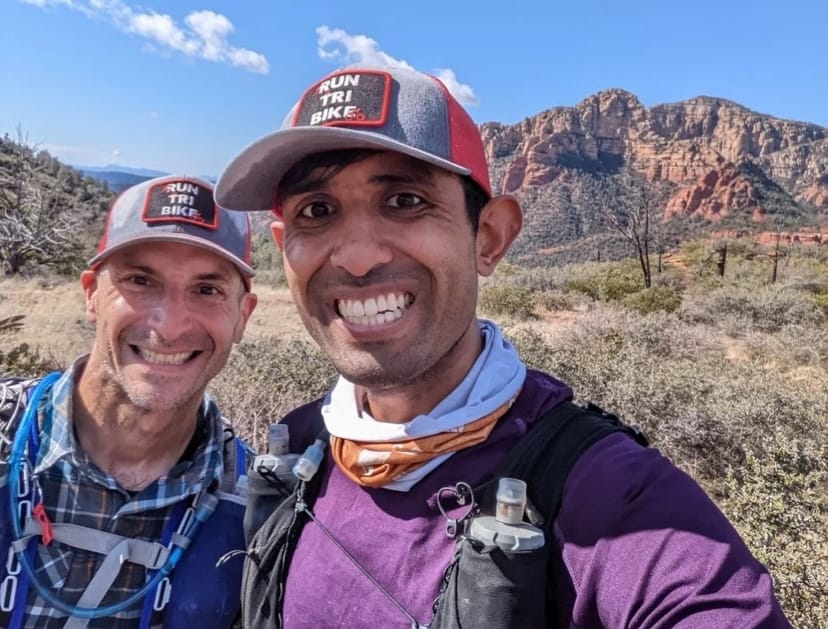
What are a few of your favorite podcast episodes on the Everyday Athlete Podcast Network that you’d recommend people start with?
Jason Bahamundi: Joe Hardin just recently had the 20th episode of ‘Beyond the Finish Line’ with Cam Balser, who ran around the perimeter of the U.S. — 12,000 miles. It was a great episode because Cam talks about the struggles he’s had in life and then how he managed to figure out running as being an outlet for himself.
There was another episode recently with Adrian Kelly on ‘Running Tales.’ While he’s a runner, he is [also] an author and…an expert in mental strength-type stuff. His book is called The Success Complex, and it was fascinating to hear about…overnight successes, and how that’s a misnomer, and how small steps lead to big wins.
We currently have three episodes of ‘Enduring Minds,’ which is a men’s mental health podcast, which most men don’t talk about but we’re on there having those conversations.
Jennifer Comfort, in one of our ‘Fiery Embers’ episodes. I use this [example] all the time, because one of the questions I ask is, ‘In the movie [The Martian], Matt Damon goes to Mars, and he basically eats [potatoes] for his whole time up there. So what’s your last meal before you go to Mars with Matt Damon?’ Her response was Wheat Thins. And to this day, I cannot stop laughing about, of all the foods in the world that you get to choose from, Wheat Thins was the thing that you chose? So we’ve had Jennifer on a couple of times, and she’s been great. Any episode with her is going to be good.
What do you hope your audience gains from Run Tri Bike?
Jason Bahamundi: When you’re in a running club or a triathlon club, cycling club, swim club — when you’re done with the event of the day — usually what happens is there’s a handful of people that sit in the parking lot drinking soda, water, beer, [and] telling stories. Or you go to a breakfast place and you’re getting coffee and pastries and you’re telling stories. That’s what we have become.
We’ve become sort of the virtual club, endurance sports club for people, because they come and hang out. They tell stories about their 5K. They tell stories about their marathon. They tell stories about their Ironman. They tell stories about their ultra. They connect in friendship ways.
I think one of the coolest things…was seeing one athlete connecting to another athlete even though we didn’t email-introduce them. I saw it on social media. Somebody was commenting on somebody else’s post, and I was like, ‘That’s because of what we did!’ I don’t know that they would know each other if it wasn’t for what we do and sharing all of these stories …. What we have is important and is helping people connect to other people.
People often say, ‘If I can help one person, then I would consider that a success.’ And [I’ve] said, ‘Pardon my language, but that’s bullshit. I want to help a million people. If I can help a million people, then I would consider myself a success.’
The reason why I say that is because I believe that endurance sports are a great conduit to success outside of endurance sports. Again, if you can make it through that hard race or that hard workout, you learn something about yourself. You can go [into] a relationship, in business, in life, in family, whatever it is — you have now built this resilience that endurance sports has given you, and you can go take that off of the run course. I also think that, conversely, the things that you do off the run course, you can use on the run course.
So, I want to help a lot of people realize that just because you’ve been told you aren’t a runner, you aren’t a cyclist, you aren’t a triathlete, or whatever — you are. Go do the thing. Don’t worry about the noise that’s around you. Because then when they go to start their business, they can deal with the noise that’s around them.
I think from that perspective, personally, that’s what I want Run Tri Bike to be for our audience, is a way to connect to each other.
Follow Run Tri Bike on Instagram.
“We’ve become sort of the virtual club, endurance sports club for people, because they come and hang out. They tell stories about their 5K. They tell stories about their marathon. They tell stories about their Ironman. They tell stories about their ultra. They connect in friendship ways.” – Jason Bahamundi