How Team 816 Coach Randy Taylor Brings Together Kansas City’s Running Community Through Inclusive Race Formats
Coach Randy Taylor leads group and individual run coaching and also organizes several annual races in Kansas City with formats that level the playing field among paces.

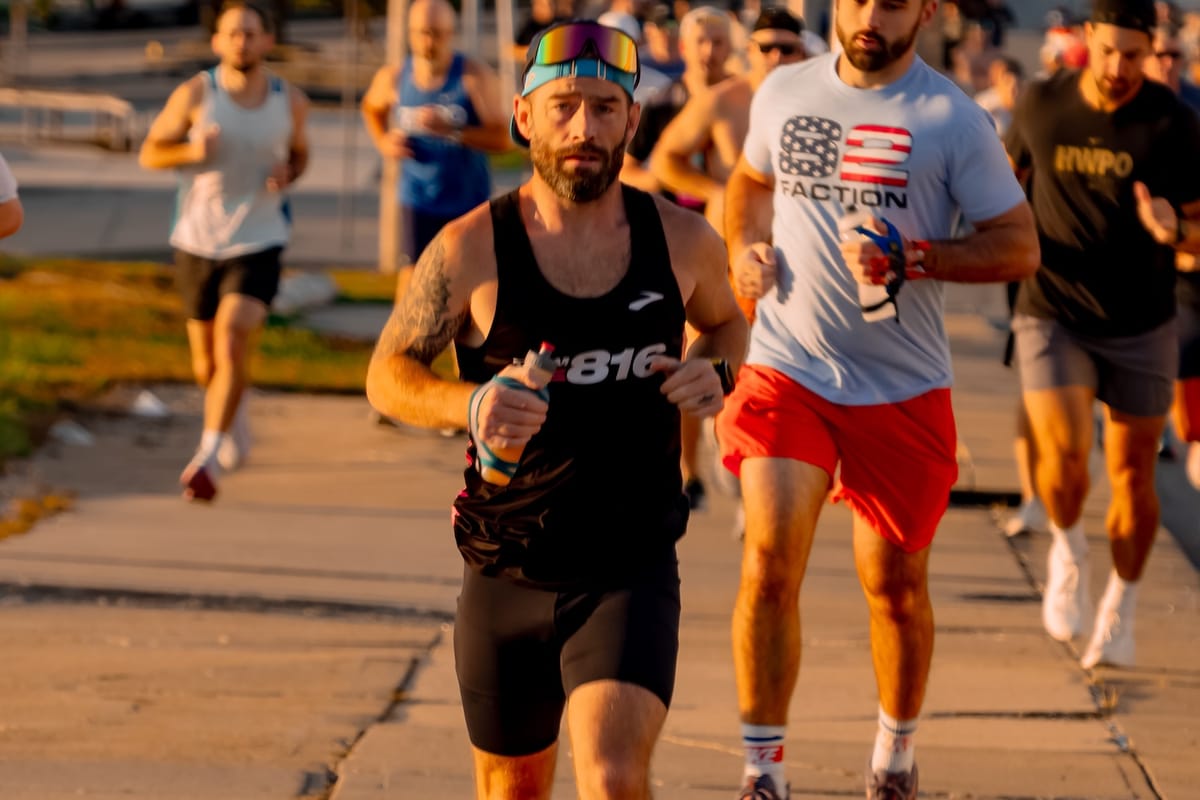
When Coach Randy Taylor’s wife suggested he train for a marathon, it was the worst idea he could think of. Despite needing some sort of structured training to get motivated, the father of three had no desire to run 26.2 miles.
But then, Randy sat down and did a little online research.
He found a 16-week marathon training plan. When he looked at an upcoming race calendar, he realized the Kansas City Marathon was exactly 16 weeks out.
Suddenly, Randy was marathon training.
He met fellow runners through a local running store during his training. And after the race, he remained engaged with the run club that met there. When the running store closed at the end of 2019, Randy kept the club going.
Digging into trail running and ultras, and improving his marathon times, Randy became someone fellow runners turned to with training questions. His background as a high school and youth wrestling coach kicked in, and he began openly sharing what he’d learned from running books, podcasts, and personal training experience.
Randy says the idea to become a certified running coach was prompted by others in the community, but it was a natural fit from the start.
“Coaching has always been a passion of mine, something I’ve naturally gravitated towards,” he shares. “I just love investing in people and seeing people grow and achieve things that they didn’t think they could.”
Growing the Kansas City Run Community
Randy gained his coaching certification through the United Endurance Sports Coaching Academy (UESCA) and initially focused on coaching trail and ultra runners, matching his personal interests at the time. Since Kansas City’s trail running community is small, he turned outward to find national coaching clients, while still leading the run club.
Eventually, Randy pivoted his focus to coaching local road and trail runners and combined his coaching services with the run club. He shares that this move allowed him to establish his role as a coach and community leader.
About a year and a half ago, Randy transitioned to working full-time on his coaching business, Team 816. He recently added another coach to the roster, longtime group leader Coach Mary Payne.
Today, Team 816 includes three programs:
• Run Academy, a run training education class with pre-made training plans
• One-on-one run coaching
• Free and paid membership options for Team 816 Run Club
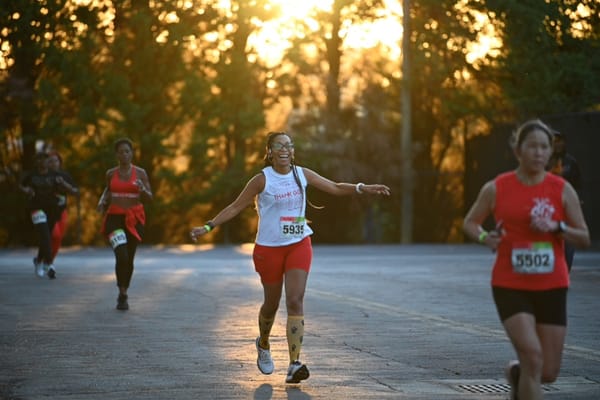
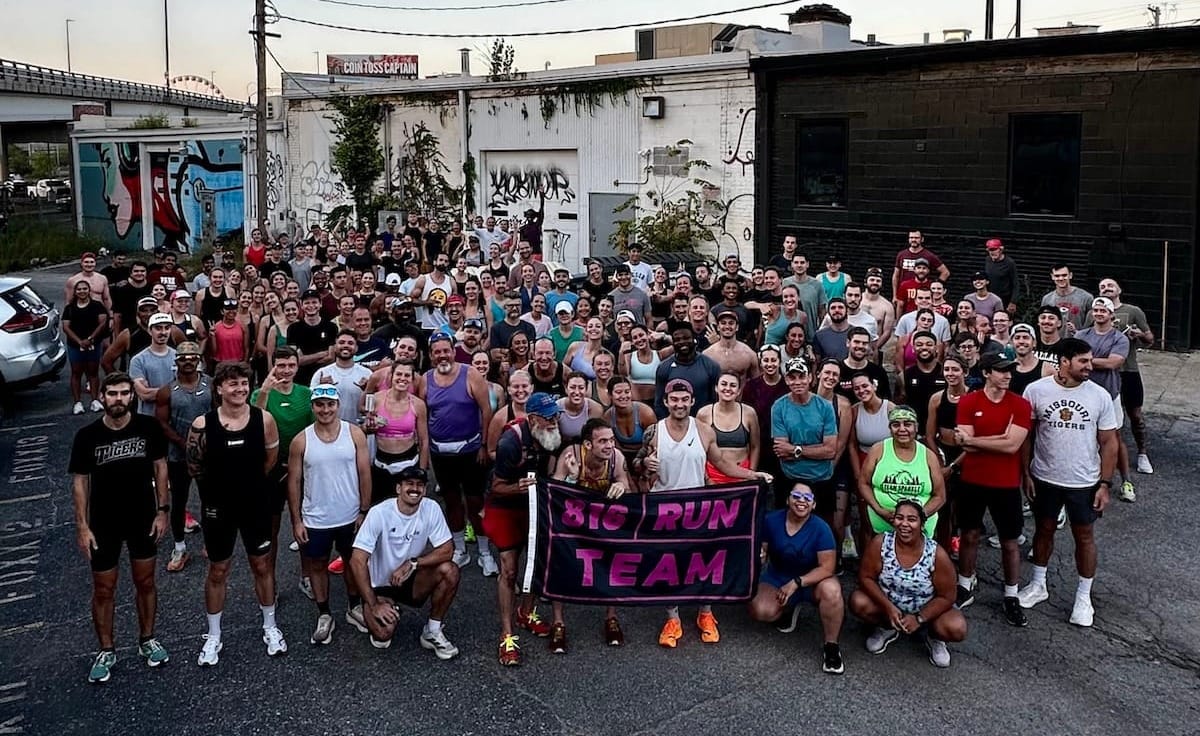
The run club’s Saturday morning long run has become a staple event in the community. As many as 175 runners join each week, logging anywhere between 2 and 20 miles. This fall, 60 Team 816 runners participated in the Kansas City Marathon’s full, half, 10K, and 5K distances, and another 50 ran the Chicago Marathon.
Creating Opportunities That Level the Playing Field
Team 816’s efforts to grow the Kansas City run community extend beyond coaching and run club meetups. Randy shares that an important focus is on creating opportunities to ensure every runner feels included and engaged, from the 4-minute miler to the 14-minute miler.
“I have really no desire to put on a traditional 5K race or something like that. There’s a ton of those out there. Go support those,” Randy shares. “But what I do have desires to create are unique races that kind of level the playing field for all runners.”
Each year, Team 816 hosts several inclusive running events that bring the community together and offer race formats not seen elsewhere. At these races, all runners have near-equal chances of crossing the finish line first.
“No matter what your ability is or how long you’ve been running, or where you’re at on your run journey, you can participate and have just as much fun as the fastest person there,” Randy says.
Below, Randy shares more about these three annual running events, how Team 816 Run Academy is structured, his advice on creating authentic run communities, and what initiatives are on his mind for Team 816’s future.
What can you share about Team 816’s annual, inclusive running events?
Coach Randy Taylor: Most events, you know, the fastest people finish [with] all the big cheers, and the people who may be at the back of the pack, it’s a little bit less. So, I’ve created a couple different formats where we try to mix it up as much as we can; 816 Relays is a great example of that.
Everybody that signs up, they sign up individually. It’s not like, ‘Hey, get your five fastest friends,’ or anything like that. You’re signing up as an individual. You put in what you think you can run your fastest mile at.
What we do on the back end is we create the teams ourselves with two main goals: 1. We want to mix friend groups up so that you meet new people in the community. And 2. We make all the teams as equal in time as absolutely possible. It doesn’t matter if you’re running a 12-minute mile. You’re probably going to be paired up with somebody that’s running a 4:15 mile.
It’s open to all run clubs, [the whole] run community. It’s a great way to create unique events, to bring the broader Kansas City run community together, meet people, have fun. As an individual, you can run the hardest mile you want to run, and you may be the fastest person there, but you might not win.
It’s just a fun way to celebrate running, celebrate community, have a good time. And then we use it also as a way to partner with other local businesses, support the coffee shop [Rochester Brewing and Roasting] that supports us.
That’s kind of a staple event. But every year, the format changes a little bit. It’s still roughly the same idea. This year, we did a four-by-mile, but it was a little bit less than a mile …. Last year, we did a mystery baton. You might have a banana or an umbrella or a leaf blower or a watermelon. We’ll change it up every year.
What are the race details for the Moonlight Mile and Tortoise and the Hare?
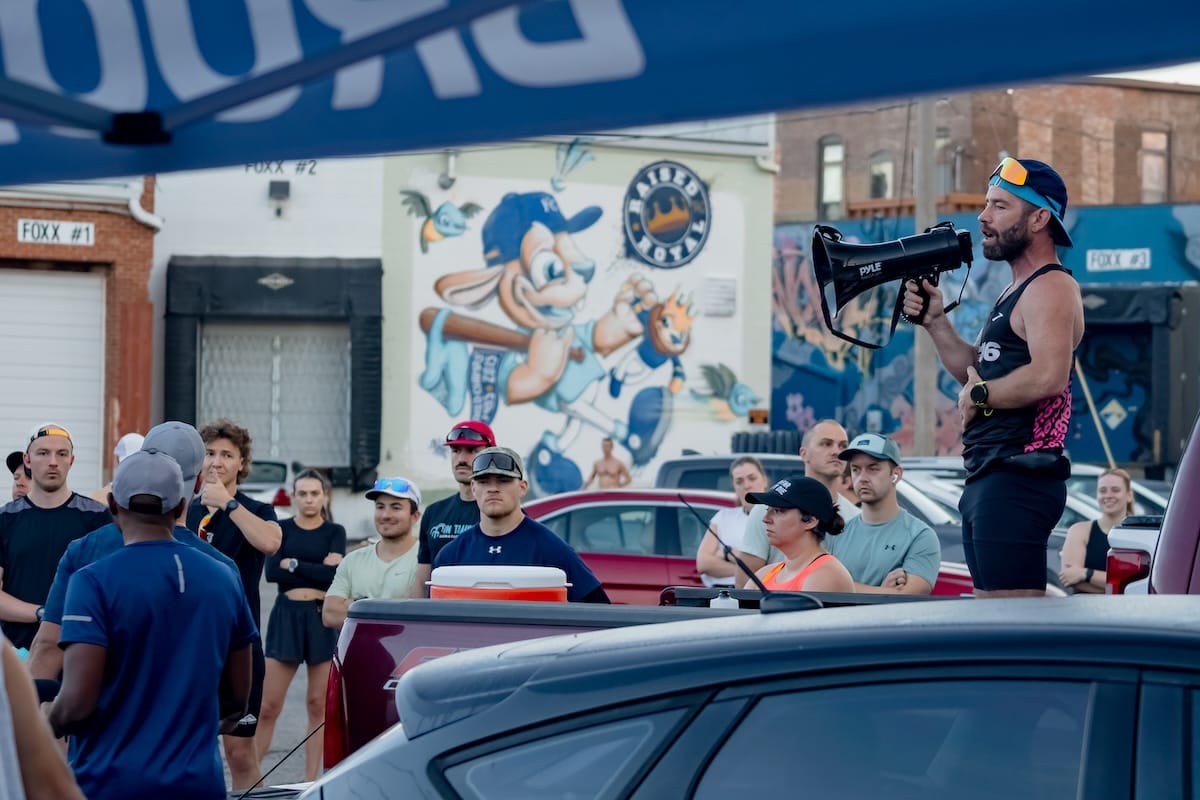
Coach Randy Taylor: We call it Moonlight Mile, but it’s a mile event that is run in the night, leading up to midnight. With that one, what we do is we stagger the start. So, say you’re a 12-minute miler, or that’s what you’re trying to break. You’re going to start at 11:48 p.m., trying to beat midnight. But if you’re a 5-minute miler, you’re trying to break 5 minutes as your PR, you’re going to start at 11:55.
There’s 30-second waves from 13:00 minutes down to 4:30. So, the start is staggered, but everyone is finishing trying to beat midnight. It’s a mass finish. Again, you might have a 5-minute miler and a 10-minute miler sprinting to the finish line at the same time, which is such a unique situation for most runners.
Each individual can run as hard as they want, in their own ability, in their own way. Everybody’s celebrated the same because everybody is finishing together. And most often, the first person across the line breaking the tape is somewhere in the middle, and somebody that you wouldn’t expect. That’s part of the fun.
Tortoise and the Hare, the format on that, again, changes a little bit. But the idea is that we have two start waves. So, from a certain pace group down, they start, and then there will be a time gap. Essentially, they get a head start. And the idea is that it’ll overlap the two groups.
We did a 10K this last year for that event, and there was actually a 20-minute head start, which seems like a lot. But when you break down the pace ranges, it overlapped almost perfectly. It’s just a fun way to mix things up and celebrate different people and different paces and different abilities.
Your paid coaching programs include the Team 816 Run Club membership group, one-on-one run coaching, and Run Academy. What’s involved in the Run Academy?
Coach Randy Taylor: It’s an education class where I’m teaching new runners, or new-to-run-training runners, everything from day one of training — how to start training — all the way through race day.
The way that works is I have pre-made training plans. There are different levels based on the distance. So you’ll have beginner, intermediate, advanced, for half marathon or marathon.
I do six class sessions that are live [on Zoom]. I’m teaching the topics live, and then we have Q&A …. It’s a little bit adapted and somewhat directed towards the participants.
We gear those towards some Kansas City races. In the spring, we have a big half marathon called Rock the Parkway. We do a 12-week session leading up to Rock the Parkway. If you’re running another half or even a full marathon around that time, people can use this class.
In the fall, it’s a 16-week session towards the Kansas City Marathon …. We had a ton of Chicago Marathon runners using the Run Academy for Chicago, because it’s only a week before Kansas City.
What advice can you share on growing a run community?
Coach Randy Taylor: You see it now all the time, every brewery or whatever has a run club, and all these other wellness groups developing run [clubs]. Then, they’ll even put ‘community’ on it, which is kind of hilarious to me. But, you know, it is from an advertising perspective, and I see that more and more.
A lot of people get into running. Maybe they decide they want to start coaching and doing these things, and then they decide, well, I need to develop a run club or figure out how to partner with people to grow my run coaching business.
I started it the other way. I had this giant community that I had been building for years, and this big network of people that I had been investing in for years, for free. It was just like, this is what I do because I love to do it. And then I moved into run coaching, and I think it helped a ton.
One of the things I hear from other people in the community, [and] the biggest advice I have, is use your own run journey and your own running and figure out natural ways to integrate that into the community. For me, I essentially continued run club because I wanted a group long run. Because I train, and I run long races, and I wanted people around to do it. It’s just a natural thing for me.
And yeah, it’s freaking hard. But I set up the route in the morning. I get up super early. We put signs and coolers every two miles. Then I run the group run with the people. I’m out there shoulder-to-shoulder with a variety of runners. I change it up as much as I can. I meet as many people as I can.
I do all of that as a run club leader, as a run club participant, as just somebody in the community. It has a massive impact when it comes back to my coaching, in the sense that people see me out there doing the work, struggling, my ups and downs — but invested in the community.
People don’t see me as somebody that’s trying to create a run group to advertise my coaching business. They see me as somebody who is at the core of the run group in my heart because I’m there and that’s what I want to do. And then it happens to be that I’m also a run coach.
What initiatives are you focused on, looking to the future of Team 816?
Coach Randy Taylor: Creating more resources for the full spectrum of runner.
I mentioned 816 Run Academy. We want to scale that and open that up to even specific races around the country. Particularly, a little bit tougher races that are more of a challenge to train for …. So, trying to really create a super polished and low-barrier-to-entry education training group in a way that works for a large group of people.
My heart is definitely on people that are new to running, new to run training, and even specifically people that are maybe more traditionally excluded from that.
I live right in the middle of the city. I want to see our run club look like the population around us, both in color, in economic status, in background, all the different things. So, continually trying to create more diversity in the group, and finding out ways to promote that to create opportunity for people to get involved, to learn about why people maybe don’t run, and to try and break some of those barriers down.
I think, first and foremost, from a mission standpoint, that’s my my big goal for this next year is to keep turning that knob and say, ‘Hey, we’re already pursuing diversity from an ability and a background standpoint, but let’s keep pursuing this from the full spectrum of person diversity.’
I can use really well-educated, long-term runners to help support newer runners. How does that look, to where we can all come together, we can all support each other?
Follow @816RunClub on Instagram.
“I live right in the middle of the city. I want to see our run club look like the population around us, both in color, in economic status, in background, all the different things. So, continually trying to create more diversity in the group…to learn about why people maybe don’t run, and to try and break some of those barriers down.” – Coach Randy Taylor