Ultrarunner and Environmental Journalist Zoë Rom on Why We Need to Stop Thinking About Ourselves as Runners
Zoë Rom is an elite trail runner, podcast host, coach, and environmental journalist. She shares the importance of making environmental decisions that extend outside our identity as runners.

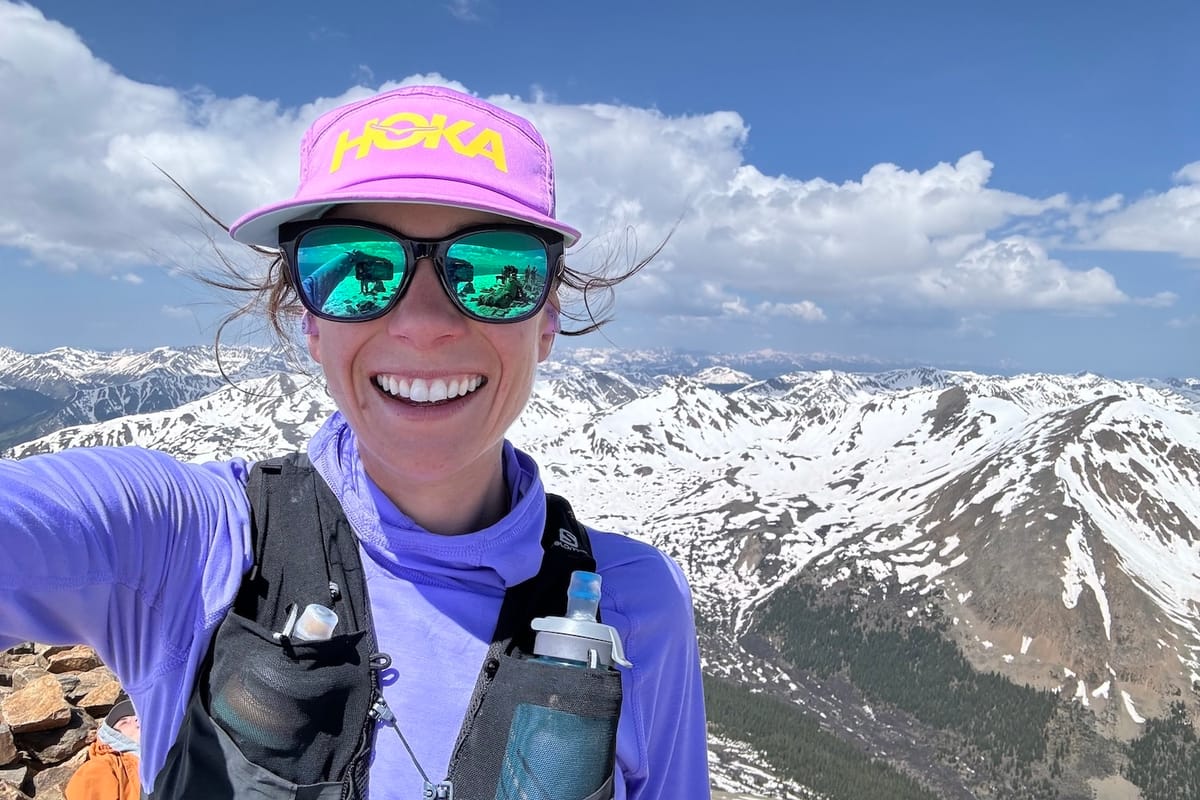
While living in Italy for two years of high school, Zoë Rom began exploring the trails.
“I guess I would now call it trail running,” Zoë says. “I wasn’t doing it in any serious or structured way. I would just go out and kind of like tool around in the woods with running shoes on.”
Returning to Arkansas for college, she was working at a running store when she received a free entry to a 50K. Zoë put in the training and won the women’s division.
“It was one of the first times in my life where I felt like I was good at a thing,” Zoë explains. “I feel like it was putting two and two together for myself.”
Noting that she enjoys long runs and particularly running on trails instead of road, she says, “It made me very curious about what else I could achieve in that sport.”
Now a runner on the rabbit Elite Trail team, Zoë’s bagged impressive finishes in her ultrarunning career, including second place female at last year’s Leadville 100.
Her running interests have led to additional opportunities, including coaching with Microcosm Coaching, co-hosting the podcasts “Your Diet Sucks” and “The Trailhead,” working as a contributing editor and writer for UltraSignup and as the former editor for Trail Runner Magazine and Women’s Running.
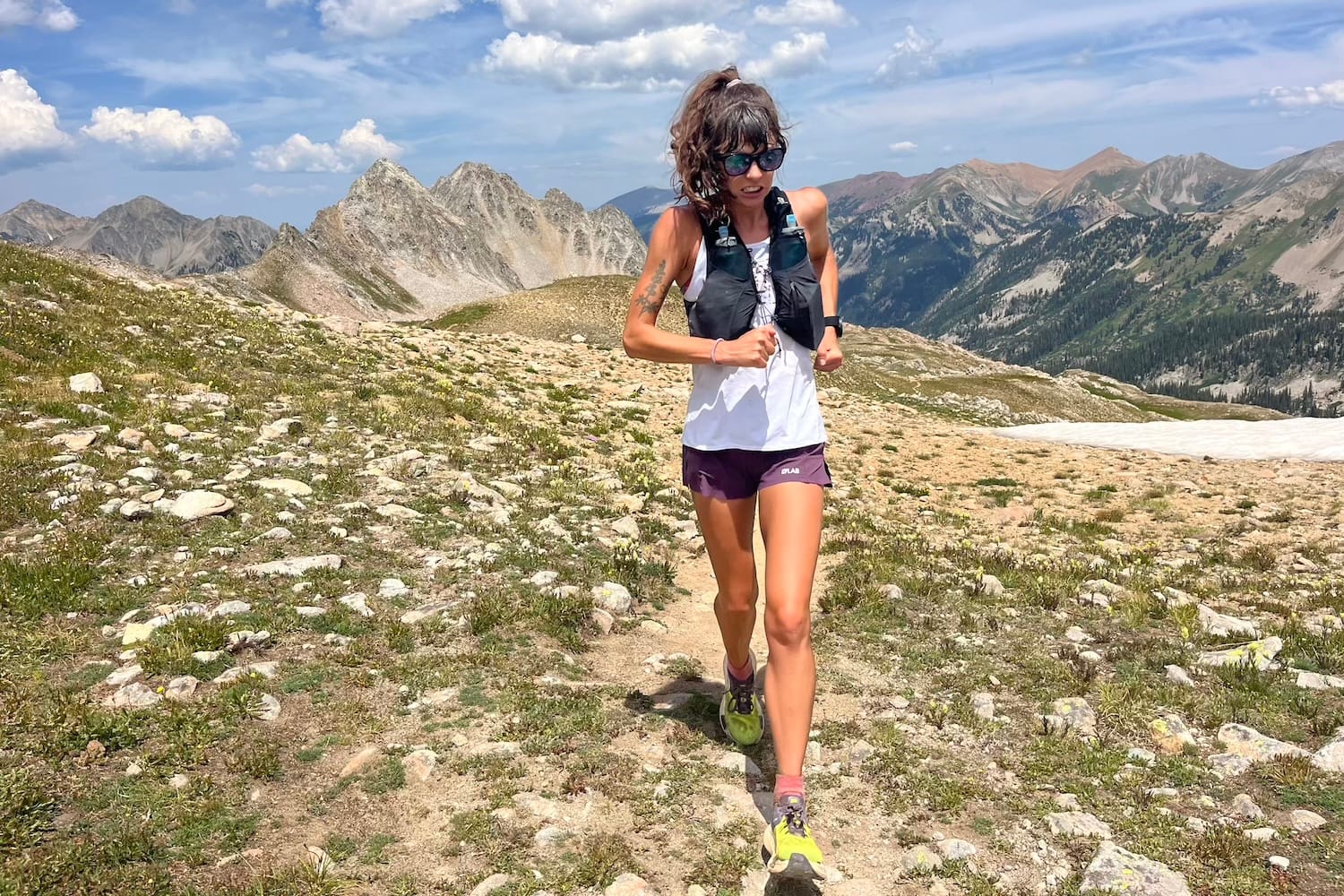
But it wasn’t trail running that brought Zoë to her current home of Colorado. It was her interest in environmental issues. Since graduating with a master’s degree in environmental journalism from CU Boulder, she’s reported on topics such as the Expanding Public Lands Outdoor Recreation Experiences (EXPLORE) Act and the impacts of a decreasing helium supply on public land management.
“I really love our planet,” Zoë shares. “I think it’s amazing and beautiful, and the more I get to know it, the more I want to be an active advocate for all the stories that I think it would maybe want to tell about itself.”
Connecting her passions for running and environmentalism, Zoë sits on the board of directors for Runners for Public Lands, an organization that empowers runners to take action to protect public lands. She also co-authored a book with fellow runner and environmental advocate Tina Muir, called Becoming a Sustainable Runner, which published in 2023.
“I love my identity as a runner. I love the community of running. I love the running industry. But in order to truly serve and truly honor and dignify the people that I love, I can’t leave it there,” Zoë says about her desire to encourage other runners to do more for the environment.
Below, Zoë shares her interest in environmental journalism, how we can expand our environmental actions beyond our identities as runners, reactions to recent funding cuts affecting our public lands, and what Runners for Public Lands is doing to help.
When did you become interested in environmental issues and environmental journalism?
Zoë Rom: Growing up in rural Arkansas, I have always been really interested in how people relate to and connect with landscapes. Folks in the south — farmers, hunters — people are really in touch with the natural world, but not always in a way that’s understood or validated by the outdoor industry as being the ‘right’ way or the ‘cool’ way to do it.
I moved to Boulder to get a master’s degree in environmental journalism because I felt like a lot of folks were not being included, not being centered, in climate conversations that should be. I wanted my communities to be represented in those stories, and I wanted our stories to be told with the same attention and care and dignity that a lot of other stories were being told. At the same time, I wanted to be a part of the mechanism that holds people in power to account.
Sometimes, a lot of the stories around climate can feel extremely negative. Not saying that being an environmental journalist is always like a basket of rainbows and giggles. It’s not …. But whenever I work on the ground with my sources, or when I’m actually embedded in communities and getting to know people and learn from them, I always do walk away feeling really optimistic because there are so many people out there that are solutions-oriented, so many people out there who are working every day to make sure that we all have a more livable planet and more fair and just world tomorrow.
I get to spend so much of every day talking to folks who’ve been working in national parks, small business owners who really care about taking care of the landscapes that they operate within, and these amazing community members who have this profound attachment to our landscape.
It’s my incredible privilege to get to learn from those people and to get to be a microphone or a megaphone for their stories every single day. And I particularly think it’s important when it comes to trying to be a voice for either communities or systems that don’t have a voice.
Oftentimes, the folks who experience the most downsides of climate degradation are folks who are already in marginalized communities. So how do we uplift their stories and center the amazing work that they’re doing — and also show that a lot of the downside of the decisions we’re making today disproportionately burdens those communities?
How do your passions for running and environmentalism overlap?
Zoë Rom: This is something that I always wrestle with because I love being able to speak directly to my community of runners, endurance athletes, and folks in the outdoor industry about the environment. But I always feel really torn about the potential downside when that lens becomes too restrictive.
For instance, whenever I’m invited to speak on a panel or do a podcast, people always want to know, ‘What are the three things every runner should do to be more sustainable?’ And honestly, the first thing you should do is stop thinking about yourself as a runner and start thinking about yourself as a member of this human community, and act from there.
When we use the framework of being a runner, I think a lot of times, that identity over-emphasizes individual solutions, like recycle your gel wrappers or offset the carbon that you expend when you’re flying to races. And you should do those things.
But if you only ever operate within that framework of environmental action you take as a runner, I can’t in good conscience say that is enough or that those actions are even in good faith. The evidence shows overwhelmingly that we need to engage on many and multiple levels, both as individual actors and in terms of systems and policy.
What does acting outside of our framework as a runner look like?
Zoë Rom: If I was able to be perfect and never use a nonreusable water bottle and never create trash or waste in any way when I’m running these races, that is still such a tiny, tiny, little drop in the bucket. What we need to do is all work together on changing the whole bucket.
So, how do we create systems that actually allow us to live within our environmental values and to actually live out these environmental frameworks?
Whereas, maybe considering not racing a lot or traveling for races, that is a pretty solid sort of individual solution you commit to. But even better, maybe things like, what if we all as a community push our races to become more sustainable?
I urge people to do the unpopular thing, which is to get political and commit to engaging in local and national-level policymaking. I know that is not the sexiest advice. Who the heck wants to call their senator on a Thursday morning? But it is so important, and we actually do have a lot of power and sway when it comes to how these policies get made. And particularly, a lot of environmental policy does happen at the local and regional level.
So, being empowered to take that on is extremely important. And knowing that showing up at the ballot box if you’re an American citizen is extremely important. Being comfortable advocating for solutions that don’t necessarily make sense in the context of being a runner.
As a trail runner and environmental journalist, what are your thoughts on the federal funding cuts that are impacting our public lands?
Zoë Rom: This is top of mind because I’m currently reporting out several stories about the layoffs and how specifically they are impacting the running industry, particularly permitting. And then also looking at how they impact rural economies, and also how they will impact biodiversity and ecological research. This is the bummer part of my job, where the news is, as of yet, not very good.
What I would say that I want folks to pay attention to is, yes, obviously the efficiency and streamlining of our government is a good thing that is of value. However, what we are seeing is a deliberate attack on our public lands infrastructure.
Federal land agencies are disproportionately impacted by the layoffs relative to how much of the budget they receive. That’s not a coincidence. That is absolutely intentional in order to take resources away from our public lands because they are being seen by this current administration as more of a monetary generator in terms of extraction and less because of outdoor recreation and ecological value.
This is tough because, right now, the majority of money generated on federal lands is because of resource extraction. But the share of money on public lands that is generated because of outdoor recreation and outdoor rec-adjacent activities is growing …. Actually, the rate that the outdoor industry is growing vastly outpaces the overall economy in the United States. It’s one of the fastest-growing sectors.
During the Biden administration, there were policies implemented that tried to shift the focus away from valuing land primarily in terms of what resources we can extract from it to what recreation potential exists here and what ecological value is here.
Now, we’re seeing the pendulum swing way back the other way, whereas this is a pretty deliberate disarming of the folks who are front lines on protecting, policing, and preserving federal lands. We’re going to see a doubling-down on the extractive side of things.
With the…executive order that was signed [in March], it makes it so that you can bypass the Endangered Species Act and you can bypass NEPA [National Environmental Policy Act] review if you want to log on forest service land, which is land that a lot of trail races happen on, so this is near and dear to my heart.
It’s heartbreaking to see people who have dedicated their lives and their careers to educating people about our public lands, and to facilitating meaningful experiences for individuals and families on our public lands, and for people who do the unglorious work of building trails and cleaning bathrooms. Those human stories are incredibly important and incredibly heartbreaking.
But even more, we need to keep our eye trained on the fact that this is happening so that the current administration can make it easier to extract resources from these lands and so that we can devalue or de-emphasize the value of outdoor recreation on these lands. Oftentimes, outdoor recreation groups can be more powerful than resource extraction, and so this is a deliberate attempt to diminish the power of outdoor recreation and conservation when it comes to protecting public land.
The secondary bit there is that it’s going to make permitting really freaking hard. So if you’re a race director who doesn’t have the good fortune of having a five-year permit, it’s going to be very hard for you to get your race permitted. If it does get permitted, good luck having an operative bathroom facility wherever you are. Good luck having trails that don’t have trail crews to clean up all the deadfall and all the erosion that will just happen in the natural course of things.
What is Runners for Public Lands doing to address the recent challenges?
Zoë Rom: One of the really cool things that Runners for Public Lands is doing is they’ve created a template that trail runners and particularly race directors can use that’s available on their blog to write to your representatives and let them know that you would like public lands to be attended to, that you would like your local race director to be able to get permitting for their event.
These are small business owners. These are people who can’t afford to not get a permit for their race. And these are folks who are sort of the backbone of the trail running industry and deserve our support, in addition to the fact that these ecosystems obviously deserve our support as well.
I think we just sent several thousand signatures to Congress about this issue. We’re able to really bring folks together — race directors, at scale. With the Forest Service layoffs, particularly, they did a letter-writing campaign, and we got thousands of people to chime in. That’s really, really powerful. If thousands of letters from race directors, from trail runners, end up in the laps of our congressional representatives, that’s huge.
The outdoor industry has a huge voice when it comes to making policy, and it’s growing. [Almost] twenty-five states in the United States have an outdoor recreation office as part of their state government, and the outdoor industry is able to guide policy in ways that we haven’t seen previously. That, to me, is not even permission but a further push for us to activate as a community with shared, vested interest in these public spaces and these public lands.
Follow Zoë Rom on Instagram.
“Whenever I’m invited to speak on a panel or do a podcast, people always want to know, ‘What are the three things every runner should do to be more sustainable?’ And honestly, the first thing you should do is stop thinking about yourself as a runner and start thinking about yourself as a member of this human community, and act from there.” - Zoë Rom