Wander Project’s Executive Director Zander Chase on Making Running for a Cause Mainstream
Running offers a vehicle toward change, if we lean into it. Zander Chase, executive director of Wander Project, shares how the organization’s charity bibs provide opportunities for race participants to run for a greater purpose.


While working for a climate tech startup in Seattle, Zander Chase began running more and more of the area’s trails. With a love for the outdoors and a deep commitment to fighting climate change, he was driven to find more ways he could help.
He decided to fundraise through Wander Project for a nonprofit doing work that resonated with him. Just over a year later, he joined Wander Project as executive director.
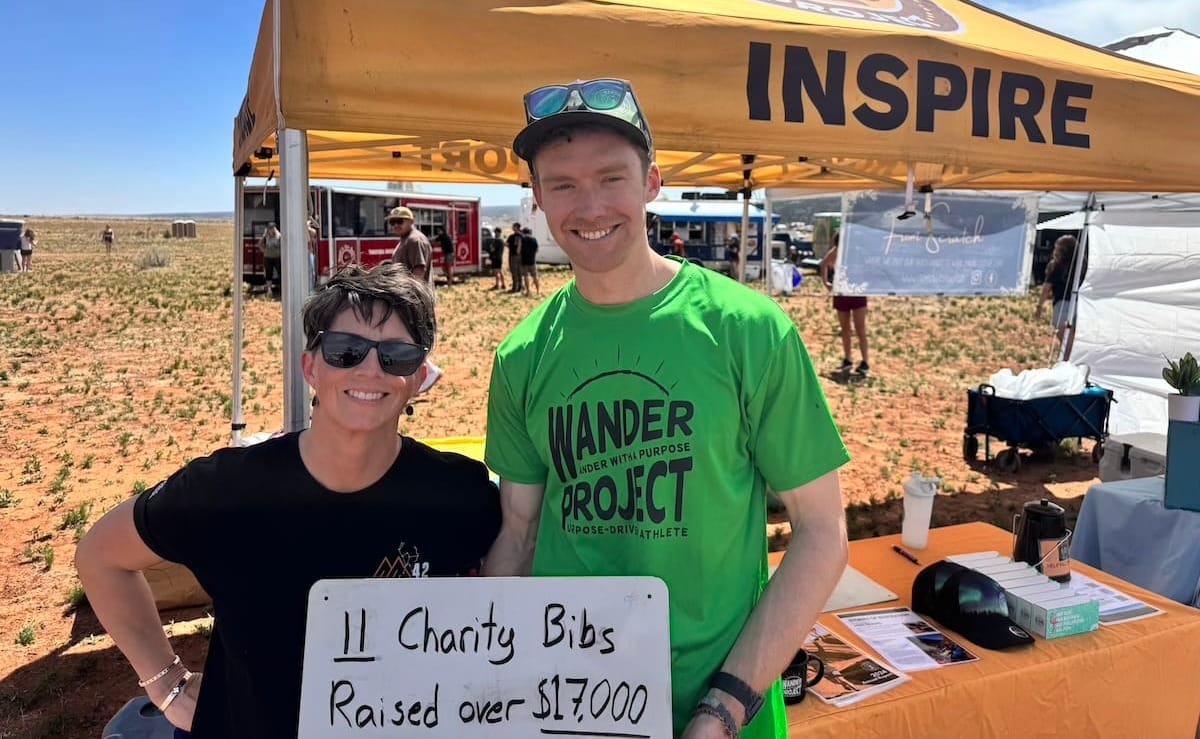
The organization is known for its charity bib program, in which runners commit to fundraising money for a nonprofit organization in exchange for a free entry to a race. Vacation Races is an original race series partner, and since joining the organization, Zander has been expanding the lineup of event partnerships.
“The focus that I’ve brought a bit to the organization is a little bit more targeting these trail running events and ultra distance events,” he shares.
Today, they partner with 30 events, including trail races produced by Aravaipa and Mad Moose.
On the nonprofit partnership side, Zander shares, “Some of our big ones are Bigger Than the Trail, which advocates for mental health, specifically around trail running; Challenged Athletes, which is a bit more on the physical health side of things, helping people with disabilities. Rising Hearts is another one, empowering indigenous voices.”
Creating Connection Through Storytelling and Community
Zander says he’s working toward ways to make running for a cause more mainstream by increasing awareness around charity bibs and communicating what purpose-driven running can look like.
The Wander Project team shares the stories of charity bib participants and their “why” behind running and the nonprofit they’ve chosen to support. Storytelling varies between short social media posts and longer form articles published to “Run for a Cause” on Substack.
Wander Project’s ambassador program is another way they’re spreading the word while also creating a sense of community for runners interested in leveraging their races as a vehicle to fundraise. And for those signed up for a charity bib through Wander Project, Zander sets up opportunities for connection, such as group Zoom calls, among runners signed up for the same event or fundraising for the same cause.
Below, Zander shares his motivations to leverage running to do good in the world, the barriers he sees in getting more people to run for a cause, and the ways runners can participate on their own terms.
How did you first get involved with Wander Project?
Zander Chase: I got involved with [Wander Project] about three years ago. Living in Seattle, I was doing a lot of running. Wander Project partners with different running events, and a couple are based in the Seattle area, so I had heard about them.
Separately, there were a couple of things in my life that were going on at the same time. I was seeing a lot of wildfires in the Seattle area — just a lot of the impacts of climate change. My grandmother lives in Florida, so she was very impacted by Hurricane Ian that happened there in 2022.
Right around then, I was like, ‘Okay, what can I do?’ I was kind of working on it professionally at a climate tech startup at the time. I was doing a lot of running. I was like, ‘How can I use this running and, instead of just running really far, draw some attention to these problems that I’m seeing in my life and around me and the places I live that are affecting people I love?’
I went through the Wander Project model, and fundraised a bunch of money, and shared it out with my network. It was a very powerful experience.
Through that, I got more involved with the organization and did a little volunteering, then stepped onto the board for a bit. Right in that period, there was some transition with the leadership at the organization, and there were some changes in my professional life as well that kind of lined up, and I ended up stepping into the role of executive director at Wander Project to move it into a new chapter.
How are you working to expand Wander Project’s charity bib program?
Zander Chase: A lot of these bigger, more established road racing events will have their own charity bib program …. You can run for a charity and get entry into those events. But a lot of trail races don’t have any charity bib program like that. They don’t have much fundraising around the event, mainly because they’re smaller operations. It’s sometimes just one person.
Our recent focus has been trying to partner with these different trail running organizations and with different nonprofits as well.
The nonprofit side of that is, there are a lot of organizations, and we group them into three rough categories. It’s organizations that advocate for the environment and environmental health, mental health, and physical health.
These organizations have a lot of supporters who are into extreme endurance or into trail running, especially the ones that are giving back to national parks, or public lands, or areas that are closely related to the events taking place. We’re working to combine the two — really leverage some of our connections in the running world to offer a platform for people who want to support these different organizations.
We do have some partners that we’ve built relationships with, and we try to support them and find folks who want to run for those causes. But if someone comes in with a specific cause they’re very passionate about, we’ll work with them so they can fundraise for that cause.
Why do you think running is an important vehicle toward change, and what advice would you give readers on getting involved?
Zander Chase: So many of us run and have this strong why behind it. Really harnessing that energy, that power to fundraise and advocate, and just raise awareness for something we believe in — that’s ultimately what we want to share out and have in the world.
It doesn’t need to be a charity bib at one of our events. It can take many different forms. But I think using that momentum through movement, through storytelling and the outdoors, through extreme endurance — leveraging that to advocate for some cause that you believe in, I think that’s powerful.
I feel like that can take a lot of different shapes as well. So if running 5Ks are your thing, how can you turn that into running for a cause? If running 250 miles is your thing, how can you turn that into running for a cause? If you like doing self-supported adventures, what does that look like?
If you don’t like running and like biking, or if you like cooking, or anything else, what does that mean to turn something that you have a passion for into a way to support something you care about?
I would encourage everyone to find that cause that you’re deeply passionate about, and a nonprofit that is doing important work in that area. When you find that connection, we see people are motivated to really go out of their way, and not only donate money, but also fundraise on behalf of them.
It seems like we’re often helpless. In today’s society, there are so many big problems going on. It’s like, what can you do? I just encourage folks to take that first little step in some direction.
What do you think would help more runners start fundraising for a cause?
Zander Chase: Making it less intimidating is one thing that I’ve been thinking a lot about. I know, from personal experience, I really don’t like sharing stuff on social media, and I was very intimidated by the idea of fundraising a lot of money or being held to that amount. That, I think, is a blocker for a lot of people.
The first fundraising thing I actually did was a hike-a-thon, so it was more flexible. There was no required minimum fundraising amount, and so that was helpful to get a sense of, ‘Okay, I can make a post on social media. I can write a text to my close friends and share my story, explain why this cause means a lot to me.’
It’s surprising what your community or your support circle will do. People want to help. It’s often just hard to ask for that help.
Making that ask very small at first and very unintimidating, I think, is helpful to spur this idea. And then, by sharing stories and just getting the word out there, having it talked about more, will hopefully make it seem less intimidating and something that anyone can do.
What else can runners do to get involved in purpose-driven initiatives?
Zander Chase: Just getting out in the community that you’re in.
Recently, I’ve been going to more events that bring runners together, or working with different nonprofits that are building a community of runners. And I feel like that is super powerful. There are a lot of awesome nonprofits out there.
Getting involved with nonprofits or run clubs in your community, and talking to people, and just getting those connections going. I feel like running, in general, is a powerful connector to bring people together. And then, you’ll be surprised where those connections might bring you down a path of common interests in some area.
For me, it’s been the environment. So, running, meeting people who are into fighting climate change in different ways. Connecting with those folks with the commonality of being runners, that’s an instant connection. Then, from there, trying to do work in different areas.
The other day, I was looking at this organization called Adventure Scientists. They are trying to harness the power of runners and hikers to collect samples of soil and the outdoors to do science. It’s like a community science project …. Footprints running camp is another organization that I was involved with, and they’re all about bringing people together who are focused on solving climate change in different ways.
Running is a great way to bring people together and find others who might share common interests.
Visit Wander Project to learn more about running for a cause.
“It seems like we’re often helpless. In today’s society, there are so many big problems going on. It’s like, what can you do? I just encourage folks to take that first little step in some direction.” – Zander Chase