Wild Poppy Creative’s Emily Holland on Gaining Perspective Through Trail Running and an Alcohol-Free Life + Running Podcasts
Co-founder of podcasting consulting company Wild Poppy Creative, Emily Holland shares how an alcohol-free life and a love of trail running helped her push past limiting beliefs, plus her insights on top running podcasts.

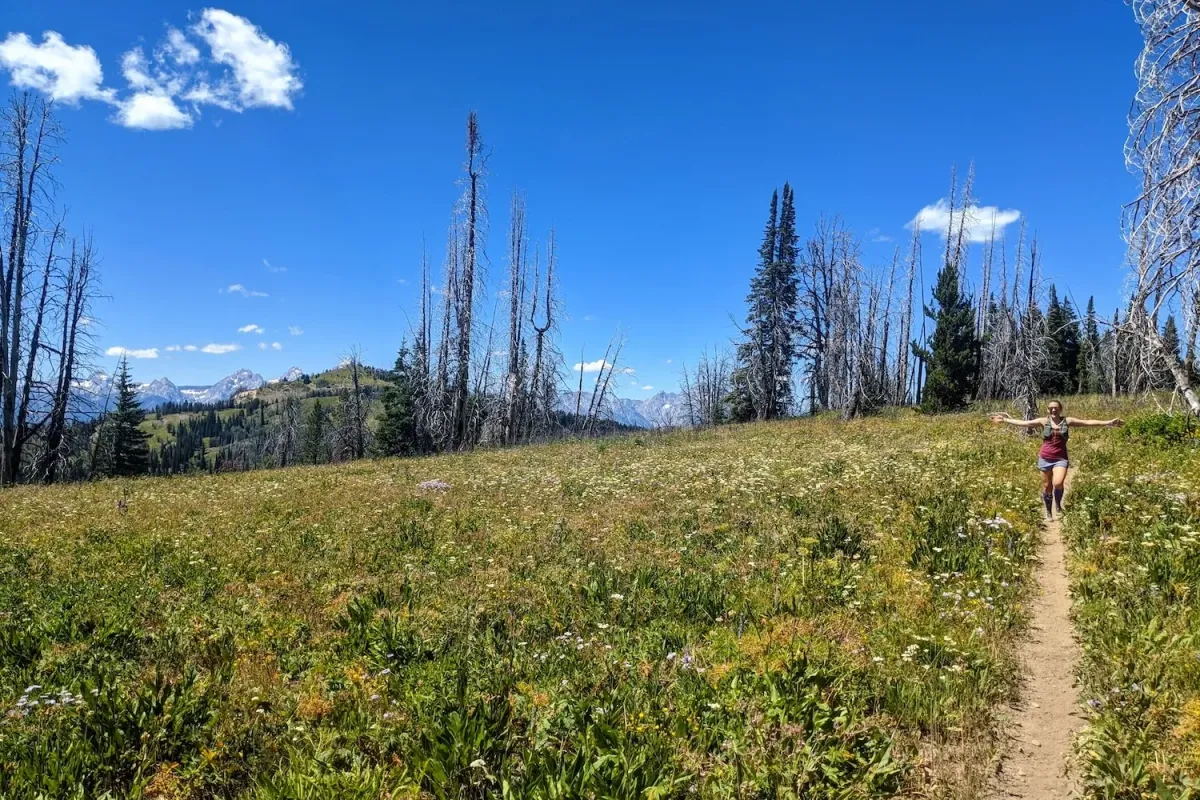
Growing up, running was a type of punishment for Emily Holland, from sprints at basketball practice to working off the day’s calories.
Even into her mid-20s, training for a marathon, she shares, “I wasn’t doing it because I liked the activity. I was doing it because I thought it made me skinny and smaller, which is what I was always trying to go for.”
Discovering trail running helped her forge a healthier relationship with the sport. As did choosing to stop drinking five years ago — a decision Emily says resulted in more confidence to pursue greater endeavors in and outside of running.
After leaving a corporate job as an account manager for a market research firm serving Fortune 500 companies, the opportunity came up to help with someone’s podcast, which led to working with more clients.
No stranger to the podcasting space, Emily previously co-hosted a successful show called “The Stokecast” with friend Jonathan Ronzio. They interviewed athletes, ambassadors, and people in the outdoor industry. After that, she hosted her own show about sobriety in the outdoor space called “Nature Untold.”
“I just love the medium of podcasting …. You can go from hearing about Roman history — of their war strategies — to understanding the Kendrick Lamar-Drake beef in one medium. That is wild,” Emily shares. “The breadth of information and the culture-changing that can happen in podcasting is incredible.”
Last year, Emily co-launched a podcast consulting business called Wild Poppy Creative Consulting with Angie Marie. The two women work with podcasters, primarily in the outdoors space, to help build their shows into sustainable business models.
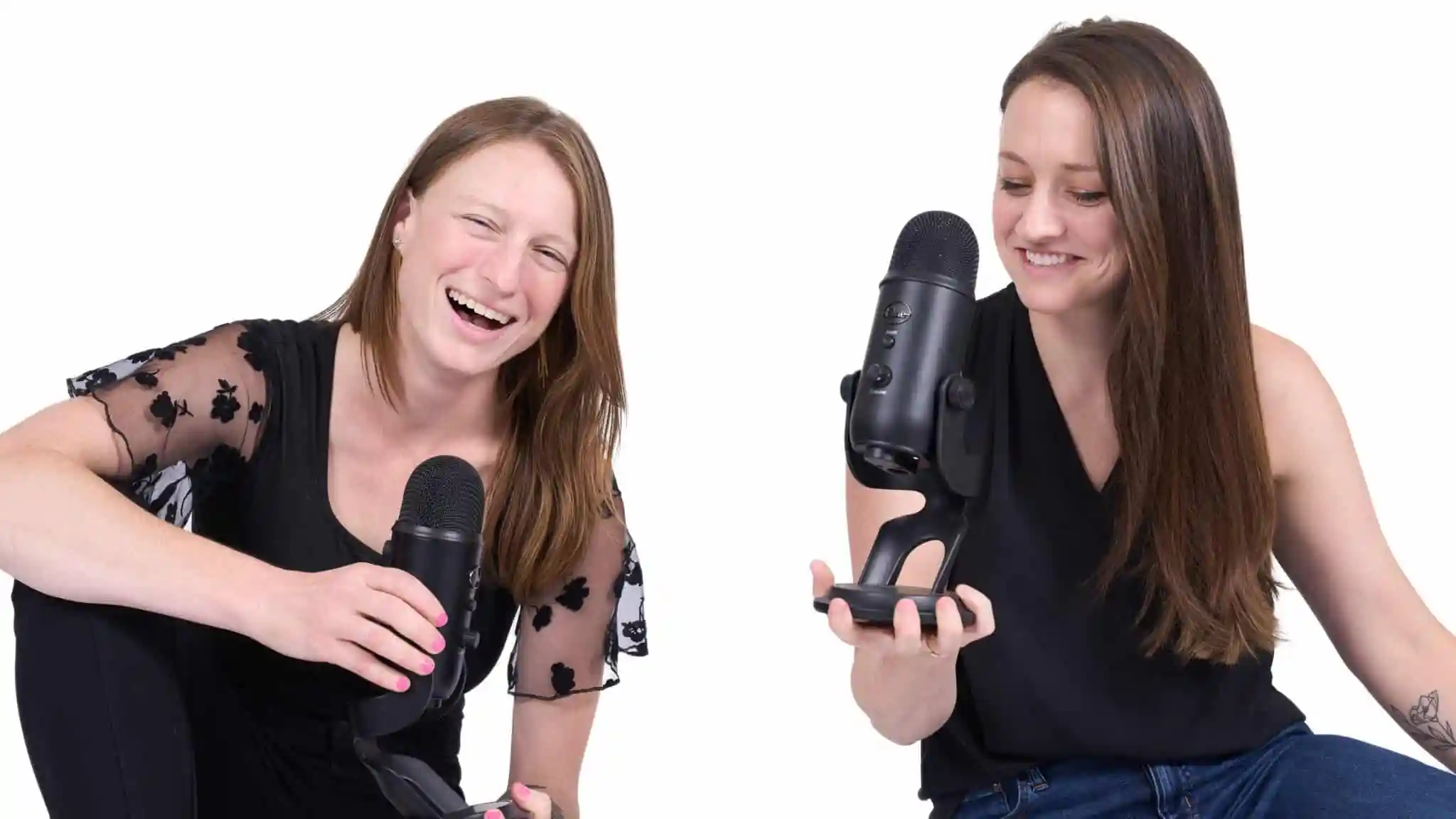
Outside of building a business, Emily is focused on running trail ultras this year while treating her body kindly and enjoying the process. Below, she shares more about her love for trail running, the positive and widespread benefits she’s experienced from an alcohol-free life, and her insights on running podcasts.
How did you get into trail running, and where has the journey taken you so far?
Emily Holland: I was trail running with my partner up in the White Mountains of New Hampshire, and I absolutely hated it because it was so scary. I was like, ‘I’m gonna fall on all these rocks and roots. I don’t really like this at all.’
But then, eventually, I got into it.
I mean, I thought it was a cool way to do mountains faster in the Northeast, and I decided to sign up for my first trail marathon. I was so slow and did not train correctly — and it was also one of the most amazing experiences of my life. Just the vibe, you know? People are talking to each other. There are trail angels. There was literally a woman I saw who gave me such encouragement on that race. I never saw her again. I don’t even know if she was real.
I really love the vibe of the trail marathon, and I decided, ‘Okay, I’m going to do this.’ And so, I did my first 50K and a 30K, all trail. And I just really fell in love with trail running, especially as I moved to Colorado and lived in Boulder.
Then, I was influenced, I would say, by the Boulder community, and felt very insecure about my athletic ability in comparison to some of the elite athletes who live here. And I kind of got sad, and I didn’t really like it as much anymore, and I felt very comparative. I was on Strava all the time, looking at people’s paces and stuff, and I would hide my paces or hide my workouts from people.
I focused on rock climbing for a few years.
In the last year, I literally listened to a “Strength Running” episode with Sally McRae. And Sally McRae, as a lot of people know, is an incredibly inspiring human being. She had so much to say about the value of doing hard things. And I was like, ‘You know what? I’m doing this again.’
So, I decided to do two ultras this year in 2025 and be a smarter athlete with my training — really focus on stabilization, mobility, in addition to all the running training and strength training I was doing. It’s been rad, and I’m so excited to see what I can do this year.
How did choosing to stop drinking influence your mindset on running and other areas in your life?
Emily Holland: To say it didn’t change everything would be a lie. I mean, it changed my entire life to stop drinking. I started drinking the same time I started running, so a long-term relationship. I was 14 and had a very up-and-down relationship with it until I was about 23 or 24, I think. Then I started to slow down a bit.
I would do dry Januarys here and there. I found that during those dry Januarys or during any time off from alcohol, I felt that I was able to see clearer. I had better energy. I wasn’t as emotionally reactive. There were a lot of benefits to me, but for some reason, I just couldn’t take the next step.
The final dry January that I did, I went back to drinking in February and had one or two drinks, and then finally I had the last drink, which was on the 15th of February 2020 — weird timing. I had one hard seltzer after skiing one day, and I remember feeling like I didn’t have the same motor control as I did when I wasn’t drinking. And for some reason, that really did it. I was just like, ‘I’m done with this. I don’t want to do this anymore.’
It was an active decision. I know for some people, they have a physical dependence. That was not my situation in that moment. I think for that reason, I had a little bit of an easier time letting it go.
For the first year, essentially, I was like an open, exposed nerve. All the emotions were flooding back. My brain was rewiring itself. Everything was kind of coming to homeostasis again. And in that year, I did a lot of growing and healing, did a lot of therapy.
On the other side of that, now that I’m past my five-year mark, I feel that the biggest difference is that I have way more belief in myself than I ever did when I was drinking. I don’t know if that’s a factor of the drinking itself, or if it’s all the work I’ve done since then with all my therapists and coaches and just a board of directors, really, to help me stabilize this thing.
But I wouldn’t have probably signed up for these races. I probably wouldn’t be taking care of my body the way that I feel that I am now. I wouldn’t be trying to tackle my anxiety head-on. I wouldn’t have gone to Kilimanjaro and done that. I wouldn’t have even thought that was possible for me.
It just opened up all these possibilities for me that are not just related to running — they’re in every category of my life. I don’t think I would have quit my corporate job if I was still drinking. I think I would have been too scared. So, anyways, [it] opened up so much possibility for me and self-belief.
After leaving your corporate job, how did you get into the podcast consulting space?
Emily Holland: [When] I left my job, I had no idea what I was going to do. I didn’t have a plan, and I just thought, ‘Okay, I’m gonna take some time off and see what happens.’
Literally, like the week I was leaving my job…a contact reached out and said, ‘Hey, do you ever help with other people’s podcasts?’ And I said, ‘Well, now I do, so let’s go!’
It was really almost like happenstance that I started. But because I loved the medium so much already, I had experience with podcasts before, I just felt like, ‘Oh yeah, I could definitely do this.’
The way that Wild Poppy came into the world…Angie — [She] is incredible. She’s such a badass in all things. She’s an author. She’s an expert in menstruation health. She’s very outdoorsy, like a mountaineer, a bike person, a running person, a paddle person. She’s like all the things all the time, just a true, true badass. She and I were working together for a while. She was working as a subcontractor for a lot of our clients, and we just kept adding projects. We really liked our working relationship, and we were like, ‘Why don’t we formalize this thing?’
So we did, [in the first quarter] of 2024. We both realized that we had tattoos of poppies on us, and so we named it Wild Poppy because we’re a little wild as well. Now we support and guide podcasters on their journeys, which can be much more like a business journey than it is just a content creation journey.
As a podcast consultant, a former host, and a listener, what do you love most in a running podcast?
Emily Holland: For running podcasts, I love a podcast that makes me feel inspired. So, ‘Oh, I could do that, too,’ not like, ‘Oh, this is so out of my realm of possibility that I definitely can’t.’
That episode with Sally…yeah, I’m not gonna run a 240 trail race. That’s never gonna be my life. But I understand what it’s like to put yourself in the pain cave. I understand what it’s like to do a suffer-fest and come out on the other side. And I like that feeling. So I can really connect with that. I think inspiration is really important for me, but inspiration that feels achievable.
But then also, I really don’t give a shit about paces, splits, the science — that’s just not important to me. I care about mindset, maybe goal-setting, more of the lofty social science side of running. I don’t really care about the newest, latest trends that we need to care about in running. That is not interesting to me …. I’m not taking an academic approach to running. That’s just not my vibe.
Do you have a few favorite podcast recommendations?
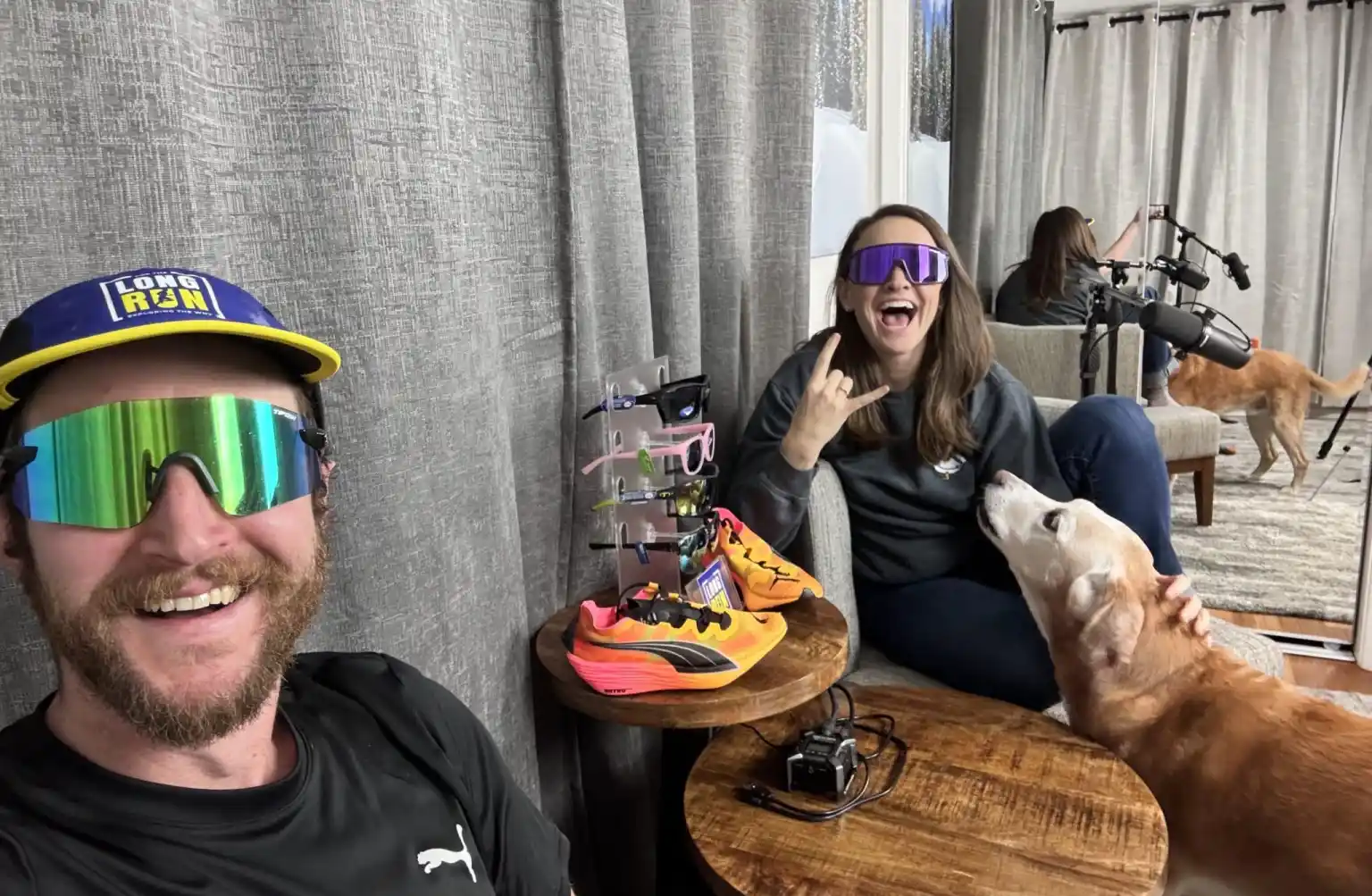
Emily Holland: Of course, I love “For the Long Run” and “Strength Running.” But I also really like “Your Diet Sucks,” which is, I guess, more of a tangential podcast — it’s not exactly running, but it’s for endurance athletes. In the same vein, I like “Eat for Endurance,” which is Claire Shorenstein’s podcast.
I like when there’s a runner on a podcast that isn’t necessarily all about running. I love listening to people on Rich Roll who are in our little trail running world who get elevated to this cool level …. Even Emily Abbate’s podcast is running, but it’s also not. It’s about so many other things, too.
(Full disclosure: Hosts of “For the Long Run,” “Strength Running,” and “Eat for Endurance” are clients of Wild Poppy Creative.)
What advice would you give to someone thinking about starting a podcast?
Emily Holland: Running creators, I think, are really important. I think all creators, and podcasters in particular, are very important to our culture and to change happening. I would just advocate for people who are already creators and have platforms to…try to amplify voices that don’t get as many mentions or follows or whatever. If you have a platform, you do have a responsibility to bring diverse and interesting voices to the table and amplify those people who are doing great things in the community.
I would also say, if you’re not a creator, but you’re thinking about it, it is never too late to start. There are so many platforms and channels that you can go down at this point. Even if you’re podcasting for the first time and you’re like, ‘Wow, there’s so many running podcasts, how can I even do it?’ — there’s always a lane for you to differentiate yourself. We’re nowhere near saturation on that side of things. So if you’re thinking about it and interested in it, I would say, go for it.
Follow Emily Holland on Instagram.
“To say it didn’t change everything would be a lie. I mean, it changed my entire life to stop drinking …. Now that I’m past my five-year mark, I feel that the biggest difference is that I have way more belief in myself than I ever did when I was drinking.” – Emily Holland