Women In Ultrarunning Founder Rachel Bambrick Shares the Common Barriers Women Face In Getting Into Ultrarunning
Ultrarunner, running coach, and founder of Women In Ultrarunning, Rachel Bambrick breaks down the reasons women are less likely to run ultras, plus how her nonprofit is making the sport more accessible and welcoming.
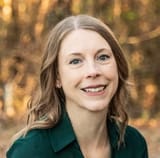
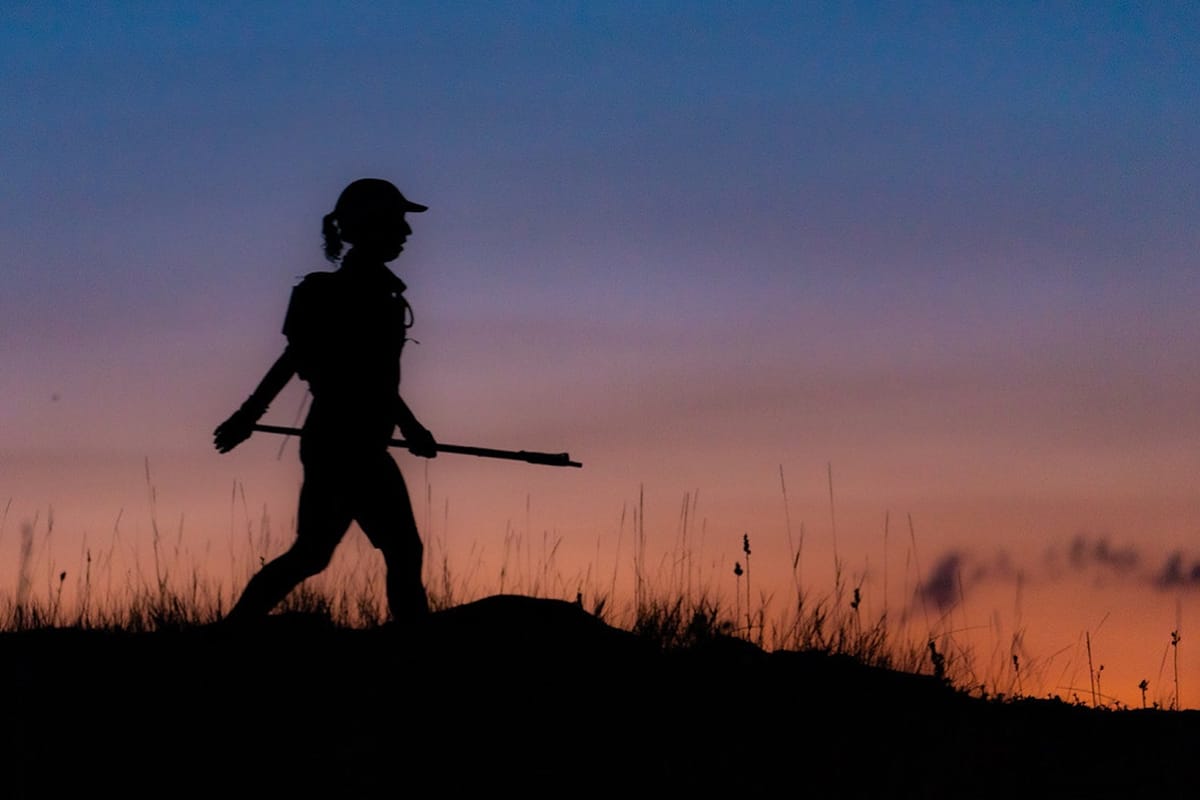
When Rachel Bambrick moved to Philadelphia, she was looking for a way to make friends and quickly realized how difficult it can be in a large city. But then, she found the running community. Despite the initial intimidation of navigating Philly’s large number of run clubs, she began attending different ones and meeting fellow runners.
Among them was a woman training for the Run Across Haiti, a 200-mile, point-to-point run across the country and a fundraising event for the nonprofit organization WORK.
“I followed her journey, went on training runs with her, got to know her better,” Rachel shares.
A year later, in 2019, Rachel got her chance to be a part of the experience. Across the seven days of running, she shares, “The shortest day is 13 miles, and then the longest day is 52 miles. So, within that, I ran multiple of my first ultras.”
Diving Into the Ultrarunning Community
Returning to Philadelphia, Rachel realized the ultrarunning scene was where she fit best. But as she got more involved in the community, she noticed a gender gap.
“I figured, when I was getting into the sport, that there had to be tons of women here. It’s a space in sport that we really can excel in, so there must be many women running ultras,” Rachel explains. “Seeing that there were not, I think that’s what really prompted me to wonder, why is that? And what could we do to change those things?”
Especially considering women were winning ultra race distances outright, such as Courtney Dauwalter taking Moab 240, Rachel felt inclined to explore the barriers women face in getting into the sport. She found they were often tied to societal expectations, support systems, and family and financial circumstances.
She also noticed a stereotype these events seemed to carry, which didn’t reflect her own experiences.
“Ultras [are] described as really hard, they’re gonna break you down and tear you to your core, but you’ll still claw at it and find a way to finish, and you’ll be covered in mud and angry,” Rachel says. “It just felt like this very dark, intense space.”
For her, the aspects of ultrarunning that she loved most included the camaraderie and supportive community, the fun aid stations stocked with a variety of delicious foods, and the lightheartedness of dressing up in costumes for a race.
“I can be really strong and tough, but I can wear the glitter and the costumes and be silly and smile. Those things can coexist,” she shares.
Wanting to bring more women into the sport, Rachel began brainstorming on a way to provide ultrarunning education for women in her local community.
The Launch of Women In Ultrarunning
“We can diversify the gender of the sport. We can diversify the race of the sport. We can diversify the perspectives and what brings you there,” Rachel shares. “When we have all that together, that just makes it even more well-rounded and a better space to be a part of.”
With that mission in mind, Rachel pitched an idea to HOKA’s Philadelphia-area field rep to produce a four-part ultrarunning educational event series. As part of the Hoka FLYER Team, she gained the company’s support and received a small amount of funding.
At the start of 2024, shortly after earning her certification as an ultrarunning coach, Rachel hosted the educational series over four consecutive months. Topics included an introduction to ultrarunning, mental strategy, technical trail running, and nutrition.
“I was seeing people coming month after month to every event. I was seeing connections form,” she says. “People were remembering one another from previous events, making plans to run together.”
After fielding questions about whether Women In Ultrarunning had a logo, if they had shirts, and if they were going to have a presence at races, Rachel realized her efforts couldn’t end there.
She continued hosting monthly trail running and educational events for women in Philly who were interested in ultrarunning or already participating in the sport. At the end of 2024, Women In Ultrarunning was incorporated as a nonprofit. And in 2025, Rachel launched two new chapters in Colorado and Montana.
Expanding the Footprint of Women In Ultrarunning
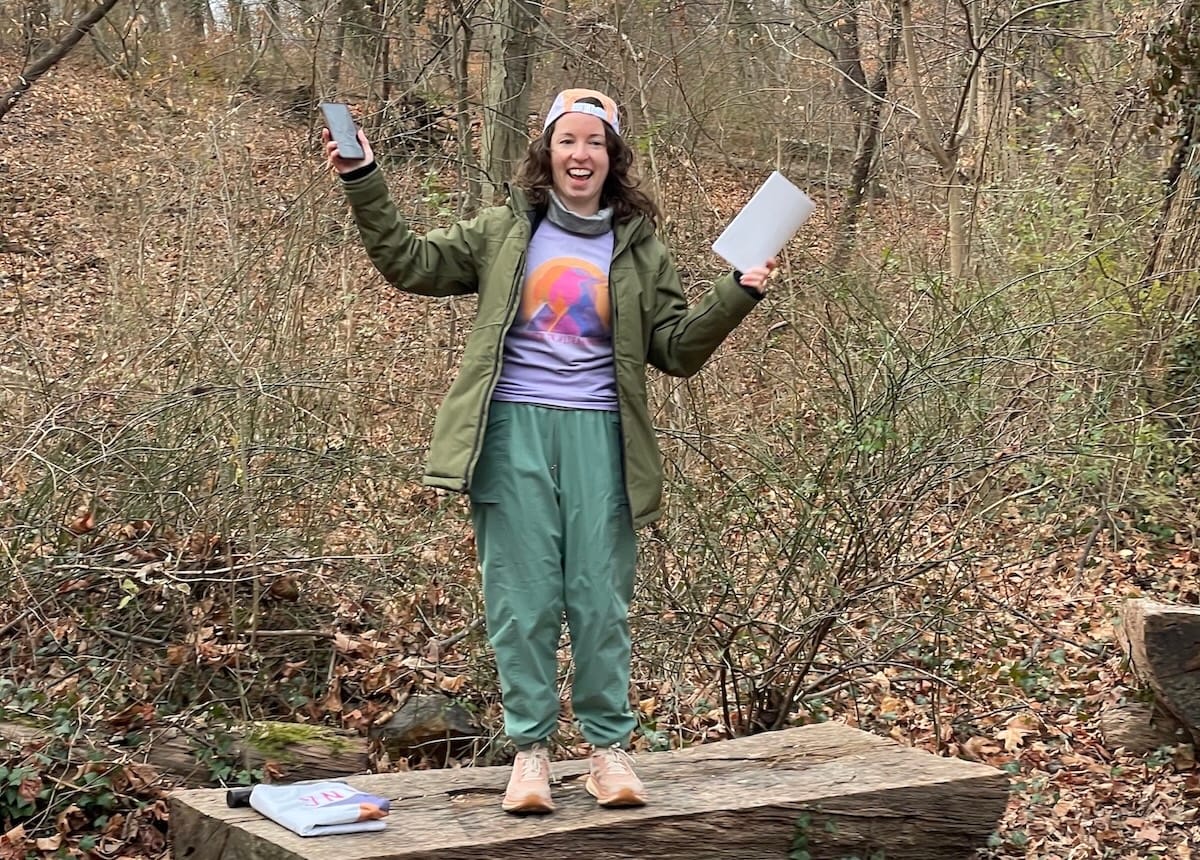
All three chapters of Women In Ultrarunning operate similarly. Each month, each chapter hosts a 60- to 90-minute trail run followed by a topic discussion led by a presenter, community member, or group leader. While some topics are the same, others vary. The groups in Colorado and Montana, for example, have learned about snow and wildlife safety.
Receiving more requests for groups in new states all the time, Rachel says she’s taking her time to develop how the organization launches new chapters and learn the ropes of operating a nonprofit. Her goal is to establish an application process for runners who are interested in leading a potential new chapter.
In the meantime, Women In Ultrarunning has an online community for runners in all zip codes. “We’re asking everything from how does one poop in the woods to how many Nerd Gummy Clusters can you eat before your stomach explodes? Anything and everything,” Rachel shares. “We’re really just trying to make it feel more welcoming.”
And as Rachel and her board of directors work together to reduce gender barriers and introduce more women to ultrarunning, grants have become a key component. In 2025, they were able to provide five $500 grants to women pursuing journeys in the sport.
Below, Rachel shares more on the grant process and recipients, the common barriers women face in ultrarunning, three ways Women In Ultrarunning is increasing access to the sport, and what keeps drawing her back to the ultra distances.
What attracts you to ultra distances and trail running more than road running?
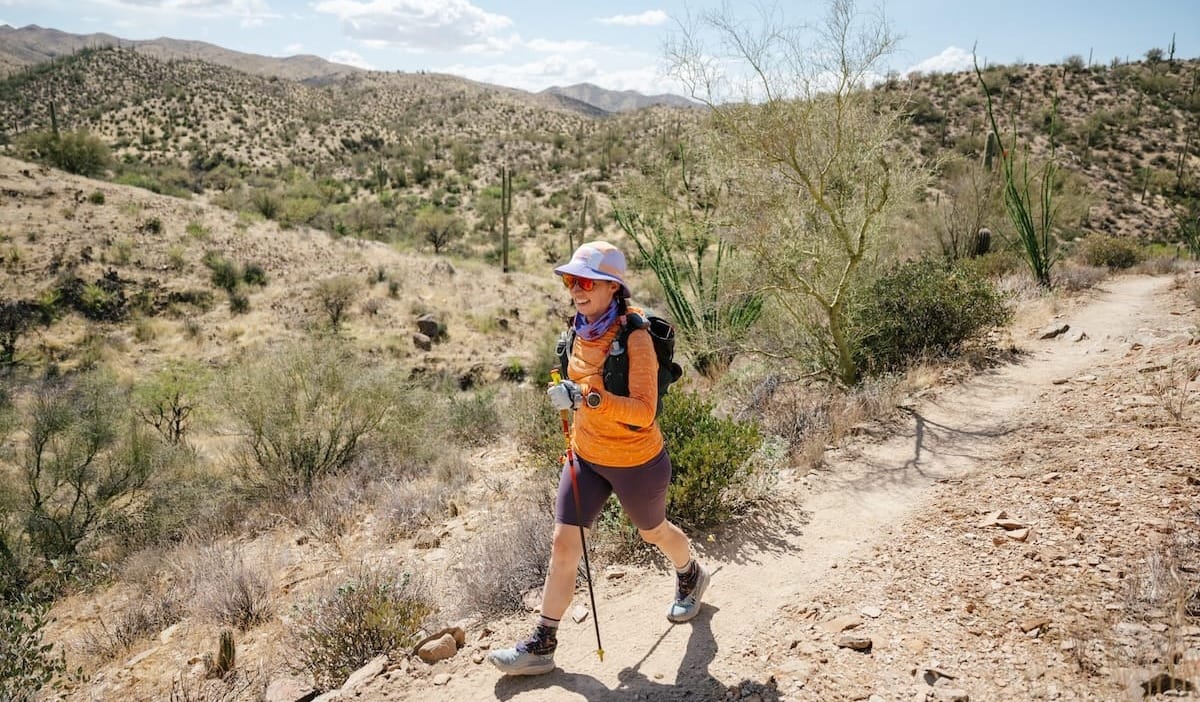
Rachel Bambrick: Some of it’s just personal preference, but I think some of the bigger things that really keep me going back to it are: I choose a lot of races that aren’t local, Not because I don’t like our local races by any means, but just because, to me, if I’m going to go and do a race, it should be an adventure. I love to go places that I’ve never seen before. I love moments in ultras when you’re in the middle of the night, climbing a mountain. When else would you be doing that?
I love those moments where you can stop and think, there’s no other reason for me to be here — besides this sport, besides this race, besides this experience.
I love the mental aspect of it. I think it comes from a huge place of privilege. I live a very standard, good life, I guess, for lack of a better way to describe it. I don’t often have a lot of moments where I can really see myself be strongly resilient in day-to-day life. I think in ultrarunning, I’m able to put myself in these tough positions to kind of make myself suffer a little bit and see how I can overcome those things and be able to learn that about myself — that I am resilient and I can overcome hard things. Being able to see that, and then take that back to day-to-day life, I think it’s really important and such a cool part of the sport.
The last part is just the community. I think anyone who’s been immersed in the ultrarunning world, or even trail running, too, with the sub-ultra distances, the community is really special. Nothing against road running or anything like that, but I do think there’s just a slight bit more camaraderie in the trail and ultra space. I think most people are doing races really because they want to complete it for themselves and learn something about them internally. That takes a little bit of that competitiveness out. Everyone is there to support one another. We all want to see each other succeed.
What are some of the barriers you’ve found women face in getting into ultrarunning?
Rachel Bambrick: There’s a huge variety of barriers that I think women face on entering the sport, from societal expectations. Women are asked far more often than their male counterparts how they find the time for training, because who’s at home? We still have these very entrenched societal norms about who should be caring for the home and who should be able to go out and pursue other interests.
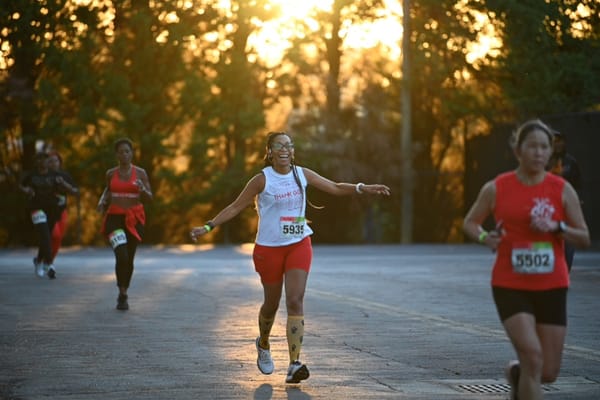
Also, if you don’t see yourself on a start line, if you don’t see yourself in race photos, if you see just a lot of men at these races, you’re not going to be as inclined to put yourself in those spaces.
There’s also the other kind of entrenched societal piece of, women are a lot less likely to put themselves in situations where they’re not certain of the outcome, [where] there is a chance, or a high probability, of not being successful. Whereas men are a lot more willing to try, but with the openness to also fail, and then come back to it and try again. I just think, historically, men have had a stronger and a bigger safety net than women. There’s a lot more for them to fall back on, and that’s just something that I think is still part of our society today.
Those are some of the barriers that women face. And then, when we think of all of those coming together, we’re going to see fewer women at the start line, and then we’re going to see fewer women in race photos. Then women are going to feel like, again, they may not belong there.
Can you share the ways Women In Ultrarunning is working to get more women into the sport?
Rachel Bambrick: The way that we’re approaching bringing more women into the sport, or increasing access to the sport, is through three different avenues.
The first being community building …. If we think about that piece, if you feel like there are people at start lines [who] look like you…you’re more willing to be in that space. So it’s decreasing that barrier to entry and creating community, both with our in-person events and chapters, and then our online community.
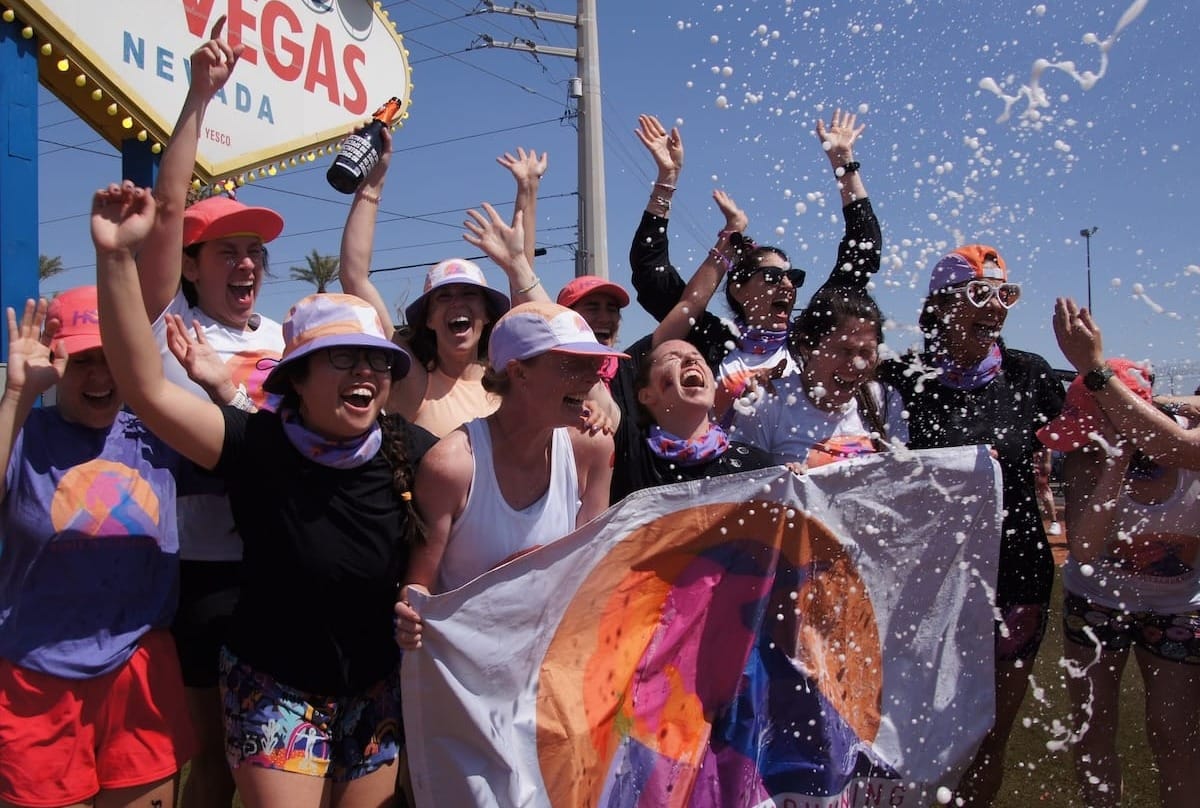
The second being education. From the outside looking in, ultrarunning feels very daunting and very scary. And how do you learn X, Y, and Z? That’s why all of our events have an educational topic focus. All of our chat forums, or at least a lot of them, in our online community…we have a gear one, a mental strategy, nutrition. So you can go and ask questions, maybe things you didn’t know or were afraid to ask otherwise.
If we just think that those two things will fix everything, it’s a little naive, because we know how expensive running is in general. Then, when you go a little bit longer, costs just continue to add up, and there’s just a massive financial barrier to entry. This is not necessarily just gendered, but there is the fact that in a variety of households, maybe women do not have access to all the finances of the house, maybe they are more in the provider role for their family and they’re just able to afford that.
While there is a financial barrier for everyone, it can impact women in a disproportionate way. So, we really wanted to make a financial piece that third way that we approach decreasing the barriers to entry.
How does the process for the grant program work, and what are the intentions behind it?
Rachel Bambrick: It was always something we really wanted to do. But growing a nonprofit, or getting any money for a nonprofit, is hard in the beginning. It’s definitely a slow growth, and it still continues to be. But I knew, as soon as we had even the slightest ability to provide some measly form of grant to people, I really, really wanted to.
We first started with one $500 grant. And again, $500 is a drop in the bucket, but it is at least something. We launched our grant initiative in July. We had a grant selection committee and a group that really helped design the applications for that. Then that group was also fantastic and helped read through and sort and select our recipients, which was a crazy process.
We had over 130 people apply. I think we had over 60 people apply in the first day, which was crazy. So a lot more than I had anticipated, which was amazing. It shows that the need is there and the want is there.
Throughout the process of launching it, we had three very generous donors reach out and ask if they could match the grant. So, saying, ‘I would like to donate $500 so you can provide an additional grant.’ Two individuals provided one grant, and then one individual provided two. All in, we were able to offer five $500 grants.
Reading through those 130-plus applications, it felt like an impossible task, and I truly still think it was to narrow it down to five recipients. But we were able to, and we were able to offer those grants. In September, we announced [them] at our first big fundraising event, which was exciting. One of the recipients was able to be there in person. Since then, I’ve had meetings with all of the recipients to really talk about how they would like to use their funds.
That was another important piece to me, or to us as an organization, was that people were able to use it in ways that were meaningful and helpful to them. Not saying that it had to be used for a race or it had to be used for a coach or something like that.
One individual, she is running her first 100 miler next year, and she knew she wanted to work with a coach, so we covered five months of coaching for her leading up to her spring race, and she’s already set with that. Someone else is going a slightly different approach. She wants to put together a team for a 24-hour relay race that’s in Philly…and really showcase a diverse team from her community.
Follow @womeninultrarunning on Instagram
“I figured, when I was getting into the sport, that there had to be tons of women here. It’s a space in sport that we really can excel in, so there must be many women running ultras …. Seeing that there were not, I think that’s what really prompted me to wonder, why is that? And what could we do to change those things?” – Rachel Bambrick