World Run Finisher Marie Leautey on How to Live Free From Limitations
Marie "Lootie" Leautey, the fastest woman to complete a world run, shares why experience mattered most along the journey and how self-imposed limitations keep us from achieving more.
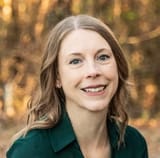
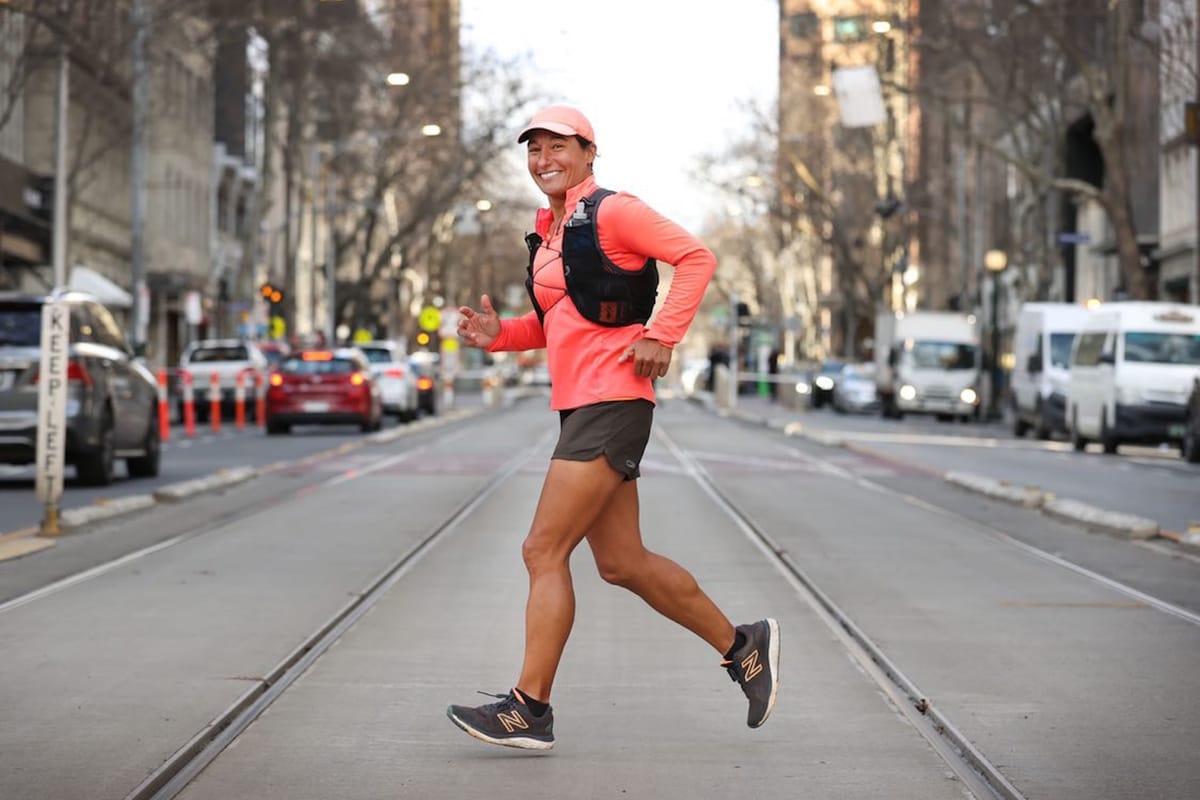
Marie “Lootie” Leautey has never been one to settle. Choosing a nomadic lifestyle and always in pursuit of new experiences, she’s spent time living in France, Scotland, Greece, and Singapore.
After five years of working in Asia as a financial consultant, Lootie was itching for her next adventure when an idea came to her:
Why not run around the world?
Lootie began in her 20s while living in Greece. But she shares in her book, Lootie’s World Run, released in English this July, that the idea to run around the world was driven more by her love for exploration. Her feet would simply be the vehicle for the journey.
At the time, six people had successfully completed a run around the world. Only one was a woman.
The officiating organization, the World Runners Association, stipulates that a runner must meet 10 specific requirements for the achievement to be certified. Among them, a runner must fully cross four continents and cover a distance of 16,300 miles (26,232 kilometers).
Lootie spent two years preparing, both mentally and physically. In December 2019, she embarked on her journey to run a marathon a day while pushing a stroller that carried her gear.
697 Days of Marathon Experiences
Just months after she began, Lootie faced the first of two setbacks due to COVID-19 travel restrictions. Despite the unexpected challenges, she writes about the kindness in humanity across continents, from providing her shelter when her accommodations were canceled to stopping along highways to offer food and water. The stroller, she says, acted as a point of curiosity and goodwill.
“I think it attracted even more generosity towards me, which is great, because that’s one of the things I was seeking through this journey — meeting people and forming connections,” Lootie explains.
Many of those encounters are described throughout the chapters, including several in the United States. While in the U.S., Lootie made a stop in Chicago to run the Chicago Marathon. She also paid a visit to the White House and to other national capitals to meet with leaders and give talks to school groups about the charity she was fundraising for, Women for Women International.
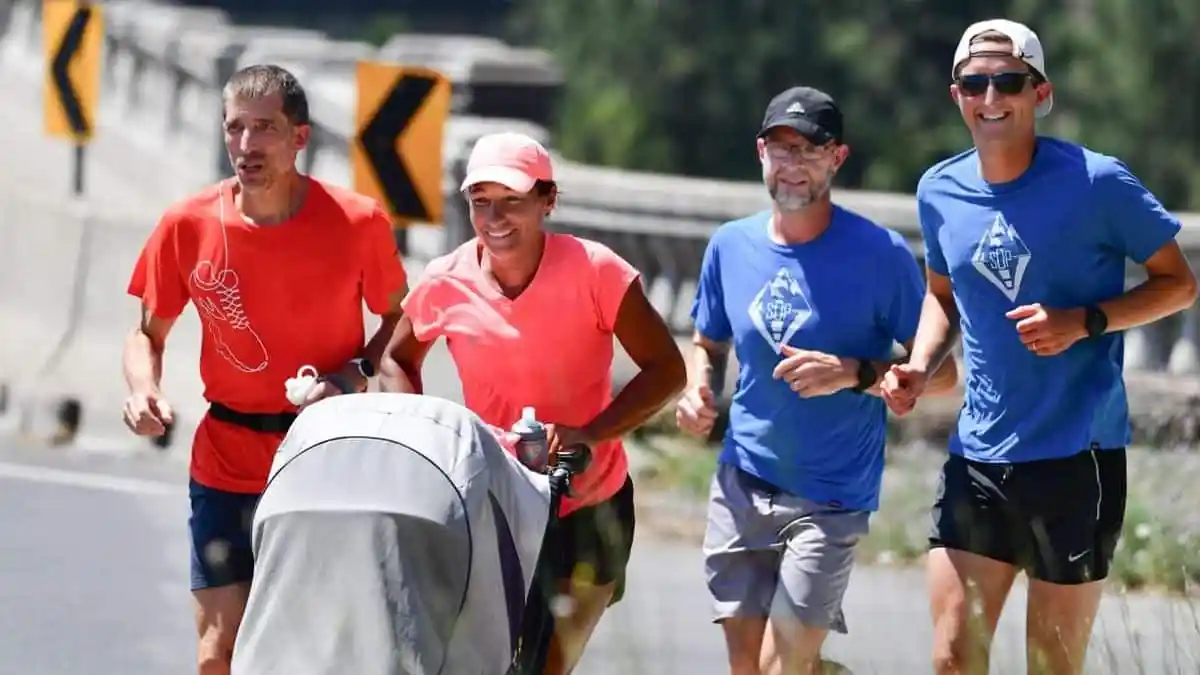
Lootie faced long stretches of road, such as in the state of Montana and Australia’s Outback. While those seemingly never-ending miles might be enough to discourage many runners, she says she was never bored.
“When you travel these distances by car, you have the feeling of nothingness. When you run through this, it’s amazing what you discover,” Lootie explains. “I never felt a day was the same as the previous one. There is always something that surprises you.”
Below, Lootie shares the mental preparation and daily mindset that propelled her through the world run, the ways we impose limits on ourselves, and the importance of showing fellow women what we’re capable of achieving.
How did you stay mentally focused on the experience in each day’s marathon?
Marie Leautey: My preparation for this world run took me about two years, from the moment I had the idea to the moment I launched on the journey. And it was part mental preparation, making sure my mindset was oriented in the right way to carry me throughout the journey, that everything I wanted was strong enough and anchored enough in me.
When you are spending so many hours on the road every day and getting your reward as you’re moving along the road, it’s in your mind all the time. It’s part of the constant ongoing reflection. And running does encourage that, because when you run in the way I was running, you have no stress. You have no pressure.
I’m just constantly thinking about how grateful I am to be on the journey, how many things it’s bringing me, how many things I’m able to share with my family, with my friends, with people I don’t even know — the incredible feeling of meeting people who connect to the journey with me every day. All of these things are in my head as I’m running, and it’s a constant confirmation that my mind state is right.
You have a hard day. You are crossing the Andes Mountains. You are running at 4,000 meters. It’s just a slower day, and that’s what it is. Then the next day is going down again. You accept that things are going up and down, because that’s not your goal. The goal is somewhere else. It becomes a lot easier to navigate whatever the road throws at you, because it’s part of the adventure.
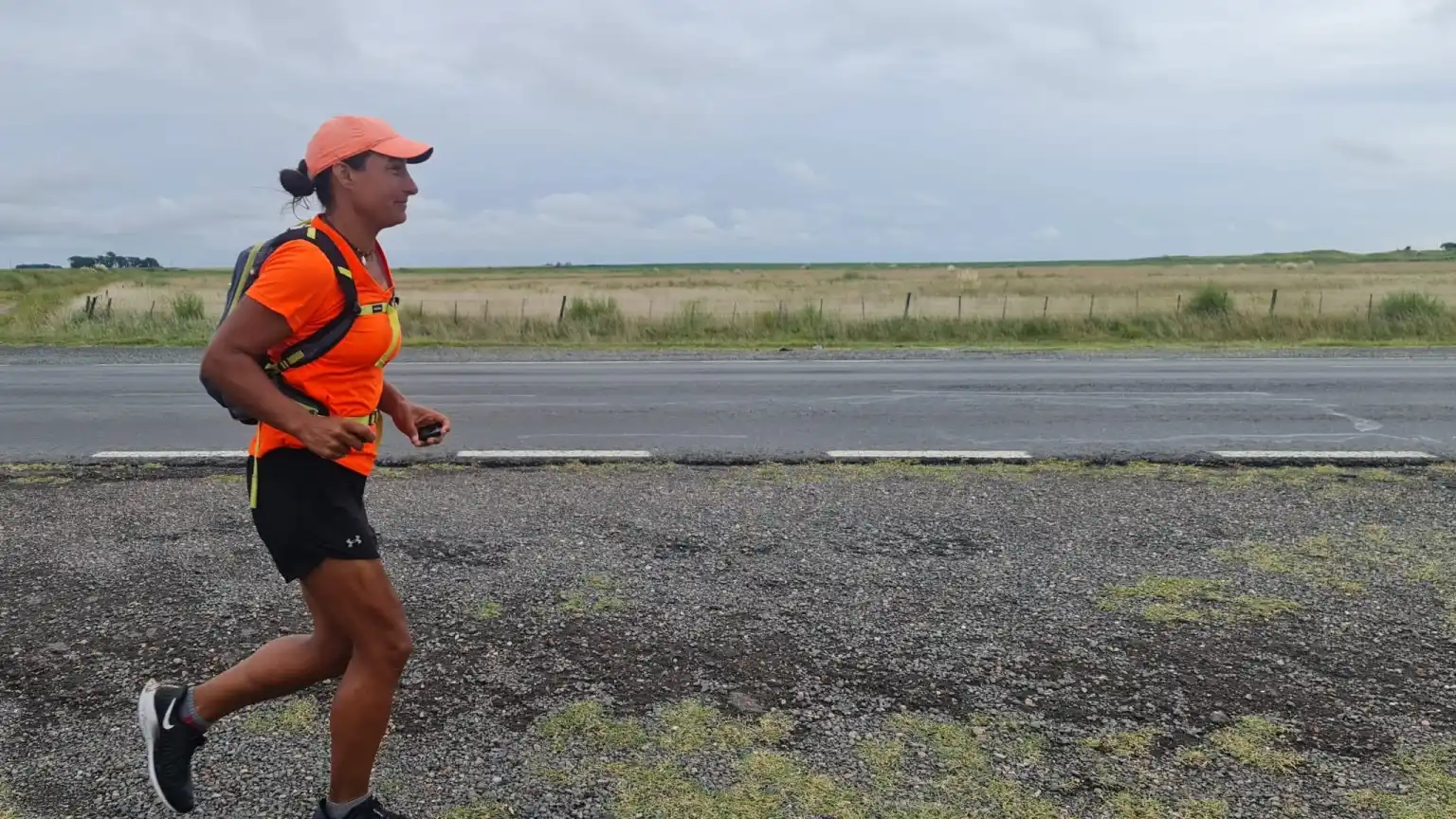
Many people would allow perceived limitations to stop them from embarking on an adventure of this magnitude. What can you share with others about overcoming limitations and fear?
Marie Leautey: When you can define a limit — ‘This fear is not my fear, it’s somebody else’s fear; therefore, it shouldn’t affect me and my choices’ — when you understand that, you’ve made a big step.
Most of the fears I was facing on my journey were the fears of others. I was not scared of being a woman alone, running around the world. Other people would be scared that maybe she’s…going to get attacked, she’s going to get this and that. These were not my fears. When you don’t carry your fear, you don’t attract it.
I really believe that there is something we exude when we are scared …. The perception that you send, the way people perceive you, is different when you are scared. That makes you more likely to be a victim of whatever it is you’re scared of.
So, I think the first part is to really work on fears. What are your fears?
It can be, for instance, ‘I want to do a marathon in 4 hours because I fear not achieving it if I put 3:30.’
Fear leads to limitations.
It’s also good to accept that sometimes you limit yourself, because that’s your choice, that can be a life choice …. ‘I can’t because I’ve got a mortgage, and I’ve got this and that, and I’ve got a car and I’ve got children.’
It’s understanding that fears and choices define what you will be able to do.
Were there any limitations you unknowingly put on yourself throughout the world run?
Marie Leautey: When I was preparing, I was thinking about how many kilometers can I run a day, and do it over and over and over. Like I said in the book, my job was 20 kilometers away from my home, so I started the habit of running home every day at my pace, thinking, ‘Oh, you had a full day at work, and then you did 20 kilometers running, and you’re fine, and you’re coming back to do your job the next day.’
This gave me the idea that maybe a marathon a day would be fine.
But there is this thing about the marathon. People run one marathon in a year, or maybe two or three, and I was going to do that every day. So when I set this distance, which I did very early in my preparation, I put a limit on myself.
Right now, there is a woman, she’s the third woman to run around the world if she completes it…and she is running about 60 kilometers a day, also pushing her 30-kilo stroller.
I set a limit upon myself right from the beginning.
I have no regrets about the way I did it. It was fantastic, and I loved it.
But maybe because I set the world record…that was an inspiration for [Andrea Prais] to say, ‘Well, I’m going to try higher.’ And basically, everything you try, no regrets! You’re part of the history of what makes other women reach for more, and I find it absolutely beautiful.
It just goes to show, we constantly put limitations on ourselves. Every time we set a goal, our goal is our limitation because we limit ourselves to reaching it. But there is a lot beyond it!
Why is it important for you to share your journey to inspire other women and girls?
Marie Leautey: I was born in ’77, so I grew up through the ’80s, ’90s …. Growing up with such a desire for the outdoors, for the adventure, I only had male role models, and it was very difficult. There were just a few women. I remember a great French free-climber who was astonishing, and I really loved her. I could connect to her.
The thing is, what we have as models defines our limitations …. It’s an unconscious limitation that comes from what we see around us.
So when I decided to launch on this journey, I realized I was going to be only the second woman in history to run around the world. And I thought, with this great adventure, and the privilege of doing this adventure, comes a responsibility. I become one of these voices, one of these figures that can say, ‘A woman can be an adventurer. A woman can do that.’
It became important to show it to other women, because when they see me do that, it will probably unlock a few fears or limitations …. At the end of the day, we can go for any adventure we wish, if we prepare for it, if we are really ready for it.
Since finishing this world run, I try to spend as much time as I can doing talks, going to sports associations, sometimes in companies. Just as much as possible, sharing about the journey so that the message goes through.
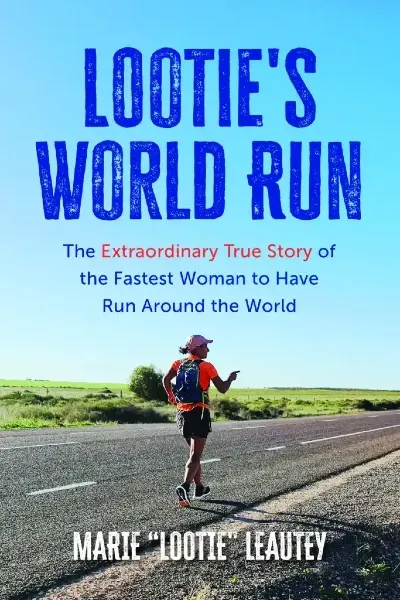
Writing this book in English as well is giving me a wider audience. If you go to a bookstore, or you go on Amazon, the keywords like ‘adventure,’ ‘exploration’ [are going to result in] mostly men …. I’m happy and I feel content to be able to place a woman on the bookshelf — a woman in adventure, exploration, running challenges. It’s not for me. I don’t have that ego. It’s not about me. It’s about women in general, and that’s the message I want to pass.
Learn more about Lootie’s world run here.
“Every time we set a goal, our goal is our limitation because we limit ourselves to reaching it. But there is a lot beyond it!” – Marie “Lootie” Leautey