For the Run Founder Shawn King on Filling a Space in DTC Running Apparel and Giving Back
Shawn King developed For the Run around the need for more affordable running apparel and a desire to give back to causes that are important to runners.

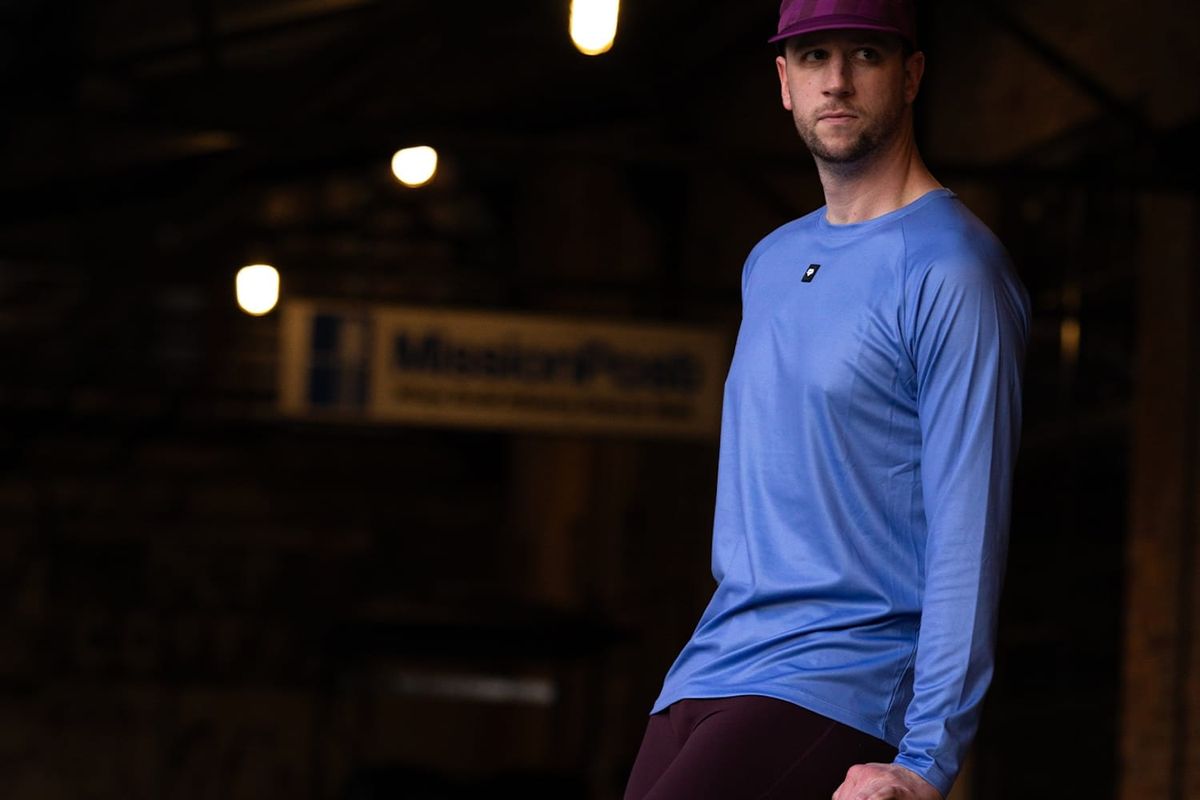
Running apparel company For the Run started with a name and a heart.
Founder Shawn King was on his way home one evening, thinking about the impact the race industry has on fundraising for charitable causes. He had just signed up to run the Chicago Marathon and agreed to run for the American Cancer Society.
As he drove, he brainstormed ways to tie his professional skills with his love for running and desire to give back to causes that are important to runners.
Without an actual business plan in mind, Shawn says he was struck with the idea to design T-shirts for runners, centered on a philanthropic mission.
“I was driving up the off-ramp to get onto my road to go home, and I stopped to turn left,” Shawn says. “That’s when I was like, ‘The company is called For the Run. [The logo] has to have a heart. And I don’t know what that looks like, but I’m going to figure it out.’”
Filling a Need as a Direct-to-Consumer Running Brand
For the Run launched in 2019 as a graphic tee company in the running space. Shawn invested only $500 of his own funds to get the business going and was committed to finding market value without loans or outside investment.
As he spoke with more and more runners about their running apparel, he realized a common theme. Women, especially, shared that their sports bras often chafed their ribcage and back, and running shorts and tights do the same in even more intolerable places. Sometimes, cuts from chafing resulted in the cancellation of upcoming runs.
Shawn also realized that many of these apparel items from direct-to-consumer (DTC) running brands were unnecessarily expensive, making them unaffordable for many runners. Price points were an immediate barrier to entry into the sport.
“Apparel should not be something that makes running inaccessible,” Shawn says. “I would really rather put the emphasis on the experience of running and make sure that the apparel is complementary to that, not a friction point.”
Shawn quickly pivoted his business vision and began designing affordable, stylish, and functional running performance apparel to be sold directly to the consumer: singlets, shorts, tights, sports bras, and more, all printed with the brand’s heart logo.
The more he engaged with the running community, the more opportunities to give back through donations and collaborations organically developed.
Supporting the Community That’s Supported Him
While Shawn ran cross country as a high schooler, he says, “My initial journey with running was not a love story. It was kind of a forced, arranged relationship.”
Years later, he started running again to establish consistency and accountability. He began to experience the mental health benefits of endurance exercise and quickly developed connections with fellow runners via social media.
Inspired by other runners’ accomplishments, from 2,000-day running streaks to watching Des Linden and Sarah Hall show us the possibilities of what it looks like to be a professional female runner, he fell in love with the running community.
For the Run’s charitable donations and collaboration projects are a natural extension of being a part of that community, and something Shawn believed other runners would want to support.
“I’m someone who just naturally gravitates towards people who have passion and caring and empathy, and I think runners have those things in spades,” he shares.
In Shawn’s first year of business, he reached out to Sasha Wolff, founder and executive director of the mental health and running nonprofit Still I Run. Together, they designed graphic tees, and Shawn assisted in creating the designs for the organization’s May Run Streak the following year. Since then, they’ve collaborated on singlets for Still I Run’s charity running programs.
Shawn also designed and sold 800 shirts as a fundraiser for Tommy Rivers Puzey, a professional runner and coach who was undergoing cancer treatment. From the sales of the shirts, $10,400 was donated to the 2020 GoFundMe campaign for Tommy.
And in collaboration with the running community, runners’ children drew their own iterations of the For the Run logo. Shawn turned 15 of the heart designs into a pattern on a long-sleeve shirt and donated $400 from the sales to Girls on the Run.
Not all initiatives are strictly philanthropic, however. Partnering with running influencer Alex ‘Herm’ Hermanson, who describes himself as a “big dude who runs a lot,” the two designed a hat with the phrase, “Suns Out Tums Out.”
“When it’s warm out, Alex would take his shirt off. He called it ‘suns out, tums out.’ He was empowering other people to feel comfortable in their skin,” Shawn explains. “That’s not necessarily philanthropic, but man, is that something that can inspire people!”
Today, about 10% of For the Run’s revenue is committed to charitable contributions. Shawn coordinates additional For the Run apparel donations by working with run club leaders who have members without the means to purchase their own running gear and finding others through social media who could use the motivation to get back to running, whether they’re postpartum or returning from an injury.
Strategic Growth for the Long Run
Coming up on seven years in business, Shawn still maintains his 9-to-5 job with West Virginia University, but he’s beginning to see For the Run growing into something more than a side hustle down the road.
“This is actually starting to feel like a business and not this thing that I am trying to constantly plug in around the rest of my life,” Shawn says. “So, it’s been exciting, admittedly a little terrifying.”
Earlier this year, For the Run’s operations moved out of his home and into a leased building for the very first time. Shawn also brought on a few people to help with business logistics, including packing and shipping orders.
Previously responsible for every aspect of the brand — design, production management, social media, customer service, web development — giving up some of the reins was difficult. But Shawn says he’s looking forward to focusing on what he’s most passionate about, including the reasons he launched For the Run in the first place.
“I’m a designer by trade. I would love to continue designing apparel,” Shawn notes. “I love the philanthropic opportunities, just in terms of putting people in apparel that otherwise might not feel like they can get access to apparel, and then certainly giving back to causes that matter a lot to the running community.”
Below, Shawn shares more on the connection he found between running and mental health, why building a brand with a philanthropic mission was important to him, the problem he finds with most DTC brands, and how he keeps For the Run’s costs down.
What brought you back to running as an adult, and what benefits has it had on your mental health?
Shawn King: I came back to running because I felt like there were a lot of things in my life that needed a refocus and a reshape …. I think I was lacking consistency in some ways. I think I was lacking accountability for myself.
Running started to give me confidence, and it started to give me structure. It started to help me think, there’s other places mentally that I could really benefit from talking to someone, understanding myself better. Running starts to give you those tools.
I see a lot of brands sometimes refer to running as cheaper than therapy. And I’m like, ‘Ah, I actually don’t think it is!’ I actually think it’s a bit insulting to suggest that running is therapy.
For me, it empowered me to believe in myself more. It empowered me to believe I can take more things on. It empowered me to feel more comfortable with myself, and it gave me confidence to tackle mental health problems.
But it is not therapy. I have a therapist. I would never replace that person with a long run.
I think the reason people fall in love with running is, it might fix those three or four things that you were hoping it would speak to or give you tools to speak to them, and then running gives you tenfold on top of that: incredible people, incredible experiences, things you never thought you could do, empowerment in ways you never thought were possible.
Why was building a running brand with a philanthropic foundation important to you?
Shawn King: I have to have a why. What is this company about? Why am I doing this?
I wanted to give back to causes that were important to runners. So, design gear, inspire people, and then learn about the things that inspire them and figure out how to lift those things up.
The running community is a powerhouse behind what arthritis or cancer or Alzheimer’s [organizations] can do ….The numbers that come out of marathon weekends, from a philanthropic perspective, are awe-inspiring.
The New York Marathon just came out with the lowest acceptance rate of lottery entrants, [but] if people could only understand the true power behind what the New York City Marathon does from a fundraising perspective, and give those people their flowers. It’s really important.
I knew that those two things — what I could do for runners, and then what I could do for causes that mattered to runners — were going to become two really important parts of the business.
On the days where the business will feel heavy or feel like too much, I would always have that reminder that I have two whys.
What space are you hoping to fill as a DTC running apparel brand?
Shawn King: Direct-to-consumer was this wildly attractive thing when it really started. You saw it with mattress companies. You had your Helixes and your Caspers. Those were kind of the first breakthroughs of, ‘We’re cutting out the middleman, and you can get a cheaper bed than ever.’ And now, those beds are more expensive than the non-direct-to-consumer [mattresses].
A lot of running brands came out as, ‘We’re direct-to-consumer.’ I think some of them have stuck to that, but…some direct-to-consumer brands today kind of feel like they’re trying to be the Nordstrom of direct-to-consumer: ’We’re going to sell you direct-to-consumer apparel, but we’ve completely omitted the savings part. Our gear is $130 or $250.’
I see a lot of brands that are selling a women’s sports bra for $80-$100, or men’s half-tights for $130, sometimes $180. That doesn’t feel good to me. I have no problems with the brands. I think a lot of the brands are doing exciting things. Some of those brands have forced the market to shift more towards function, which I appreciate a ton. I don’t so much appreciate that they’ve also seemingly inflated the bottom line by 300%.
That’s creating some interesting rifts in the running space …. There’s been an emphasis on status in running that has grown exponentially in the last three years.
There are a lot of DTCs out there who are, I wouldn’t say directly influencing this kind of gatekeeping mentality in the running industry right now, but I don’t think it’s helping it. So, I’m just really focused on creating really quality products that highlight function but also remain within a scope that feels affordable and feels accessible to as many people as possible.
How did you build an apparel brand with only a $500 investment, and how do you continue to keep costs down for customers?
Shawn King: I think it’s just been through really, really honest and cautious growth.
Whether it’s restaurants or apparel stores or any of these things, the fail rate is really high. In a lot of instances, it’s because people believe, ‘If I can just go out and get $100,000, $200,000 of initial investment or a loan, I’ll buy a bunch of stuff and invest in a bunch of things, and it’ll work out.’ They haven’t necessarily paid attention to their bottom line or their customer base. They get overexposed, and then the company fails.
My growth mentality has been, I’m only going to grow when the profit yields growth …. I found production partners who were comfortable with really low-quantity orders, were willing to work with me on the questions that I had …. It’s just keeping the product line tight, not trying to expand too rapidly.
For the first four to five years of the brand, it was just, if people like the gear, they’re going to tell their friends, and their friends are going to tell their friends. I can then grow respectfully to the brand and not overspend and not invest in places that I don’t think the money should go.
I believe the ways that I keep those costs down as we move forward is that same exact model, just understanding what my consumer base is, and also designing apparel that helps people get out the door, helps people feel motivated to go for a run.
Follow For the Run on Instagram.
“I feel like there are a lot of DTCs out there who are, I wouldn’t say directly influencing this kind of gatekeeping mentality in the running industry right now, but I don’t think it’s helping it. So, I’m just really focused on creating really quality products that highlight function but also remain within a scope that feels affordable and feels accessible to as many people as possible.” – Shawn King