Pao Labs Founders on Sharing Chinese-American Heritage with Runners Through Energy Jelly Flavors
Co-founder of Pao Labs, Zack Yu, shares the story behind developing a new running fuel brand, including its jelly consistency and Asian-inspired flavors, plus how they involved the running community in product testing and feedback.

On a Friday night, Zack Yu and Celena Chan decided to go to an Italian restaurant for dinner. The wait for a table was over an hour, and to fill their time, they chatted about potential businesses they could launch.
“We kept coming back to this idea,” Zack shares. “Energy gels have a reputation for tasting disgusting, way too sugary, and people have such issues with their stomach when they’re running.”
Over the next few weeks, the concept for a new running nutrition brand took hold.
Both were already runners. Zack began his running journey out of necessity to compete in Spartan Races. But when he met Celena, who enjoyed training for half marathons and marathons, running became a way to spend more time together.
“She was running four to five times a week,” Zack explains. “If I wanted to see her, it was like, okay, I better put on my running shoes.”
One of their early dates was a New Year’s Day workout with the Brooklyn Track Club. “There’s a photo of us, actually, at the very end of the race, and she beats me,” Zack says. In the years since, they’ve run several marathons together, including a few of the World Marathon Majors.

Reflecting Their Own Culture In a Running Brand
Throughout the pandemic, Zack and Celena noticed the increasing popularity of running. They saw that the sport was attracting more people from different walks of life. Despite this, brands in the running space lacked diversity.
“A lot of what we think we can do, we model it on our parents or what we see in mainstream culture today,” Zack reflects.
They realized that Asian representation was important for welcoming more people from their community into running.
Zack and Celena began experimenting with various Asian-American-inspired flavors and ingredients in their kitchen to develop a formula for their product. Both with professional backgrounds in finance and tech, they quickly realized their food science limitations.
Celena called her best friend from college, Ivy Chen, who has a bioengineering Ph.D. from Harvard. Based in the Bay Area, Ivy was experienced in working with a solution called hydrogel in the pharmaceutical setting for diabetes and cancer research.
She jumped in to help and developed the base of their product: a food hydrogel that forms a semi-solid jelly consistency. Once the initial energy jelly was developed, they took it to their running community in NYC for feedback.
“We didn’t really have a product, we didn’t have branding, we didn’t have any of those things, but we really quickly wanted to involve the community,” Zack shares. “If they don’t have an input, then you’re not exactly sure if what you’re creating is something that someone wants or needs.”
Building a Brand in Public
Pao Labs officially launched in May 2025 — the name, Pao, means ‘run’ in Chinese.
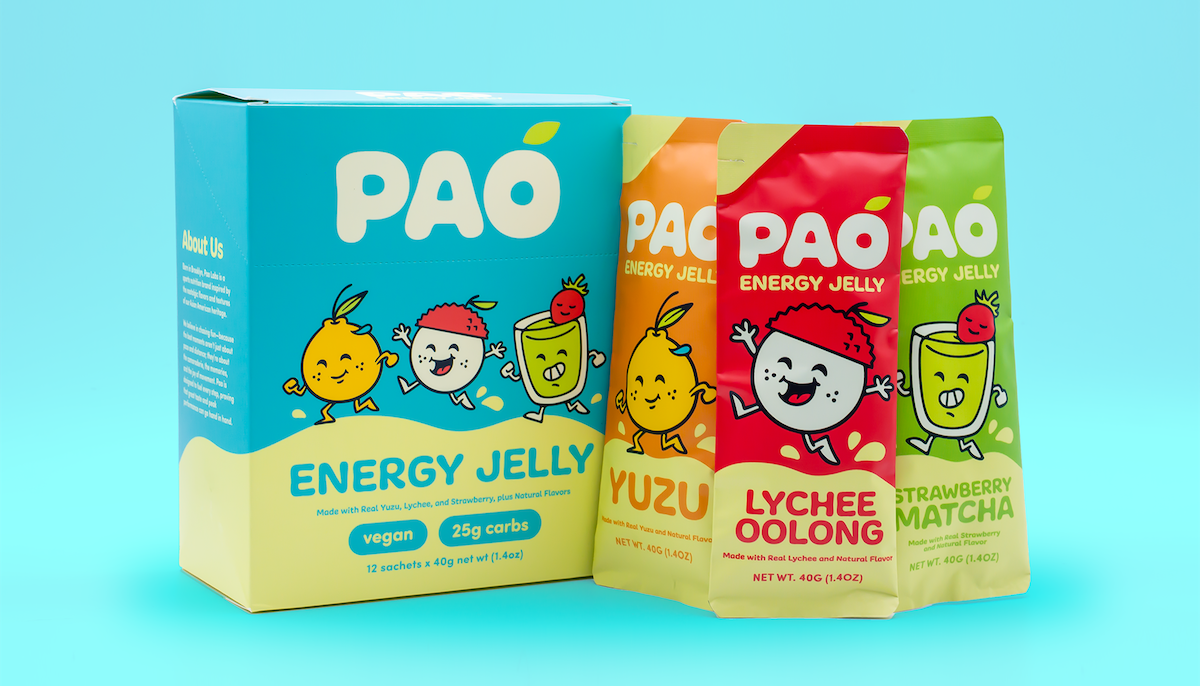
The co-founders voted on three flavors to start with: Strawberry Matcha, Lychee Oolong, and Yuzu. Ingredients include real matcha powder, strawberry concentrate, oolong tea powder, and lychee powder. A few flavors that didn’t make the initial cut were passionfruit, guava, and a caramel-miso combination.
“We wanted something that speaks to our culture,” Zack says. “We are Chinese-Americans. It speaks to us as part of our heritage, and the flavors speak to all the things that we grew up eating and enjoying.”
Zack, Celena, and Ivy continue to work full-time jobs. That has allowed them to make decisions more strategically and with a long-term focus, instead of feeling greater pressure for quick success. They’re also funding the startup on their own to avoid feeling beholden to someone.
“We didn’t really want to go the VC route of taking on money, even though we’ve been offered,” Zack notes.
Growing at their own pace also gives them more grace to navigate unforeseen product and manufacturing challenges, which are common in the early days of a startup. And when they do run into challenges, they share them transparently with customers and social media followers.
For instance, when the co-founders received a batch of Pao Labs energy jellies in new packaging, they quickly realized the fin of the packaging didn’t tear straight through, a problem for any runner planning on taking fuel on the run.
They shared the situation — and the solution — in a social media video that went viral. Posts like these are more than moments of founder vulnerability. They offer an interesting behind-the-scenes look at what goes into building a brand.
In the months ahead, Pao Labs’ co-founders are working on a new caffeinated jelly, which they hope to launch this spring, and experimenting with whether electrolytes can be incorporated into their hydrogel. Branded race sponsorships are on the horizon, and two summer due dates will welcome two new members to the Pao Labs family.
Below, Zack shares more about Pao Labs’ flavors, its jelly consistency, testing a new running nutrition product with influencers, and the team’s community-focused commitment.
Why did you and your co-founders choose the three flavors Pao Labs launched with?
Zack Yu: We’ve been to Japan many times, and Yuzu is always near and dear to us, in cocktails as well. And in the culinary world, people love it. I guess we watched one too many culinary shows, but that one stood out as a great option for non-caffeinated. There’s a subset of people that just don’t do well with caffeine, and so we needed to have one for them, and that was the flavor that we chose.
The Lychee Oolong…we grew up eating lychee. I think 90% of the world’s lychee is produced in China. We love that flavor. We grew up eating lychee jelly cups. We would freeze them in the freezer, and we’d have them in the summer. I think, if you talk to any Asian, and you mention lychee jelly cup, they’re going to know exactly what that is.
We thought, from that perspective, this nostalgia would really be a homerun. But with everything that we do, we want to create balance. If you have something that is sugary, you usually want to balance that flavor out with something bitter.
The lychee, we naturally paired with the oolong. I was born in Fujian, China, which is a southeastern province of China, and we are known to be the home of oolong tea. It’s where it originated. There’s this famous [set of trees] there. In Chinese, it’s called Da Hong Pao, but it translates to ‘big red robe.’ All the other trees are descendants of this one tree, and it’s notoriously hard to actually get any samples of this tea. Even the president would have to visit the province in order to get it. They will not send it to you. So, for us, it was very close to my heart.
Then, lastly, Strawberry Matcha, I think it speaks for itself. Even if you’re not Asian, you know exactly that flavor combo. Matcha has taken off since, I don’t know, seven or eight years ago. In Japan, they’re having trouble even keeping up with demand. We were like, ‘Hey, this is a good bridge to introduce to people who are not Asian.’ Once they realize this is amazing, they will gently go into trying Lychee Oolong and Yuzu, which they might not really be familiar with.
Why did Pao Labs decide to use a jelly consistency?
Zack Yu: We talked about all the issues that are with energy gels …. It’s super messy, sticks to your teeth, tastes super sugary, and upsets your stomach. So, we told ourselves, ‘Okay, we can’t just come up with an Asian-flavored energy gel that is like all the rest.’
The jelly consistency really does solve all those problems for us.
There’s no way of getting around the fact that you need carbs. That’s what’s going to fuel you. But that means it’s sugar, and sugar is sweet. So, whether you drink it or you have it in this sticky paste, your tongue is going to be coated in it, and you’re going to taste all of that. But in a jelly consistency, you’re not going to taste as much of it. It’s going to be clean going down the palate, and honestly, better for your teeth as well.
It is a hydrogel, and there’s a lot of science behind hydrogels …. It’s not a gelatin product where it will melt when it’s an 80- to 90-degree temperature, or even if it’s in your pocket while you’re running and sweating.
Depending on the ingredients and how much weight you give to certain ingredients, you can make the jelly a little harder or a little softer. That can also help time delivery — how it breaks down in the body.
It is quite, quite difficult to actually produce in a manufacturing setting at scale, but we wanted to do it because there’s research backing it, nothing controversial about it. It’s all vegan, and it gives you that delicious, juicy, jelly bounce that we like.
The consistency really does help with people taking it when they’re running, especially trail runners, ultrarunners. We get a lot of ultra trail runners that message [us] — ‘This was the only thing I could take.’ Because it tastes, not exactly like real food, but there’s a bite to it. At the same time, you’re getting all of the benefits of a jelly.
What a lot of people don’t realize is that all-natural energy gels may not be the best thing for you when you’re running, because it causes your body to need to digest it. [Your body] works to convert all of those natural sources down into sugars that you can actually use when you run, and that’s where most of the indigestion comes from. It’s from sugar — either too much sugar or your body is working overtime to process some of these foods and break them down.
In addition to sampling Pao Labs’ jellies with your local running community, how else did you test your product?
Zack Yu: When we first started our business and we were trying to sample, we were like, ‘Well, there’s a lot of influencers out there, but we have no money to pay them.’ If our brand really is going to resonate with people, I’m sure it’s going to resonate with influencers as well.
We created a program where we A/B tested the different types of samples that we were creating: ones with different textures, ones with different flavors, and ones with different flavor intensities. [Celena] ended up doing outreach to all of the influencers that we thought would be really in tune with our brand, and just asked them, ‘Hey, could we get you to give us some feedback over the course of a month?’
They really were into our branding. They wanted to help us a lot. Even now, they’ve asked us, ‘Can we continue to help you refine some of your flavors?’ And they will post on our behalf, not because we’re paying them hundreds or thousands of dollars or anything like that, but purely because they want to see an Asian-American brand succeed in a space where there’s a void of this sort of diversity.
What’s one thing that’s on your mind for the future of Pao Labs?
Zack Yu: One of the things that we think about quite a lot is: How can we scale without losing that community aspect? It’s something we think about quite often, mainly because we’re three people. We get super busy all the time, and I can already see it. Even now…I haven’t had as much time to go out there and run and be a part of the community. That’s always very difficult because this was the whole reason we did this.
So, how do we continue being a part of the community and rooted in that, and also give back to the community?
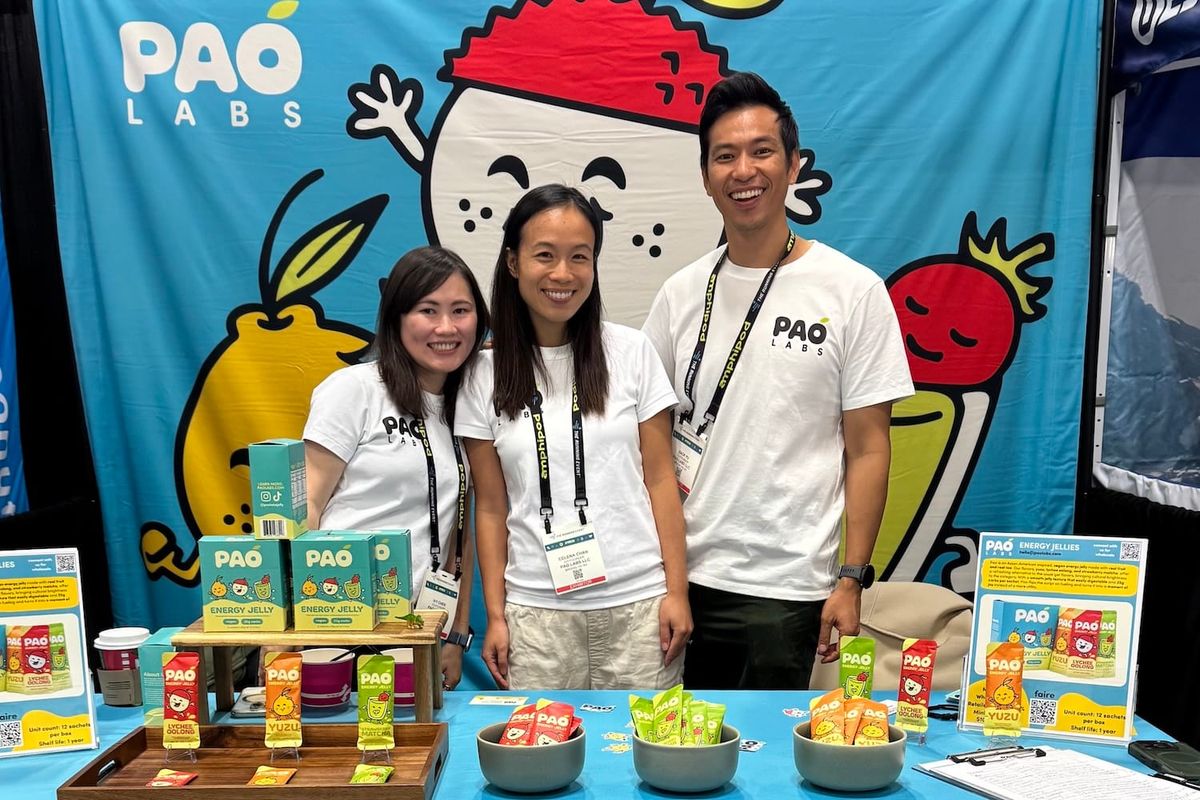
[At The Running Event], we met some amazing people. One of them, Andrew Chen of 3sixteen, had talked to us about charitable donations and putting community first. We were asking questions about, ‘How do you do that when you don’t have a boatload of money? We don’t even have enough to pay ourselves a salary.’ And he was like, ‘Honestly, you’re thinking way too big. Scale down. You can make an impact just with your platform and going out there and hosting small events.’
But you have to choose to do that, right? We think there are ways to give back to the community, and we’re thinking about that for this year.
Winning [The Running Event’s] New Product Showcase was amazing, because they gave $1,000, and being able to give that to charity …. [We] let the people decide. We opened it up, and I think that was really impactful. Now, we know what charities or causes they care about, and that can inform us of how we can continue partnering with different charitable organizations and what is meaningful for our audience.
Follow @PaoLabsJelly on Instagram.
“We wanted something that speaks to our culture …. We are Chinese-Americans. It speaks to us as part of our heritage, and the flavors speak to all the things that we grew up eating and enjoying.” – Zack Yu