How Joel Frye Is Creating Meaningful Shared Experiences for Youth Runners and New Trail Runners in D.C.
Physical education teacher and coach, Joel Frye is a founding board member of RunJuneteenth and leads the D.C. chapter of a kids running series.

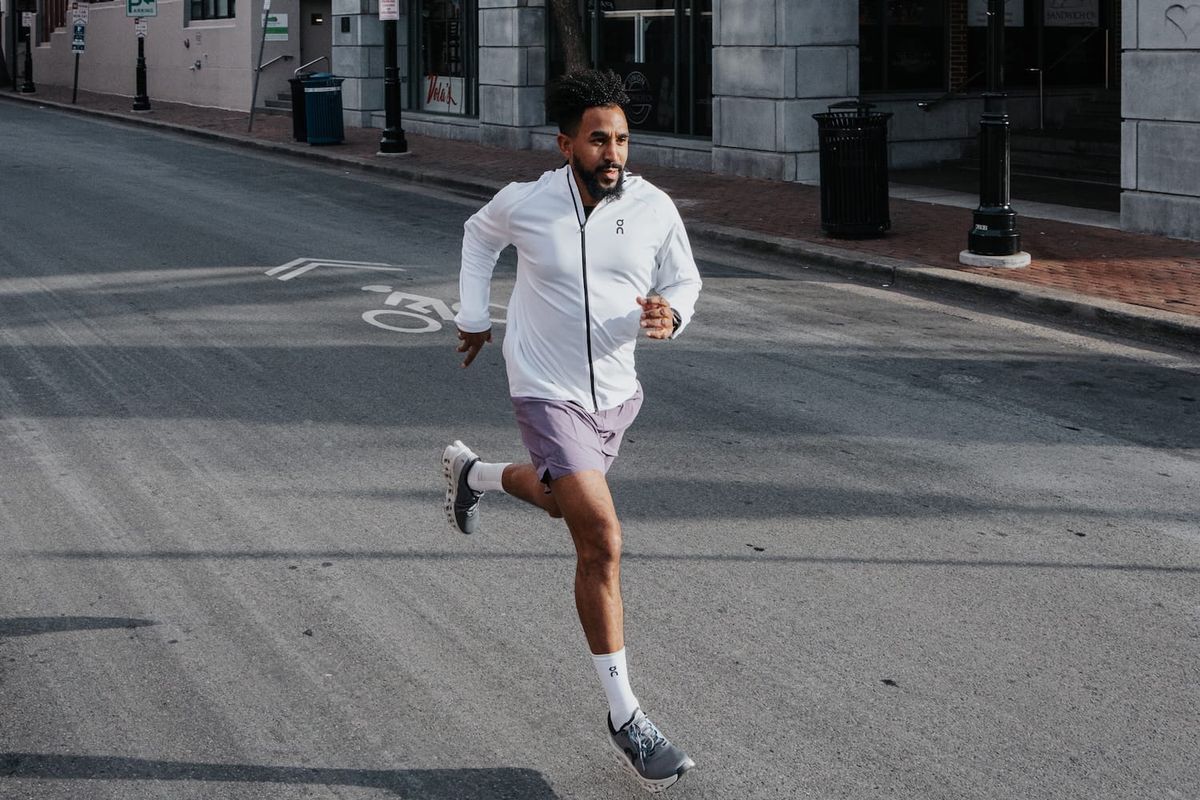
Sometimes, it’s the decisions and events that reroute our plans and lead us to become the person we’re meant to be. For Joel Frye, whose friends and family also call him Joey, two come to mind.
The first of which was joining the cross country team his freshman year of high school after his mom and grandmother pushed back on him playing football. The second was a serious car accident that delayed his college graduation by a year and gave him time to change majors from broadcast journalism to exercise and sports science.
If not for those two moments, he might not be a high school physical education teacher and cross country and track coach, the community coordinator of a youth running program, and a founding board member of RunJuneteenth.
Joel might not have become a coach or a runner at all.
Running Through the Years
It didn’t take long to develop a love for running. From his first cross country meet to his second, he improved by two minutes and was quickly hooked by his progress and the team environment. All four years of high school, Joel ran on the cross country and track teams, competing at the state and regional levels.
He took a break from running while in college. But when Joel moved back to his hometown in North Carolina, he began stopping at Reservoir Park on his way home from work to run a 2-mile loop.
“I built back up to where I was feeling really good. I was doing about five loops, two or three times a week, and I just felt really good. It’s kind of like I rediscovered myself,” Joel shares. “I had the energy. I just had that competitive edge again.”
After earning his graduate degree in sports administration from Georgia State University, gaining experience working for a community nonprofit, and coaching several youth sports teams, Joel moved to Washington, D.C., to become a physical education teacher.
As he was settling into the classroom in 2012, a friend convinced Joel to run his first half marathon, the Marine Corps Historic Half in Fredericksburg, Virginia. A few years later, he trained to run the Chicago Marathon as part of a charity team raising money for Action for Healthy Kids.
Around the same time, he started running socially on Wednesdays with the local District Running Collective. The group often split into subgroups that ran together on other days of the week, including what became known as “10-mile Mondays,” a 6 p.m. run from the U.S. Capitol. Joel found a team-like environment again and enjoyed pushing his run club friends toward their goals.
Since that first Chicago Marathon, he’s crossed the finish line of a dozen marathons, including five World Marathon Majors. But Joel’s biggest achievements in the running community are those that benefit others.
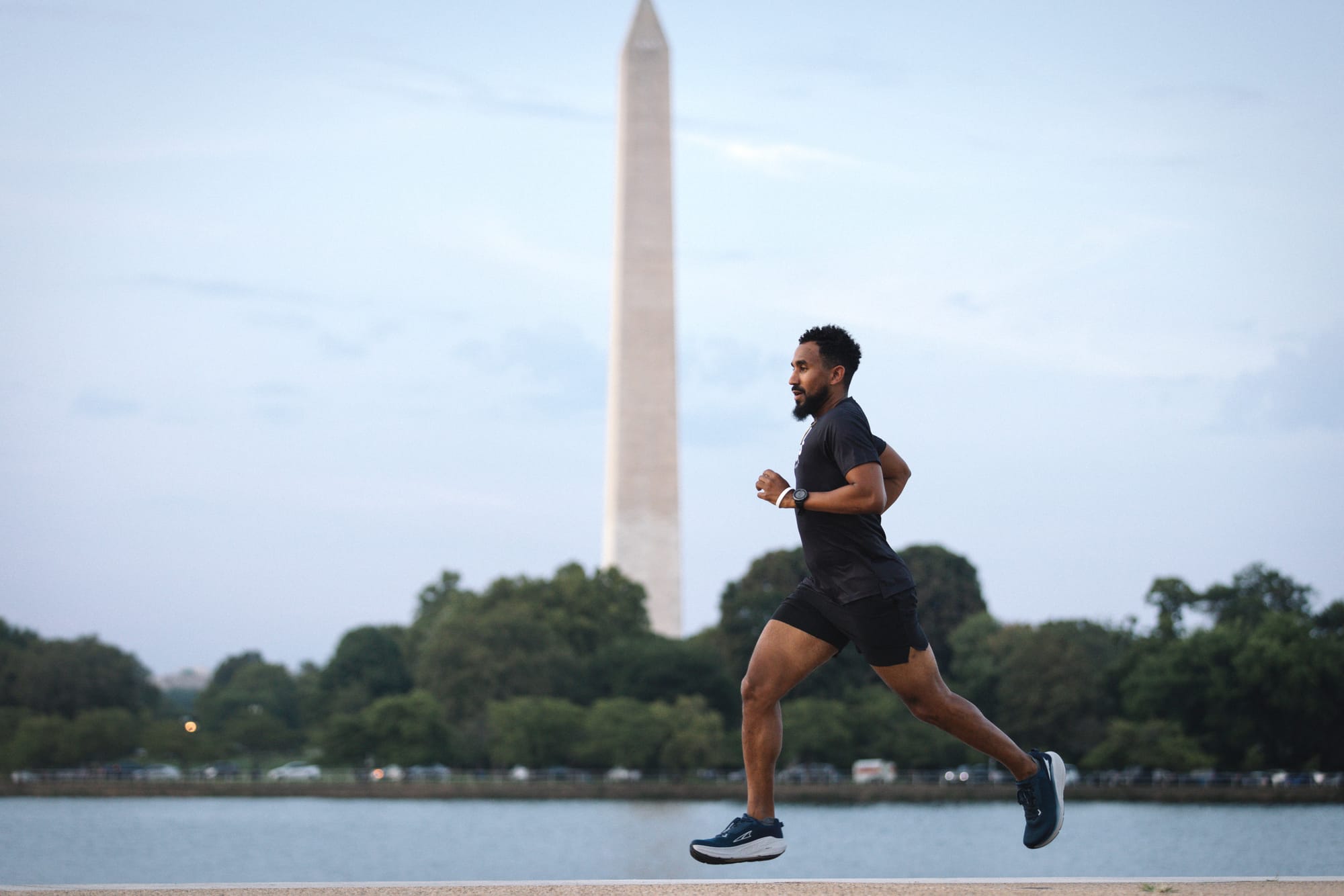
Starting a Local Movement with RunJuneteenth
A couple of months into 2020, Joel tore his Achilles. He was recovering from surgery when Covid-19 shutdowns were in full swing and remembers watching from the couch as more and more people started running.
A friend of his, Freddie Irby — also known to his peers as “Innkeeper Freddie” — was signed up to run the Vancouver Marathon. When the race was cancelled, Freddie decided to map out a marathon route from D.C. to Silver Spring, Maryland.
“Freddie wanted the run to be meaningful, so he started the run at Frederick Douglass house in Southeast D.C., mapped the course through D.C., finishing in Silver Spring at his parents’ home. He had a lot of our friends help him — mark the course, be water stations — and some folks even ran it with him,” Joel explains. “It was on Juneteenth.”
Once Joel was cleared to start running again, he began trail running to get out of his house after a week of virtual teaching.
“I would get in my car and drive out one hour outside of D.C., just to see what different trails are out there,” Joel says.
One fall day, he posted pictures of a trail he ran, and a friend asked to join him next time. The more runs he did, the more people came along until it became a consistent Saturday morning group long run from various trailheads.
One week, Freddie suggested they explore an unkept trail through the center of D.C. that traced part of the Civil War Defenses of Washington. While out there, Freddie shared the significance of the trail, as it connected Civil War Defenses of Washington fort sites that were constructed to surround D.C. during the Civil War and protect Union soldiers and formerly enslaved Africans. It’s where Freddie suggested they hold a half marathon and 10K for the upcoming Juneteenth. Joel and their friend Kota Uyeda hopped on board to help with the planning.
“Kota was well-versed in consulting and corporate sponsorships and stuff like that, and I was well-connected with the running community, and Freddie had the vision,” Joel shares. “So that’s how he put together this team to operate it.”
The Juneteenth Marathon had about 100 people participate in 2021, its first official year. They organized a few buses to pick up 10K participants who ran to the halfway point of the course. The out-and-back route of the half marathon ended in Fort Stanton Park, where they all gathered for a picnic.
After that first year, Freddie formalized the Juneteenth Marathon as a nonprofit. Recently renamed RunJuneteenth, the organization continues to organize the free half marathon and 10K around Juneteenth — which now hosts more than 500 runners annually — with added programs throughout the year.
The name change, Joel explains, “takes the focus away from the actual race to us being more of a nonprofit organization that creates initiatives and supports access to running locally.”
Among initiatives is an application-based beginner trail running grant to help new runners train for the annual half marathon or 10K. Sponsored by Altra, grant recipients receive a 12-week training plan, personal coaching, and Altra trail running shoes. Last year, two runners participated, and they added two more spots for 2026.
Leading up to the annual event, RunJuneteenth also hosts a plogging series to clean up area trails, partnering with run clubs around Baltimore and D.C. The series is supported by a grant from Athletic Brewing Company’s Two For The Trails program.
And this past winter, RunJuneteenth organized a winter trail series to welcome runners to trail running. Sponsored by REI, they hosted nine trail running meetups at different trailheads and provided breakfast, running swag from REI, and shuttle buses. Running shoe companies also attended to outfit runners with trail shoes for the run.
Looking forward, Joel shares they’re committed to developing RunJuneteenth’s programs to provide greater access to trail running, build the local run community, and give back.
Introducing Running to Our Younger Generations
While RunJuneteenth is where Joel works to create opportunities for his running peers, he’s also investing in D.C.’s youth. A few years into his physical education teaching position at a Title I early childhood and elementary school, he began researching grant-funded programs around physical activity for kids.
“My student demographic has been predominantly Black, and in this community, access to organized running programs have been limited or nonexistent,” Joel shares. “Kids are only going to be interested in what they see and know, and for my kids, it was basketball and football. I wanted to change that, especially realizing how much my kids loved running.”
He stumbled upon an organization called Healthy Kids Running Series, which didn’t yet have a D.C. chapter established. The Healthy Kids Running Series hosts running events, from the 50-yard dash to the mile, for kids aged 2 to 14.
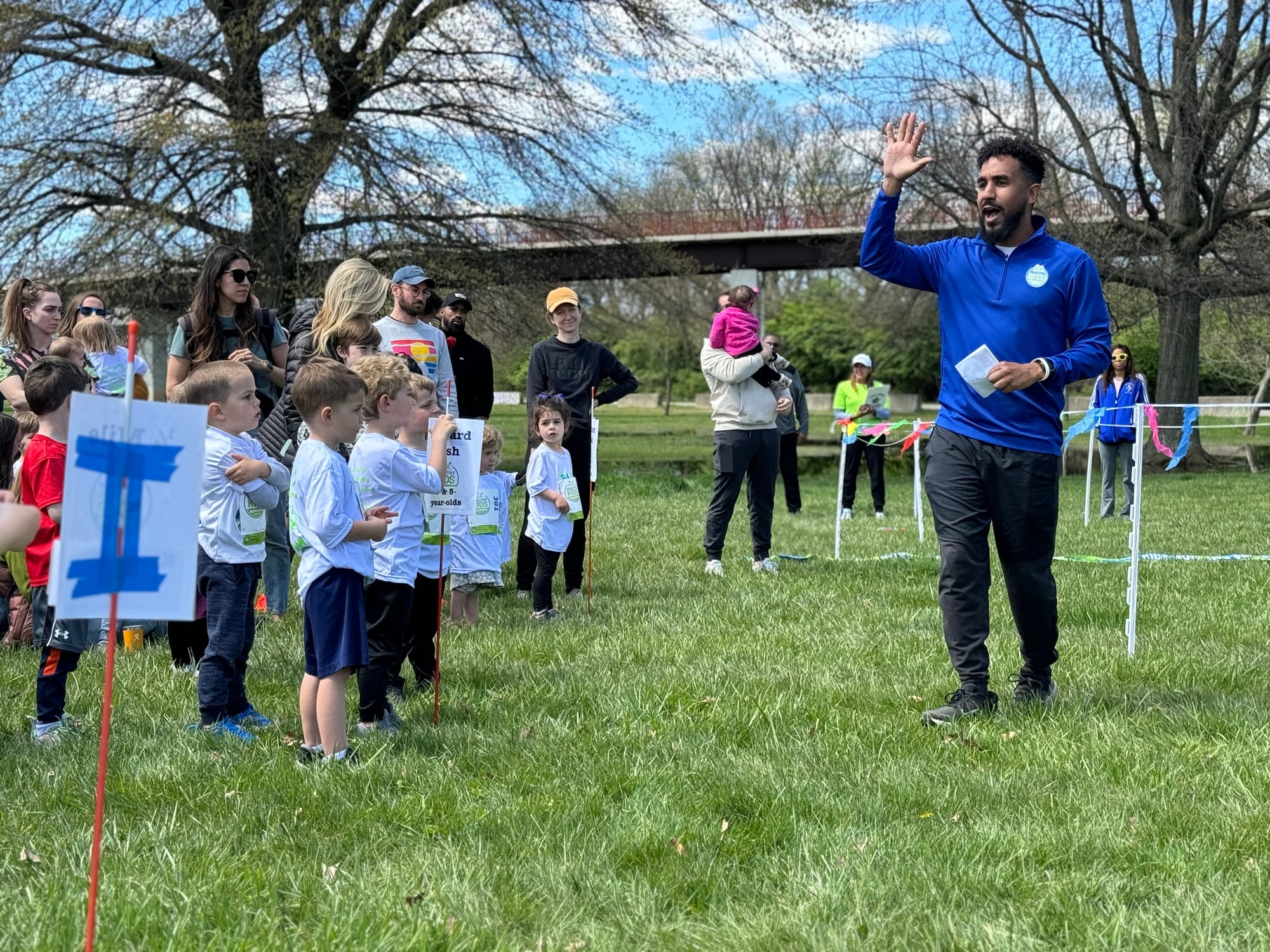
Joel became a community coordinator and launched the local chapter in 2018. Starting with a dozen kids from his own classroom, the program has since grown to more than 80 kids each season who live citywide and across socioeconomic backgrounds.
Today, as a high school teacher and coach, Joel continues to coordinate and expand the Healthy Kids Running Series. His community involvement has kept him busy and resulted in his longest break from running and racing since his Achilles injury.
“This time, it’s been more of a step back so I can invest in the kids in our youth running program,” Joel shares. “That’s been the main focus for me. How can I take these things that running and participating in sports have contributed to my life and share it with these kids?”
Below, Joel shares the ways youth runners inspire him, lessons he hopes to impart on youth runners that are relatable to runners of all ages, and why shared experiences in running are better than the solo journey.
What’s inspired you most about working with youth runners?
Joel Frye: With my kids in our race series, we only meet once a week, and it’s not consecutive. It could be two Sundays, then we have two Sundays off, then another Sunday …. As a result, the kids aren’t getting regular training or regular fitness.
What I try to instill in the kids week to week is, number one, you’ve won just by showing up. Number two, we’re not racing the person to our right or to our left. That’s not who we’re here to race against. We’re our own biggest competitor. We want to be better next week than we were today.
I try to lay the foundation for positive reframing. For example, instead of being upset at the end of a race because they finished third or fourth, they are excited because their time was faster than it was in their last race. It’s kind of a psychological manipulation, but ultimately it supports effective self-regulation and how to practice a growth mindset.
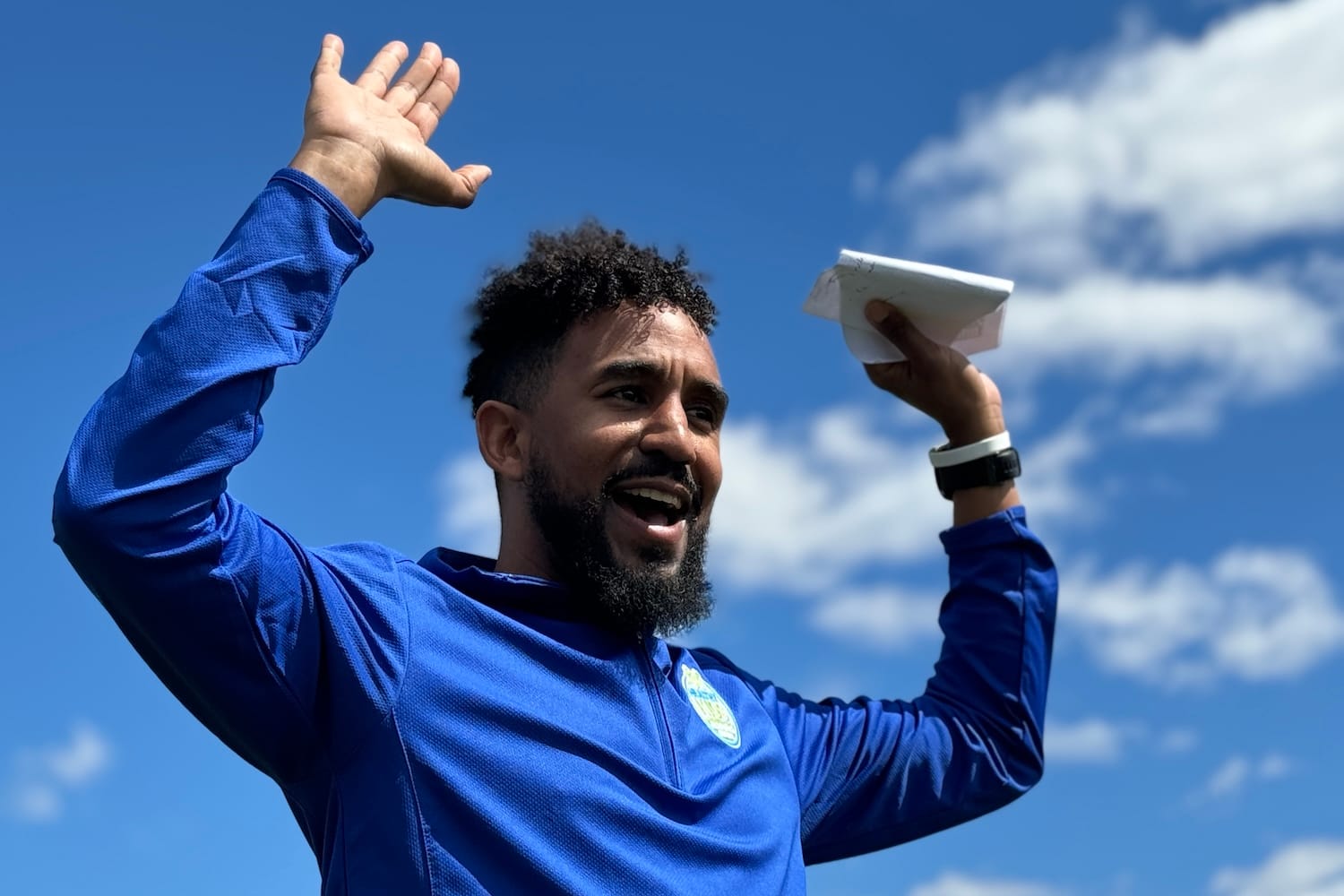
Just that simple, subtle seed planted in their brains, having them think about it, and then seeing how much they improve from one race to the next. For me, I’ve been thinking a lot about this more recently, it just shows me how much running is influenced psychologically.
I have my quarter-milers. They ran 2:02 in race one, and then they’ll come back and race to run a 1:54. Race three, run 1:49. They realize what their limits are, and they’re more willing to push those limits — not off of anything that they’ve done physically to prepare for it, but just because they believe that they can do it. That has been mind-blowing for me, because they’re not even training during the week, but they’re getting faster and faster.
It’s that psychological encouragement, helping them to believe what they can do. They look back on what they’ve done and are willing to push themselves to a new limit …. It makes me want to do more because it shows me that they are invested in their own growth and development and they want to be better.
Based on your own experience as a runner, what are you hoping to impart on the kids you coach?
Joel Frye: I want to create a space and invite young kids…where they can be runners early — learn, enjoy running for the benefits beyond the physical, beyond the trendiness. Because running, it’s individualized. You are your own biggest competitor.
When you run a marathon, your body goes through so many transformations — physically, mentally, emotionally. And then, when you come out on the other side, there are so many things you can reflect on that don’t even involve running. But you’ve had to push through, persevere through, and you’re a better person because of it.
I want my kids to be better people because of their own running journeys, what they can take from running. As a Black man who is a distance runner, I want my kids to see that it’s something they can do, too. I want to be the model, the example. I’m the representation in their lives that helps them to realize they can do this, too.
Beyond it being “cool,” I just want them to know that running doesn’t mean you have to be a super-fast sprinter. And also, yes, it is cool and fun. But that’s not the reason I connect my identity as a Black man and its impact on my young runners. Maybe for them, ‘Running is cool and fun because Coach Frye does it. He’s Black, and I’m Black, so I can do it, too.’
Making it “cool” is the hook I need to draw in my high schoolers. More work is involved to garner their attention and interest than it is for my younger kids. I just need to get their feet in the door somehow, so that I can expose them to opportunities in running they may otherwise never experience, show them what they can do. And slowly but surely, as they saw their own gains, they became more invested in their personal journeys.
I think that’s what it is about for me. Kids really investing in their own personal journeys through running.
With that focus, you’re going to become a better person …. You’re not intending to gain these things. That’s not what you’re going into it for. But as a result of your work, your perseverance, you receive all these benefits.
Why is running most enjoyable when it’s community-focused?
Joel Frye: I grew up an only child. I had a lot of cousins, but I was the oldest …. I was raised by my grandparents for the first four or five years of my life because my mother was in the military, so I spent a lot of time with them early on.
When I could be around other people, I embraced that. And I like to see everybody win. If I have something, I want everybody to be involved with it.
I’ve done a couple of solo trips. It’s cool. But I like shared experiences. Sharing experiences is more meaningful and more impactful for me than just doing it alone. Because 20 years down the road — ‘You remember when we did this?’ — you could talk to somebody about that. Involvement in the community, for me, it just makes the journey worth it.
Individually, running, those lessons that you learn and benefits you receive, that’s you. But there’s no reason that you can’t bring others along with you.
That saying, ‘If you want to go fast, go alone, but if you want to go far, go together,’ I think that’s something that I’ve really embraced. I just enjoy the people that are around me. I want to see them succeed. I want to see them do well … It’s just as gratifying for me to see my friends and others succeed.
I don’t think it’s necessarily an indicator of my own personal success, but I do think it is a reflection of who I choose to be around. I learn so much from my friends, from their accomplishments and life experiences. So, as a result, I’m able to apply that wisdom to help me better navigate different areas in my life.
I think it’s more of a philosophy that, “If I win, then we all win.” If I have it, then you have it. For me, it has always been about serving others and leveraging my position, whatever it may be, to benefit those around me.
Follow @runjuneteenth and Healthy Kids Running Series, D.C., on Instagram.
“When you run a marathon, your body goes through so many transformations — physically, mentally, emotionally. And then, when you come out on the other side, there are so many things you can reflect on that don’t even involve running. But you’ve had to push through, persevere through, and you’re a better person because of it." – Joel Frye