Ultrarunner Chris Raup Helps Fellow Veterans Find Community and Healing Through Warrior Trail Foundation
After returning from Iraq with PTSD, Army Veteran Chris Raup experienced the many challenges in receiving proper veteran care. In 2024, he launched Warrior Trail Foundation with a commitment to help fellow veterans find mental healing and meaningful community through trail running.

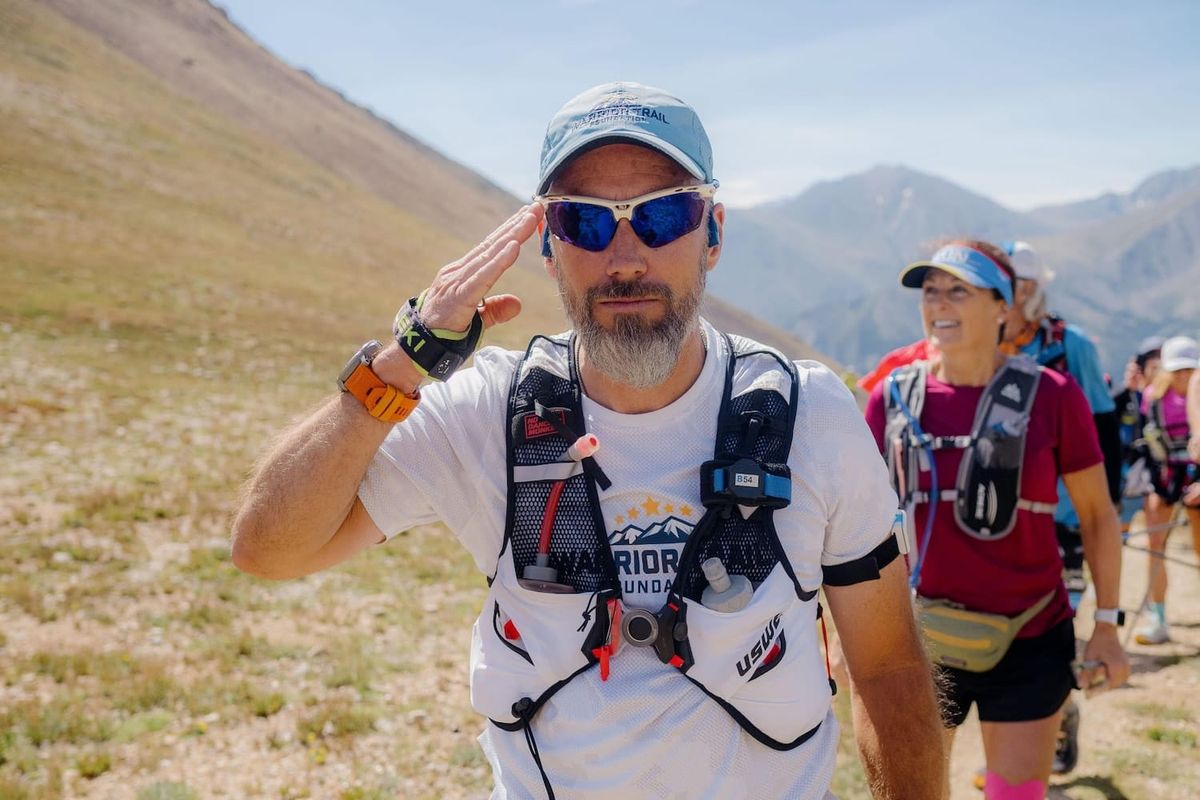
Chris Raup has been running his whole life. Or at least, it seems that way when he reflects on his journey.
“I grew up in the mountains of Central Pennsylvania, and I don’t remember spending a lot of time walking through the woods. It always felt like everywhere we were going, we were running,” Chris shares. “Running from the house down to the creek, from the creek over to the pond, from the pond up to the ridge.”
Chris ran with an after-school group in middle school, then as a distance runner on the high school track team and on the rugby and soccer fields. He ran in college with the ROTC and ran to max out his scores on PT tests while in the Army.
Serving as a Field Artillery Officer, Chris joined the Army in 1988. He deployed to Bosnia in 1996 and Egypt in 2005. Then, in 2006, he was sent to Iraq to complete the deployment of a fellow service member and friend who had been killed in combat.
When Chris returned home from Iraq, life felt unbalanced.
“I think one of the main causes of PTSD is the challenge that the rest of the world goes on while you’re over there doing all those things, when you’re being shot at and having rockets hit the building that you’re in,” he says.
“Then you come home, and your wife has redecorated the house while you were gone, and she’s done that not intentionally by any means,” Chris goes on to explain. “But what it says to you is life went on. And had I not come home, life was going to go on. All that sacrifice and all that effort that you put forward seems futile in that moment. It’s really hard to explain to anybody.”
Chris became frustrated by the many obstacles veterans face in receiving care after sacrificing their lives for their country. A sentiment echoed by many, he says, “It seems like those that don’t come home get better treatment than those that do.”
In 2008, at his joint retirement ceremony with a Colonel he worked alongside for most of his career, the Colonel made a comment that stuck with him: “Don’t make your 20 years in the military your greatest accomplishment.”
Finding Purpose in Helping Fellow Veterans
It was a few years later, during a ski trip to Breckenridge, Colorado, that Chris was inspired by a program called Wounded Warrior Family Ski Week. Realizing there were actions he could take to help fellow veterans navigate PTSD and find meaningful community, Chris gained the founders’ approval to launch his own version of the program in Pennsylvania, which he called Wounded Warrior Patrol.
While operating the nonprofit and seeing and experiencing how outdoor recreation helps to heal the mind, Chris began increasing his running. A friend challenged him to sign up for a trail half marathon. He had already completed a road marathon, so he figured, how difficult could it be?
“I got quite an education that trail was a completely different situation,” Chris admits. “But I was sort of intrigued, stuck with it, and next thing I knew, I was running my first 50K.”
That 50K led to a 100-miler, which led to 200-milers.
On the trails, Chris says, he’s able to experience the power of awe. “You’re hearing the birds, you’re feeling the wind, you’re feeling the breeze on the back of your neck,” he explains. “And then you move, and you have the optic flow.”
At the end of a 10-year run directing Wounded Warrior Patrol, Chris decided to set up a new foundation for veterans in the trail running space.
Welcoming Veterans to the Trail Running Community
“For many of our veterans, the military was the best family they ever had, especially as time goes by and they forget about all the crap and BS that they put up with,” Chris says. “Trial by fire, whether it’s just in a training environment or literally in a combat environment, creates relationships that can’t be replicated anywhere else.”
The more Chris engaged with the trail running community, he found it reflected the military community in positive ways. Alongside the mental health benefits of running and being in nature, he grew confident in the potential for a trail running foundation to improve the lives of veterans.
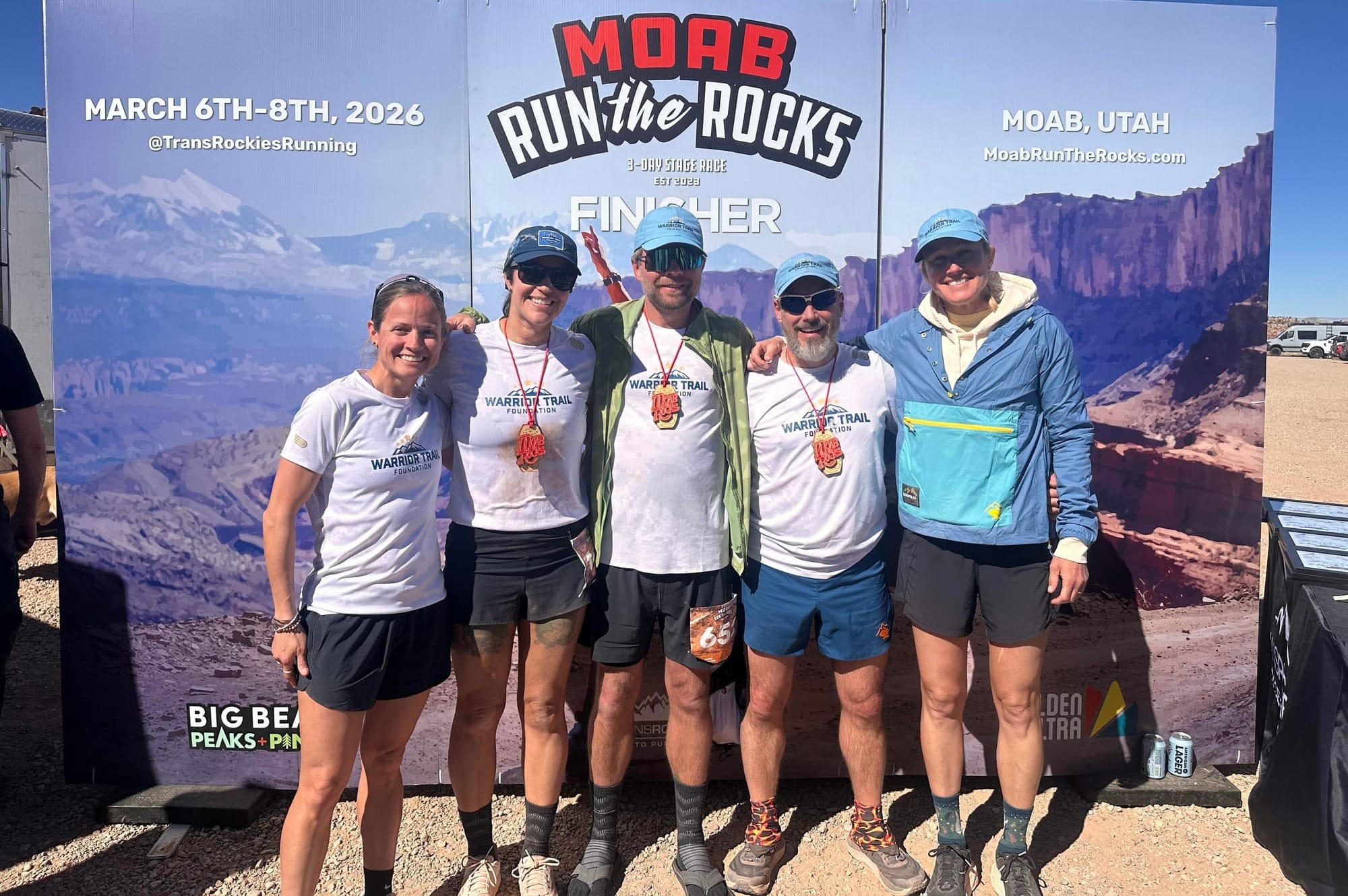
In 2024, Chris launched Warrior Trail Foundation (WTF) with a mission to “empower veterans, their families, and survivors by offering a safe space for healing, personal growth, and camaraderie,” and to “leverage the power of the trail running community and its inclusive, supportive environment to make a lasting impact.”
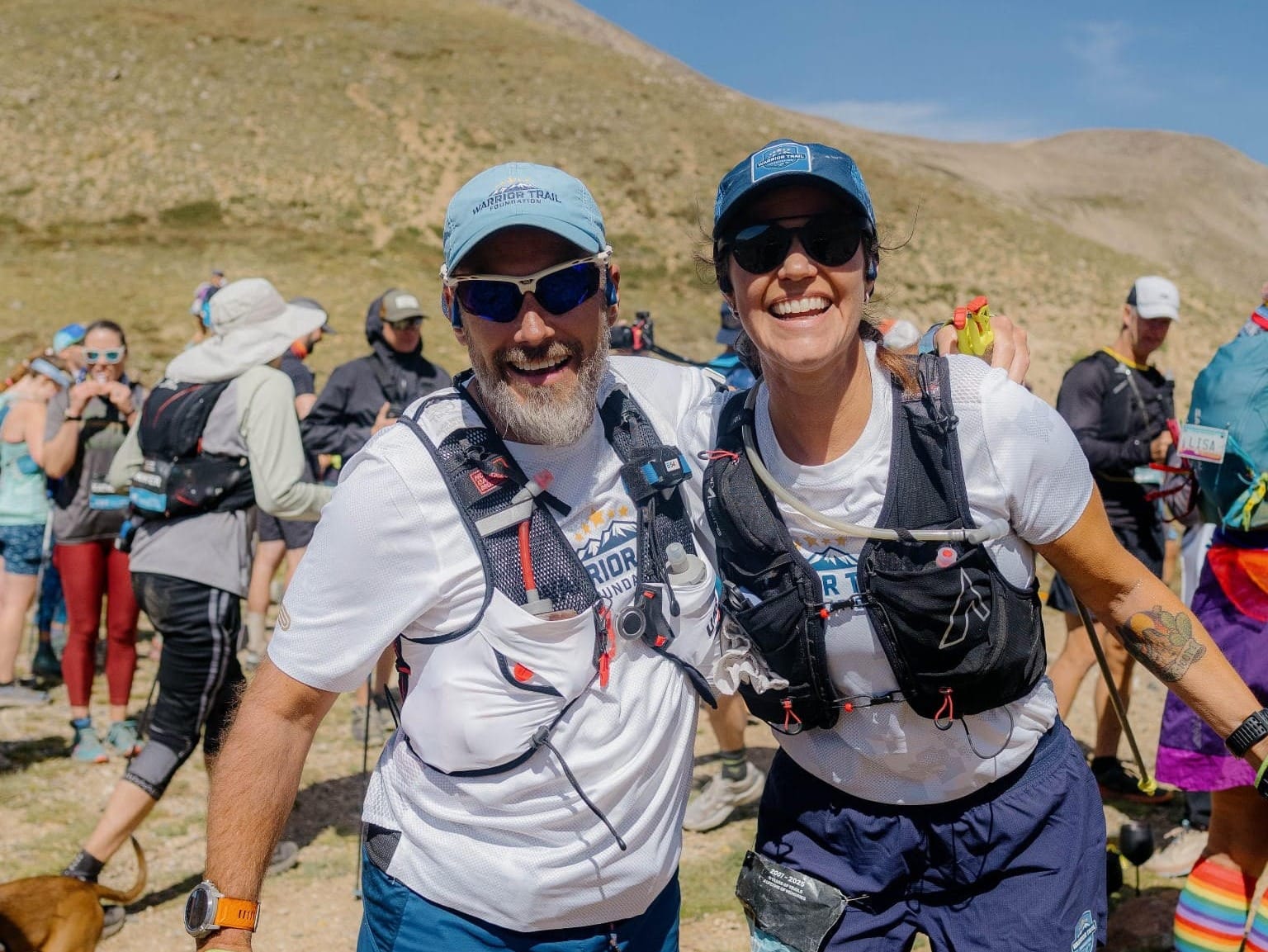
The foundation’s featured program is its Warrior Trail Team and corresponding athlete scholarships. Each prospective athlete goes through an application process, and applicants can be veterans, veteran spouses, or veteran family members.
Currently, Warrior Trail Foundation is working with 10 athletes, and a few are soon to join. Scholarships provide funding to cover race fees and travel, as well as one year of coaching with one of the organization’s seven partnering coaches.
“We have a bench of about 25 athletes that are waiting for coaching. The only thing that’s keeping them from being in coaching is budget,” Chris shares. “We won’t put somebody in coaching that we don’t have the funds to pay for a year.”
With only one paid staff member and limited overhead, Warrior Trail Foundation keeps its expenses low. Existing fundraising initiatives include a Veterans Day virtual event called 11 on 11/11, where participants donate $22 to the foundation and commit to run 11 miles, 11K, or 1.1 miles. Chris is also the director of a small ultra race company in North Central Pennsylvania that hosts a 220-miler, 110-miler, and 50K, with proceeds supporting WTF.
Corporate sponsorship is an avenue Chris is exploring to bring more athletes on board. But right now, what can’t be covered by fundraising initiatives and donations is often covered by his own income as a wealth advisor.
Maintaining Sight of Individual Value
“Where a veteran feels that their life is valued and that their service is valued, is where they feel like they are a valued part of the community,” Chris explains.
After military service, establishing a new community is difficult for many veterans. And for those navigating PTSD, depression, and anxiety, the loneliness and lack of a healthy outlet can quickly become too much. Those factors contribute to the 18 veterans who commit suicide each day, double the rate of nonveterans.
It’s this knowledge that drives Chris to prioritize community-building opportunities for Warrior Trail Foundation’s athletes. Over the past year, they traveled together to the Copper Kings 100, Arizona Monster 300, Tahoe 200 Endurance Run, Leadville 100, and Cocodona 250, among other ultramarathons. They also started using a group communications app to stay connected between events.
The community has been a powerful force for Warrior Trail Foundation’s athletes, which Chris has witnessed firsthand.
“We recently had one of our veteran athletes who went dark on us for a couple weeks, didn’t respond,” Chris explained.
When Chris finally received a return phone call, the athlete said that, after a long time sober, he stopped for a beer one night after work. One beer one night became two beers another night, and three beers the next.
The athlete shared with Chris that it soon hit him. “I’m part of an organization that’s counting on me. These people are committed to me. I’ve got a coach who’s trying to help me live a better life and develop healthier norms,” Chris recalls him saying.
The athlete’s commitment to Warrior Trail Foundation pulled him back to sobriety.
No Measure Too Small
“I’d love to have an impact on thousands and thousands of veterans, absolutely,” Chris shares. “But at the end of the day, you have to start with one.”
Chris says he imagines a world where we’re not actively engaged in wars. It could mean a world where military members don’t suffer from PTSD or fall through the cracks of the VA following their service to their country.
“In the meantime,” he says, “I’m mostly focused on how we take care of those who took care of us, who were willing to pay the ultimate sacrifice for the dream that you might have the freedom to run through the trails wearing whatever you want, calling yourself whoever you want.”
Below, Chris shares more on the ways running helps him navigate stress and PTSD, how Wounded Warrior Patrol and Warrior Trail Foundation got their starts, why trail running is a good match for veterans, and his philosophy on coaching.
How has running helped you in navigating stress and PTSD?
Chris Raup: I always used running or playing soccer or some sort of activity as a methodology of just dealing with the stress in life. And what I found after Iraq was that running was a great way for me to just sort of disconnect.
A lot of people refer to it as active meditation. I don’t really know what that means, because I don’t know what meditation means. I have zero ability to sit down and close my eyes and lose myself into something like that. I definitely have what I would call a hyperactive brain, and it’s very hard for me to just sit down. As a matter of fact, my wife always jokes that I’m either moving or I’m unconscious.
I find that running really helps me with that. And of course, trail running even more so.
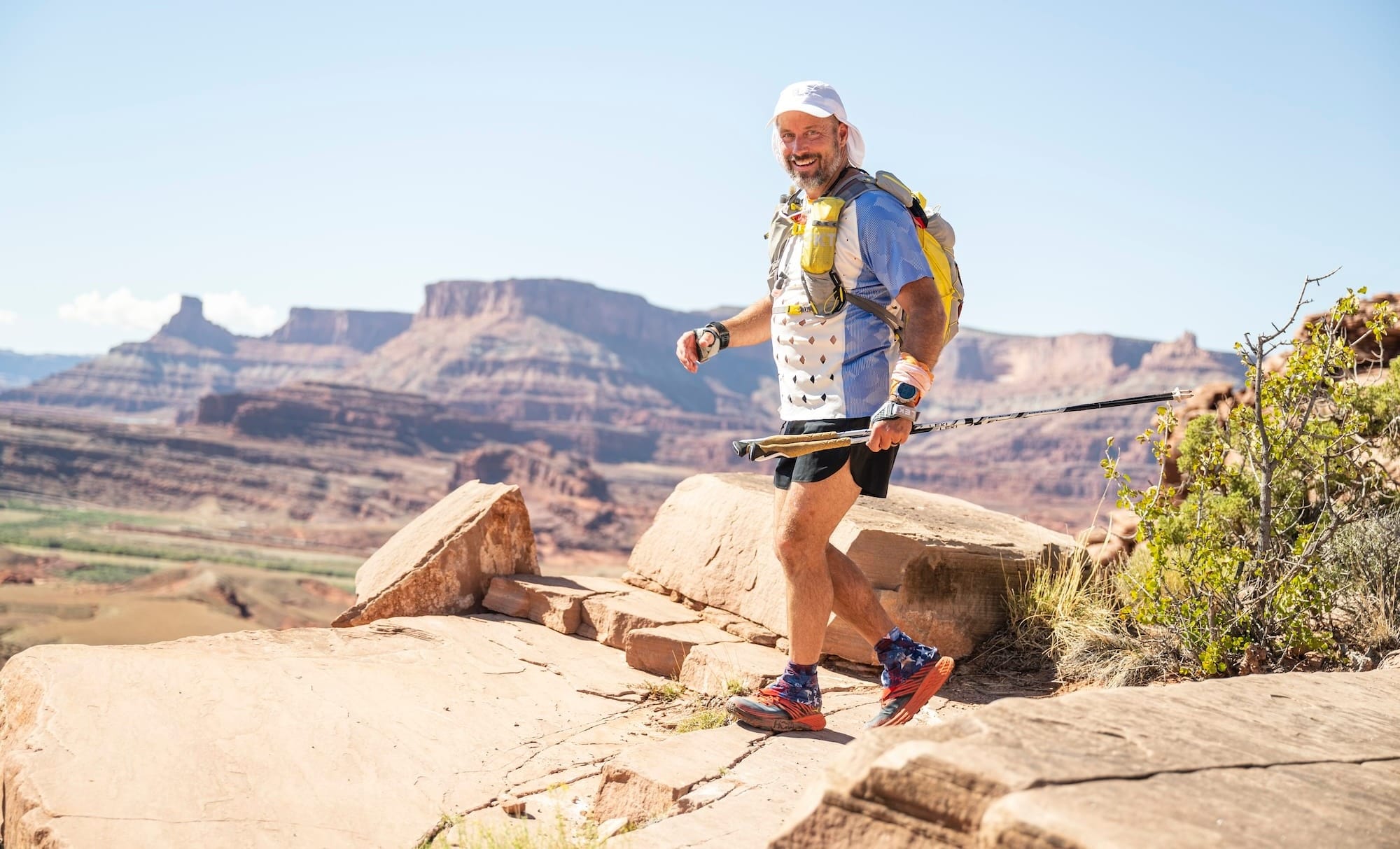
I process a lot …. I solve a lot of problems, from a business standpoint, life problems. But I would say the biggest thing for me is I reprioritize. I remind myself, when I’m out there running, that a lot of the things that are clouding my mind aren’t really that important.
When I go for a run, I like to think about it from the standpoint that I’m shedding …. I am literally shedding stress. I’m shedding problems. I’m shedding things that aren’t important. Things that seemed important before I went for the run, but I finished the run, and I’m like, ‘Yeah, that’s really not that important.’ [I’m] reprioritizing and getting rid of things, leaving baggage behind.
What inspired you to launch an outdoor recreation-based foundation to help veterans?
Chris Raup: I started another foundation where we taught veterans and their family members how to ski. It’s called the Wounded Warrior Patrol.
We started that idea up based on an existing nonprofit in Breckenridge, Colorado, called the Wounded Warrior Family Ski Week. It was run by this lovely older couple, who were in their late 70s, early 80s, Bob and Bonnie Miller.
I discovered it when I was out there on a ski trip. I actually flew out to meet with them and talk to them and attend their week to see how they were doing it. And I said, ‘This is just awesome. We have nothing like this on the East Coast. Would you mind if I recreated this?’
They gave me their whole three-ring binder and everything: ‘Here you go. This is how to do it.’ They were fantastic. We basically took their concept, created our own foundation.
We were able to partner up with a resort owner who also owned the Pittsburgh Pirates — Bob Nutting and the Nutting family. They basically gave us carte blanche. Anything we asked for, we had. It was an amazing foundation that we ran for 10 years.
Approaching the 10th year, they sold the resort, and we lost our significant donor. We just decided, if we couldn’t do it 100%, we weren’t going to do it. So, we had one final event where we brought the families in for a week of skiing at the resort, and then we shuttered that foundation. And I said, ‘Well, I will figure out the way to move forward.’
It was only a couple months later that I was out blowing snow one day in Colorado, and it suddenly hit me. [Trail running] is my new passion. We know what that other foundation did. What we learned was just getting people out doing things, recreational therapy, is so powerful.
I walked in the door that day, and I said to my wife, ‘I’ve got it. Our next foundation is going to be focused on trail running.’ She’s like, ‘Well, you certainly do it enough, and it clearly is your passion, right?’ I’m a firm believer in making your passion your mission, and so that’s what I did.
What makes trail running a good fit for military veterans?
Chris Raup: The main reason why I thought trail running was the perfect environment for healing for veterans was the trail running community itself.
There’s a long-standing tradition in rugby that you battle each other on the pitch, and then you party together until the wee hours of the night. The match was more like a prelude to the joint party between the teams and the supporters from each team. I always loved that part of rugby.
What I found in trail running when I was introduced to it was a very similar thing. We’re going to go out on the trails, we’re going to mutually do battle against a trail — a common enemy — and then we’re going to come back and celebrate that.
The thing I’ve always admired about trail runners is most trail runners will stick around to support the people at the very back. And being one of the people at the back, that’s pretty damn valuable to come in and see the person who finished three hours ahead of me sitting there on the grass waiting for me, to cheer me in. That’s pretty amazing.
I think we’re starting to see that dissipate, and there’s a recent push from certain individuals to try to more legitimize and more professionalize trail running, and that discourages me.
But I think that the community that we identify with in the trail running community is the community that is best suited for our veterans. It makes them feel like they are part of something bigger than themselves, and it is a community that is mutually supportive …. We have one common theme, and that is we just all want to be out there, mutually supporting each other and testing ourselves against nature. There’s almost nothing like it left in our world.
What can you share about Warrior Trail Foundation’s coaching philosophy?
Chris Raup: From the early onset, I realized the value of having a professional coach. And I believe having a professional coach or mentor is valuable in a lot of things in life.
I was already a certified endurance running coach, but what I found is, I don’t actually like coaching athletes, from the standpoint that I don’t like writing programs for them. I think, at the end of the day, if you’ve got any experience in running, you sort of know what works for you. What you really need from a coach, more so than a program to get you ready for your next race, is you need that person that you can call and share the challenges that you have.
If I have a regimented program I have to follow from a coaching standpoint, that just creates another layer of stress for me. Something that I maybe can’t measure up to every day, because life happens. What we’re trying to do is work with our coaches to think about how a veteran handles that. Especially a veteran with PTSD or something else might not handle that so well. It might create another layer of stress that they don’t need in life. How can we coach them in a somewhat non-traditional way?
What [we’re] working on right now [is] how that works out. These are the goals for the week. My job [as the runner] is to squeeze them in and then stay in touch [with my coach] as to how this went, how that went — a lot more communication, a lot less program writing.
We have some veterans who are training for their first 50K. And for those early on in their running career, they might need more program. They might need more coaching as to how to do the strength work.
At the end of the day, we’re just trying to be cognizant of the customer we’re providing services to and tailoring around that, rather than a cookie-cutter approach.
Follow @WarriorTrailFoundation on Instagram.
“I think that the community that we identify with in the trail running community is the community that is best suited for our veterans. It makes them feel like they are part of something bigger than themselves, and it is a community that is mutually supportive …. We have one common theme, and that is we just all want to be out there, mutually supporting each other and testing ourselves against nature. There’s almost nothing like it left in our world.” – Chris Raup